9 Home Garden Design Ideas For Your Small Outdoor Space
Less than 10% of urban homeowners with a small outdoor space feel they are using it well, according to landscape design surveys. That gap between potential and reality is almost always a design problem, not a space problem. A thoughtful layout, the right plants, and a few clever hardscape tricks can turn even a narrow side yard or a cramped patio into a place you actually want to spend time in.
Disclosure: This post contains affiliate links. As an Amazon Associate, we earn from qualifying purchases, and at no extra cost to you.
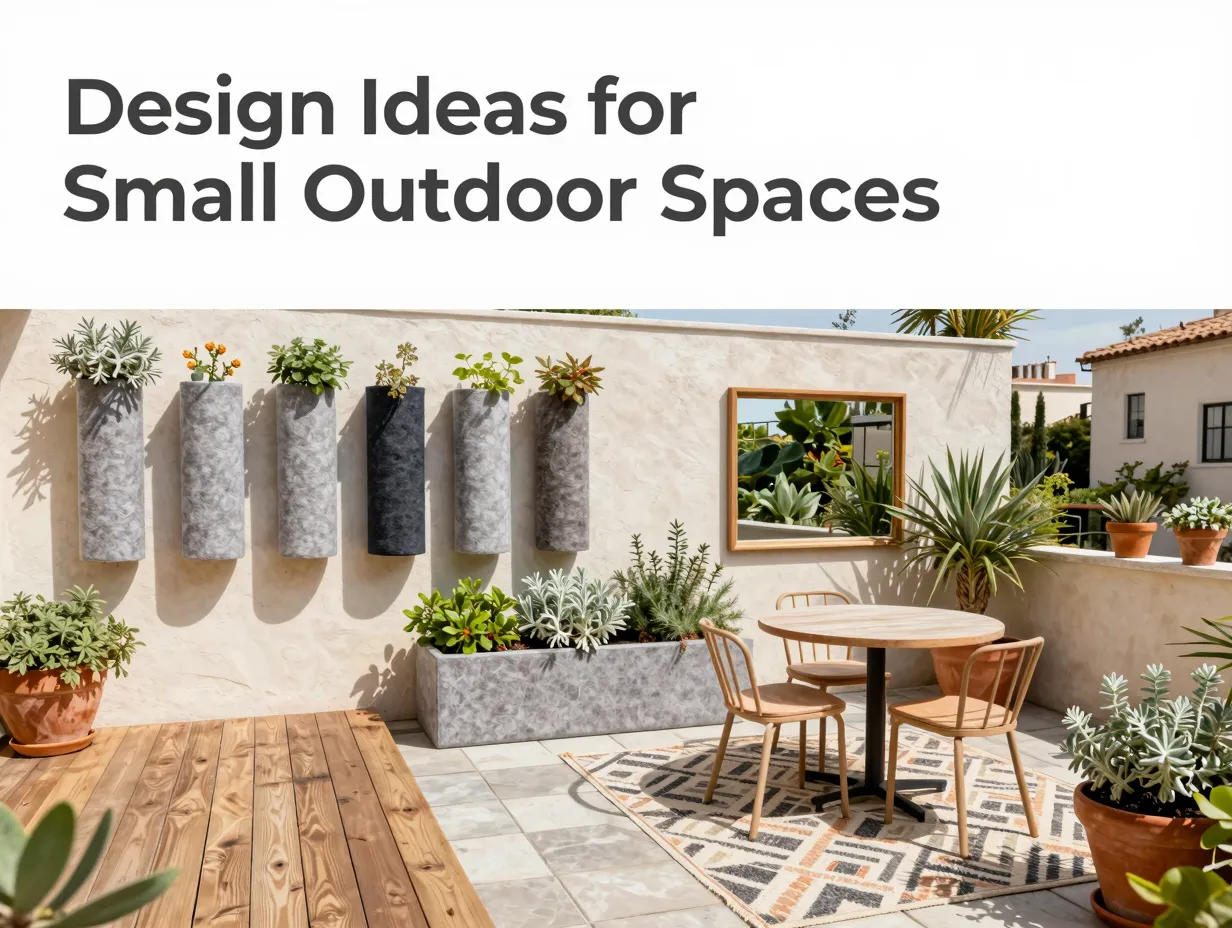
In this guide, I walk through 9 home garden design ideas for your small outdoor space that I have researched, tested, and seen work repeatedly in real gardens. Whether you are starting from bare concrete or trying to refresh a tired patch of lawn, these ideas are practical, scalable, and grounded in the strongest design thinking of 2026.
Key Takeaways
- Vertical surfaces, including fences and walls, are your most underused real estate in a small garden.
- Dividing a compact plot into distinct zones makes it feel larger and more purposeful.
- Layered planting creates privacy, depth, and year-round interest without requiring more ground area.
- Hardscape choices like diagonal paving and outdoor mirrors can visually double the perceived size of a small space.
- Low-maintenance, drought-tolerant plant palettes reduce upkeep while keeping the garden attractive through every season.
The Core Principles Behind Great Small Garden Design
Before diving into the individual ideas, it helps to understand the logic that connects them. Small garden design is not simply about fitting more things into less space. It is about creating the perception of abundance, privacy, and purpose in a footprint that might be no larger than a living room.
Three principles guide every idea in this list:
Vertical thinking. Most small garden owners think horizontally. They fill the ground and then run out of room. Designers think vertically from the start, treating walls, fences, and even overhead structures as plantable, decorative surfaces.
Zone clarity. A garden that tries to do everything everywhere feels chaotic. Defined zones, even in a tiny plot, give each area a clear purpose and make the whole space feel intentional.
Visual tricks. Certain materials, plant arrangements, and reflective surfaces can make a space feel significantly larger than it is. These are not gimmicks. They are well-established principles of spatial perception used by professional landscape architects.
With those principles in mind, here are the 9 home garden design ideas for your small outdoor space that deliver the most impact.
9 Home Garden Design Ideas For Your Small Outdoor Space
1. Build Upward With Vertical Gardening and Wall-Mounted Planters
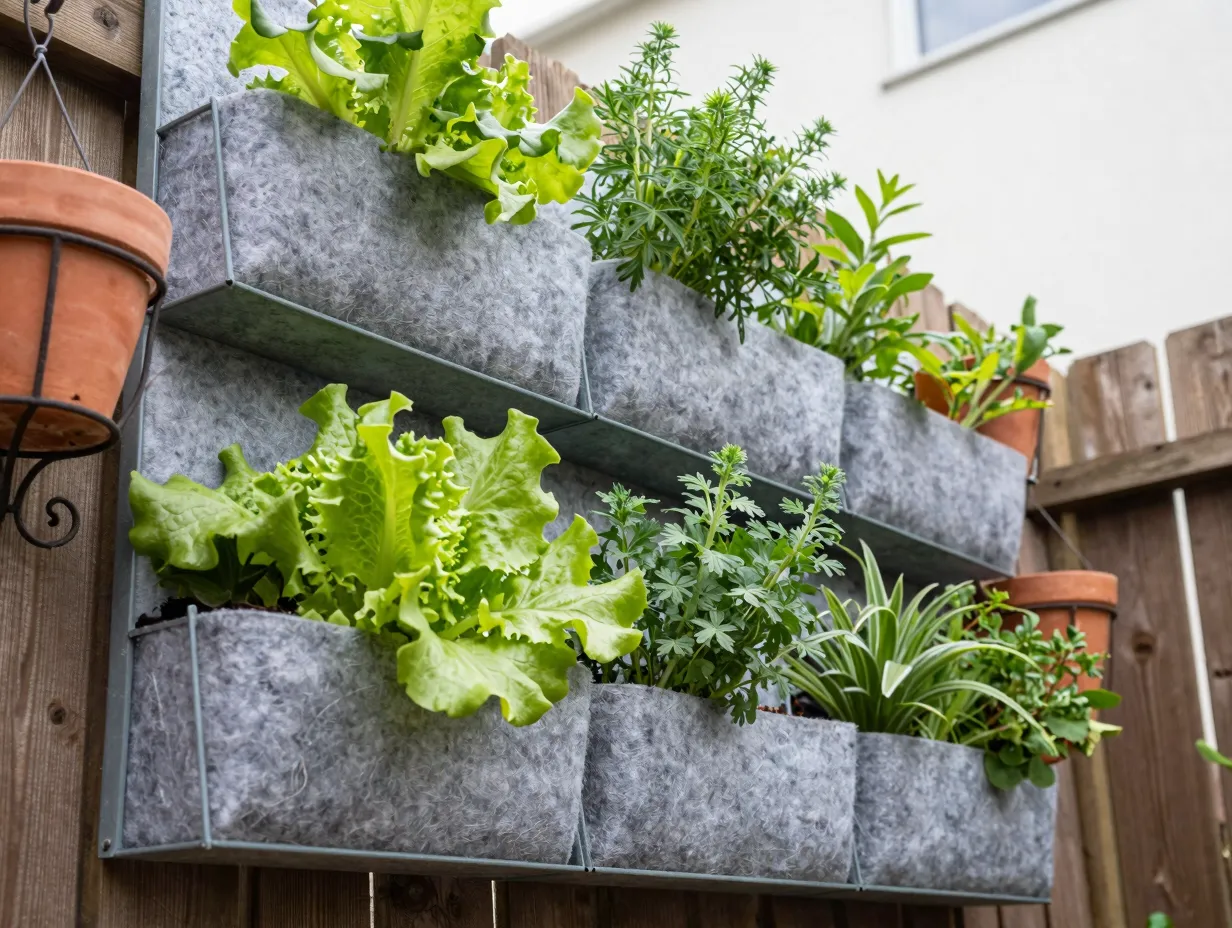
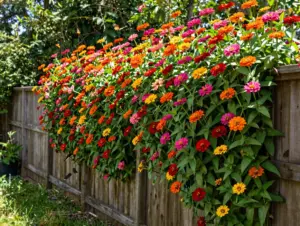
The single most effective move in a small garden is to stop thinking of the ground as your only planting surface. Walls, fences, and even the sides of sheds are valuable growing real estate [1].
Wall pockets made from breathable felt are particularly well suited to salad greens and cut-and-come-again herbs. You harvest a few leaves, the plant regrows, and you never had to give up a single square foot of floor space [1]. Trellises mounted to a fence can support climbers like peas, runner beans, or jasmine, adding height, fragrance, and productivity without expanding the garden’s footprint [4].
A few practical options for vertical gardening:
- Modular wall-mounted planter systems in powder-coated steel
- Timber pallet planters repurposed and mounted horizontally
- Hanging terracotta pots on wrought-iron brackets
- Freestanding shelving units positioned against a boundary wall
“Walls are the secret rooms of a small garden. Once you start treating them as surfaces rather than boundaries, everything changes.” — a sentiment echoed by multiple landscape designers in 2026 trend guides [1][4]
The key is to match the weight of the planter system to the structural capacity of the wall or fence. Lightweight felt pockets and plastic modular systems work on most timber fences. Heavier terracotta or ceramic arrangements may need masonry fixings.
2. Divide Your Plot Into Distinct Zones
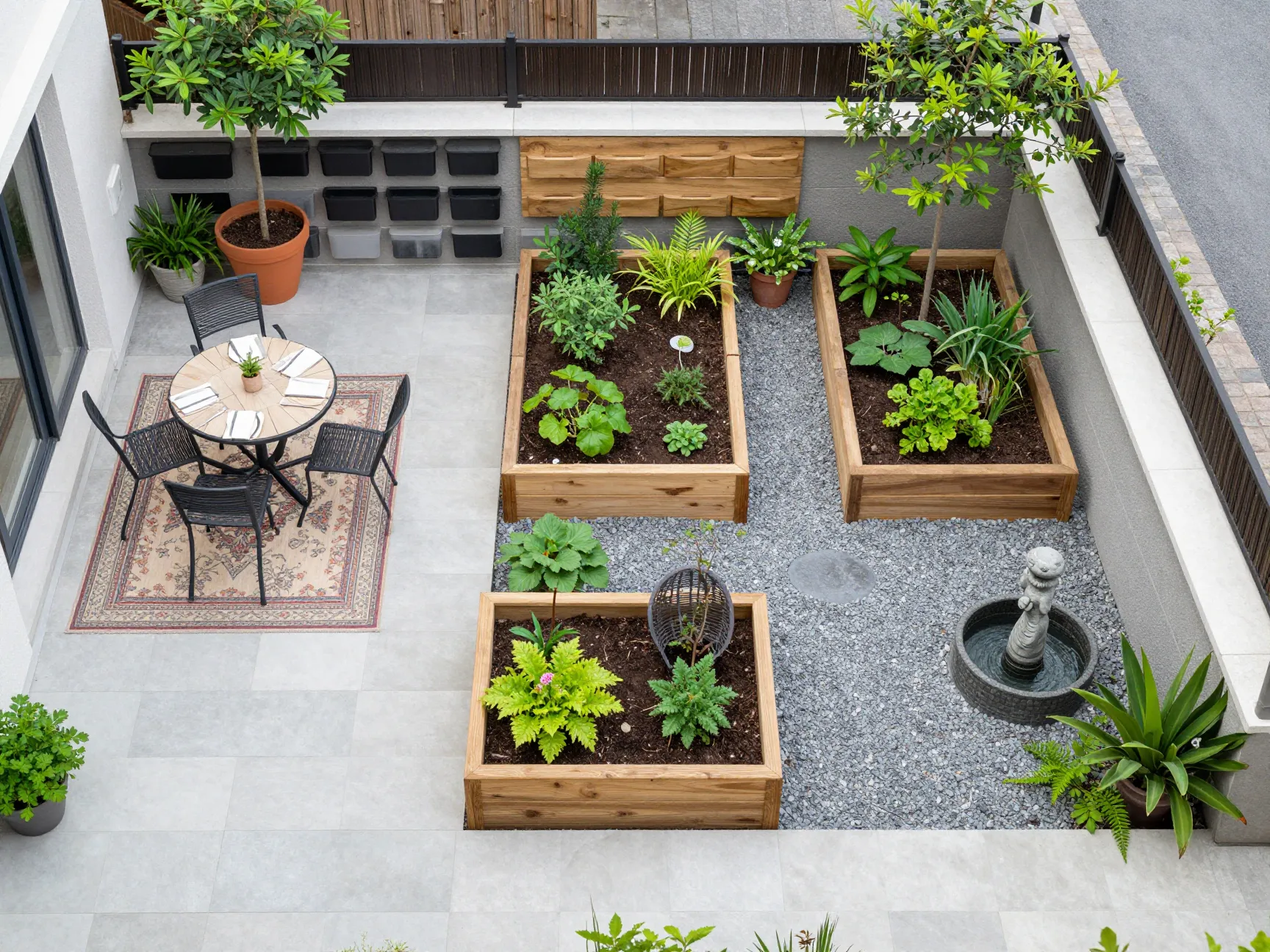
One of the most counterintuitive ideas in small garden design is that adding more structure makes a space feel bigger, not smaller. Designers in 2026 have been calling this approach “Botanical Bento” — the idea of dividing a compact plot into distinct, purposeful sections the way a bento box organizes a meal [2].
A typical small garden can hold three zones comfortably:
| Zone | Purpose | Suggested Elements |
|---|---|---|
| Social zone | Relaxing and entertaining | Bistro set, outdoor rug, string lights |
| Edible zone | Growing herbs and vegetables | Raised beds, wall pockets, compact fruit trees |
| Calm zone | Reflection and sensory interest | Gravel, a focal statue, a small water feature |
The boundaries between zones do not need to be walls. A change in paving material, a row of containers, or even a shift in ground texture from gravel to grass is enough to signal a new area [8][12]. This zoning approach helps even a narrow yard hold a lounge corner, a dining spot, and a planting zone without any of them feeling cramped [10].
When I first tried this in my own small back garden, I was skeptical. Dividing a space that already felt small seemed like it would make it worse. It did the opposite. Each zone suddenly had a reason to exist, and moving between them felt like a small journey rather than a shuffle across a patch of concrete.
3. Use Layered Planting to Create Depth and Privacy
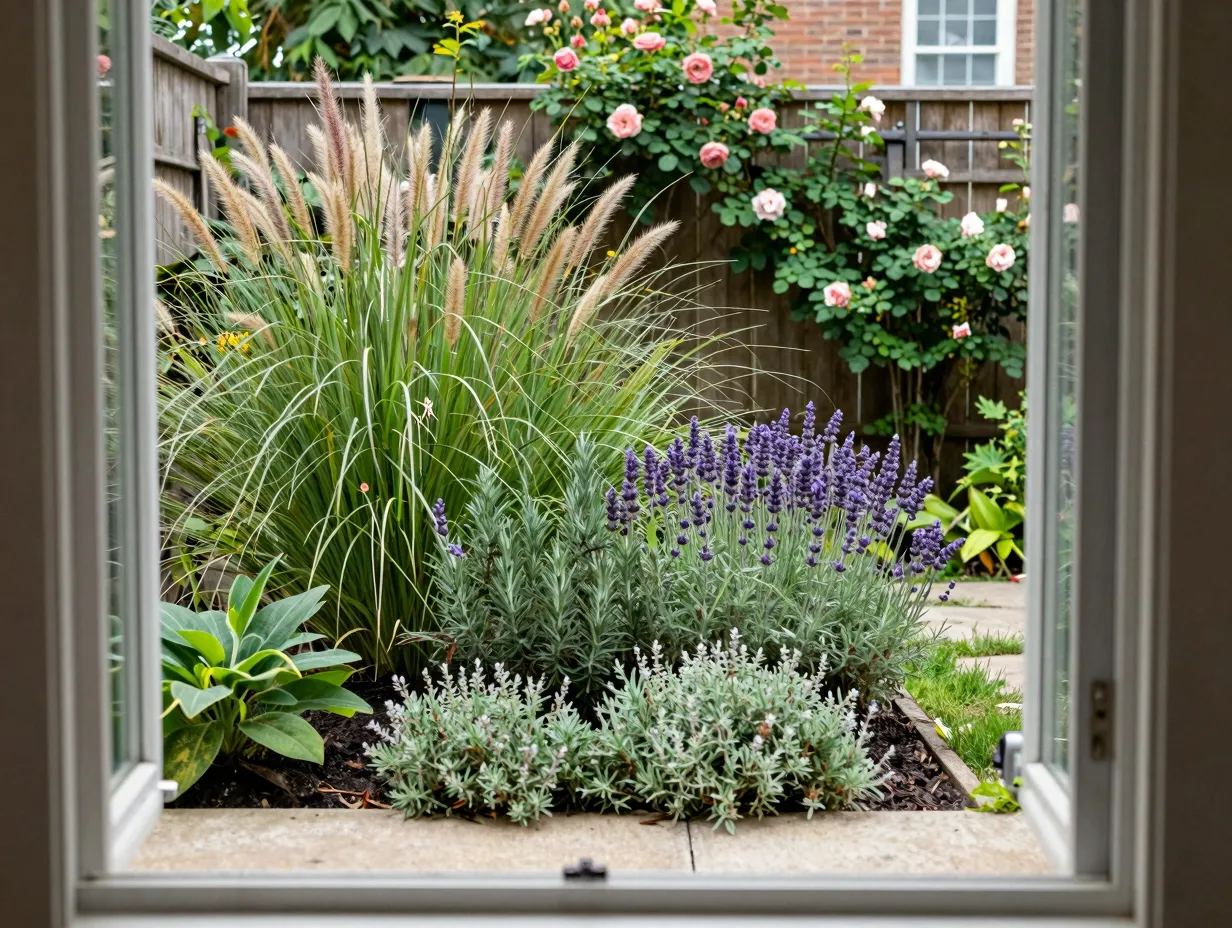
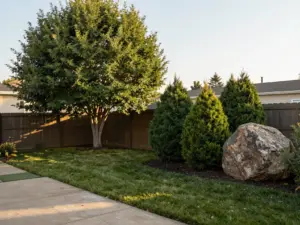
Layered planting is one of the most powerful tools a small garden designer has, and it is also one of the most underused. The principle is simple: tall structural plants at the back, midsized flowering shrubs in the middle, and trailing or groundcover plants at the front [3][8].
This tiered arrangement does several things at once. It creates a sense of depth that makes the garden feel larger. It provides visual interest at multiple heights. And in urban spaces where overlooked gardens are common, tall grasses, climbing vines, and dense shrubs act as natural screens that block sightlines and reduce noise [10][12].
Recommended layering combinations for small spaces:
Back layer (tall, structural):
- Bamboo in root-control barriers
- Tall ornamental grasses such as Miscanthus
- Climbing roses or wisteria on a rear trellis
Middle layer (mid-height, flowering):
- Lavender, salvia, and rosemary for fragrance and pollinator value
- Compact flowering shrubs like Hydrangea ‘Annabelle’
- Ornamental alliums for vertical punctuation
Front layer (low, trailing):
- Creeping thyme as a fragrant groundcover
- Trailing nasturtiums that spill over path edges
- Low ornamental grasses like Festuca glauca
This structure also means the garden looks good from inside the house, which matters more than most people realize. A layered view through a window is far more satisfying than a flat plane of lawn.
4. Lay Diagonal Paving to Visually Expand the Space
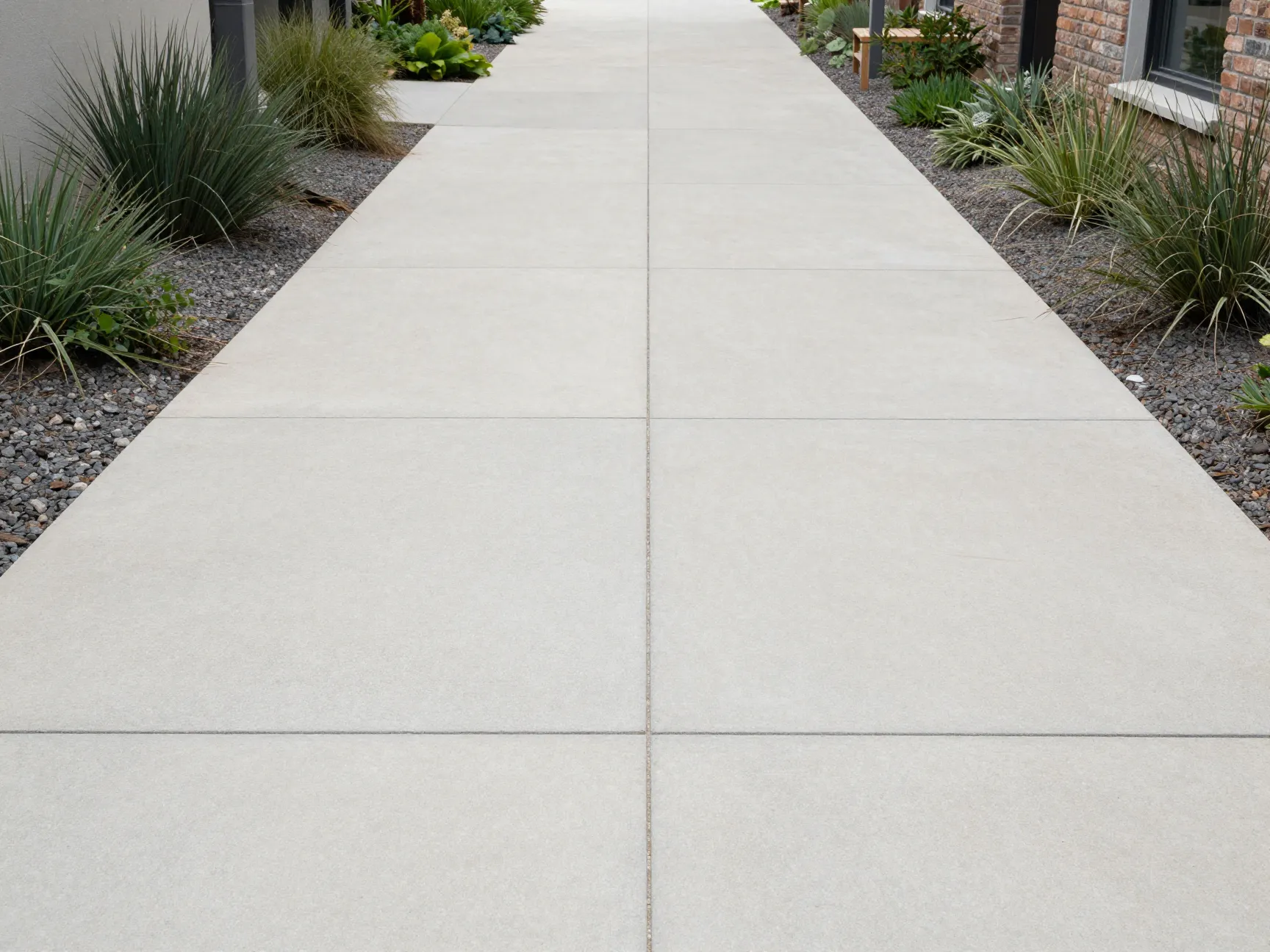
Hardscape choices have a dramatic effect on how large a small garden feels. One of the most reliable tricks is to lay paving diagonally rather than parallel to the garden’s boundaries [2].
When paving runs parallel to the walls, the eye follows the shortest dimension of the space and the garden feels narrow. When paving runs at 45 degrees, the eye is drawn along the longer diagonal, and the space reads as larger than it actually is.
Large-format slabs, around 600 x 900 mm, amplify this effect further by reducing the number of grout lines visible at any one time [2]. Fewer lines mean less visual fragmentation, which the brain interprets as more open space.
Practical considerations for diagonal paving in small gardens:
- Budget for approximately 15-20% more material due to cuts at the edges
- Use a consistent grout color that blends with the slab rather than contrasting with it
- Combine with a single, simple plant palette to avoid visual competition
This approach works particularly well on rectangular plots, which are the most common shape for urban gardens. The diagonal line breaks the boxy feeling that a rectangle naturally creates.
5. Install Outdoor Mirrors to Bounce Light and Create Illusion
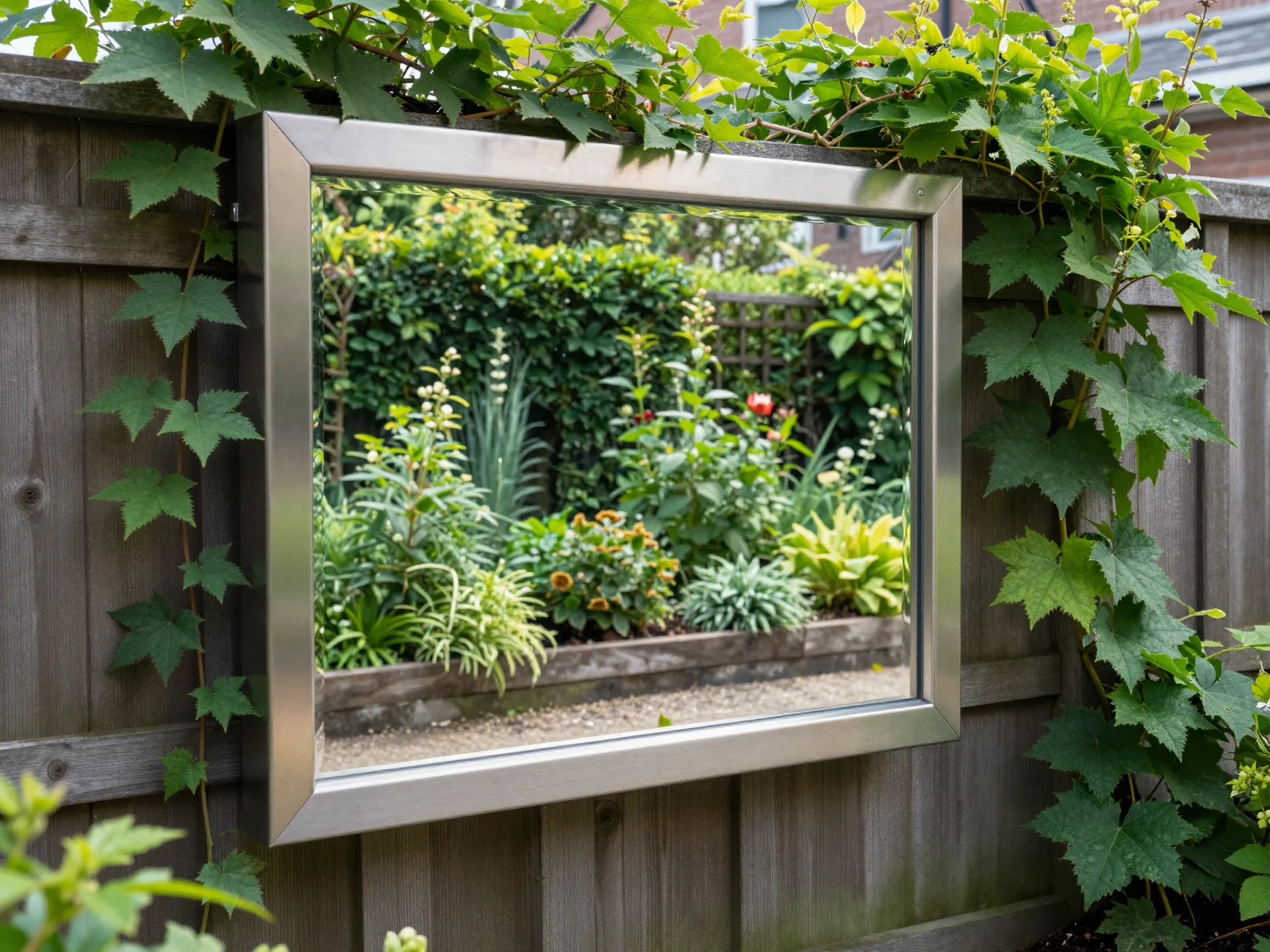
Weather-proof outdoor mirrors are one of the most talked-about small garden tricks of 2026, and for good reason. Positioned on a north-facing wall or a shaded boundary, a large mirror bounces light into dark corners and creates the impression that the garden continues beyond its actual boundary [1][5].
The effect works best when:
- The mirror reflects a planting area rather than a blank wall
- It is framed by climbing plants or a trellis to soften the edges and make it look like a window into another garden
- It is positioned at eye level or slightly above to maximize the depth illusion
Safety matters here. Use mirrors specifically designed for outdoor use, with a stainless steel or powder-coated aluminum frame. Standard glass mirrors can shatter in frost. Acrylic mirror panels are a lighter, safer alternative that work just as well visually [5].
One designer tip I came across in an English Garden feature: position the mirror so it reflects the most attractive part of your garden, not a fence or a downpipe. The reflection becomes part of the design [5].
6. Choose a Drought-Tolerant, Mediterranean-Style Plant Palette
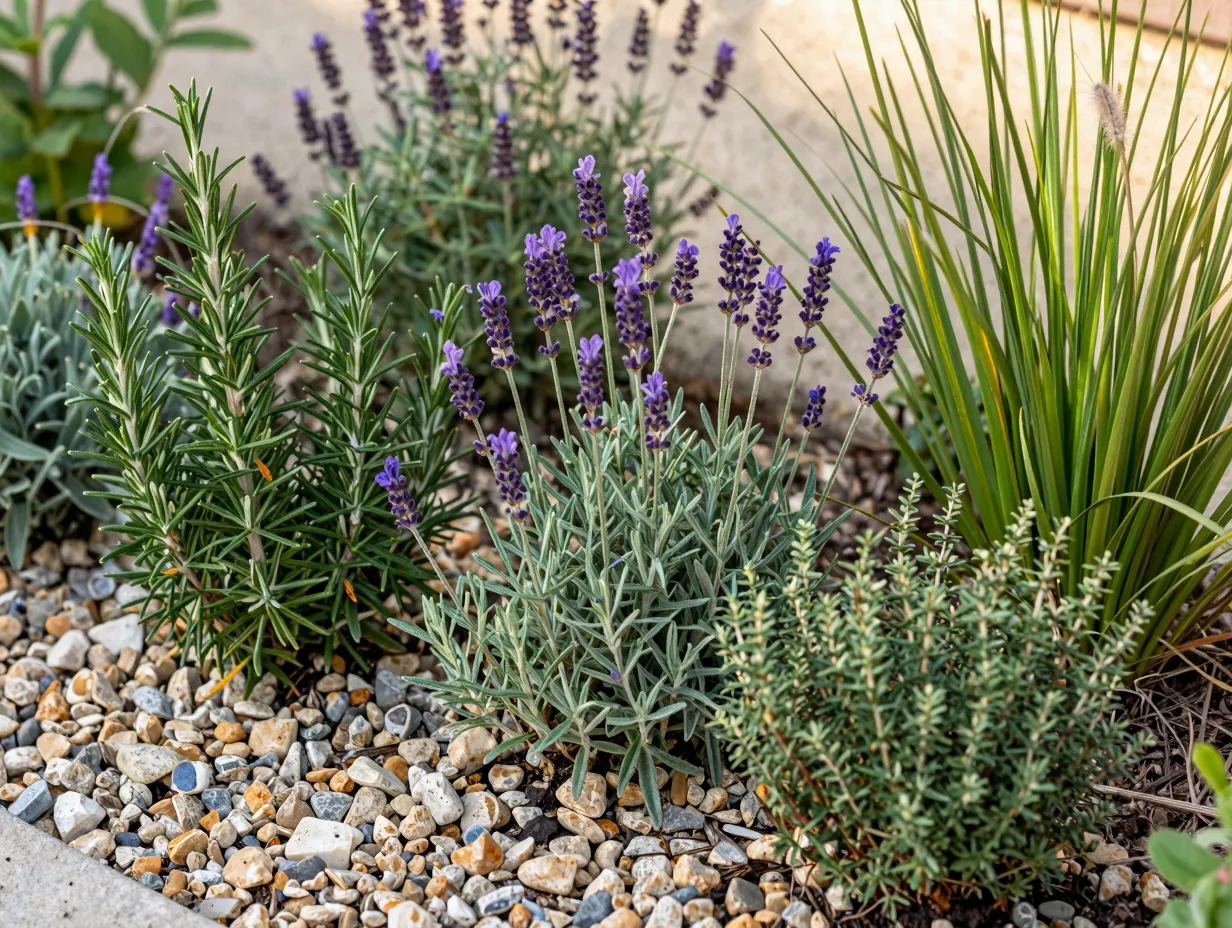
Plant choice has a bigger impact on the long-term success of a small garden than almost any other decision. In 2026, the strongest recommendation from garden designers and trend forecasters is to lean into drought-tolerant, Mediterranean-style planting [2][3][8][12].
This palette centers on lavender, rosemary, salvias, ornamental grasses, and compact trailing plants. These species share several qualities that make them ideal for small spaces:
- They stay attractive with minimal water once established
- Most are fragrant, adding a sensory dimension that amplifies the feeling of a lush garden
- They attract pollinators, which adds movement and life
- They are generally compact and well-behaved, not prone to taking over
A simple Mediterranean-inspired planting scheme for a small sunny garden:
Structural anchors: Rosemary ‘Miss Jessopp’s Upright’, Lavandula angustifolia ‘Hidcote’
Mid-border fillers: Salvia nemorosa ‘Caradonna’, Stipa tenuissima
Edge softeners: Thymus serpyllum, Erigeron karvinskianus
This palette works particularly well with gravel mulch, which suppresses weeds, retains moisture, and gives the planting a clean, cohesive look. The gravel also doubles as a low-maintenance ground surface that can serve as a zone boundary, as mentioned in idea number two.
7. Incorporate Raised Beds for Productive and Structured Growing
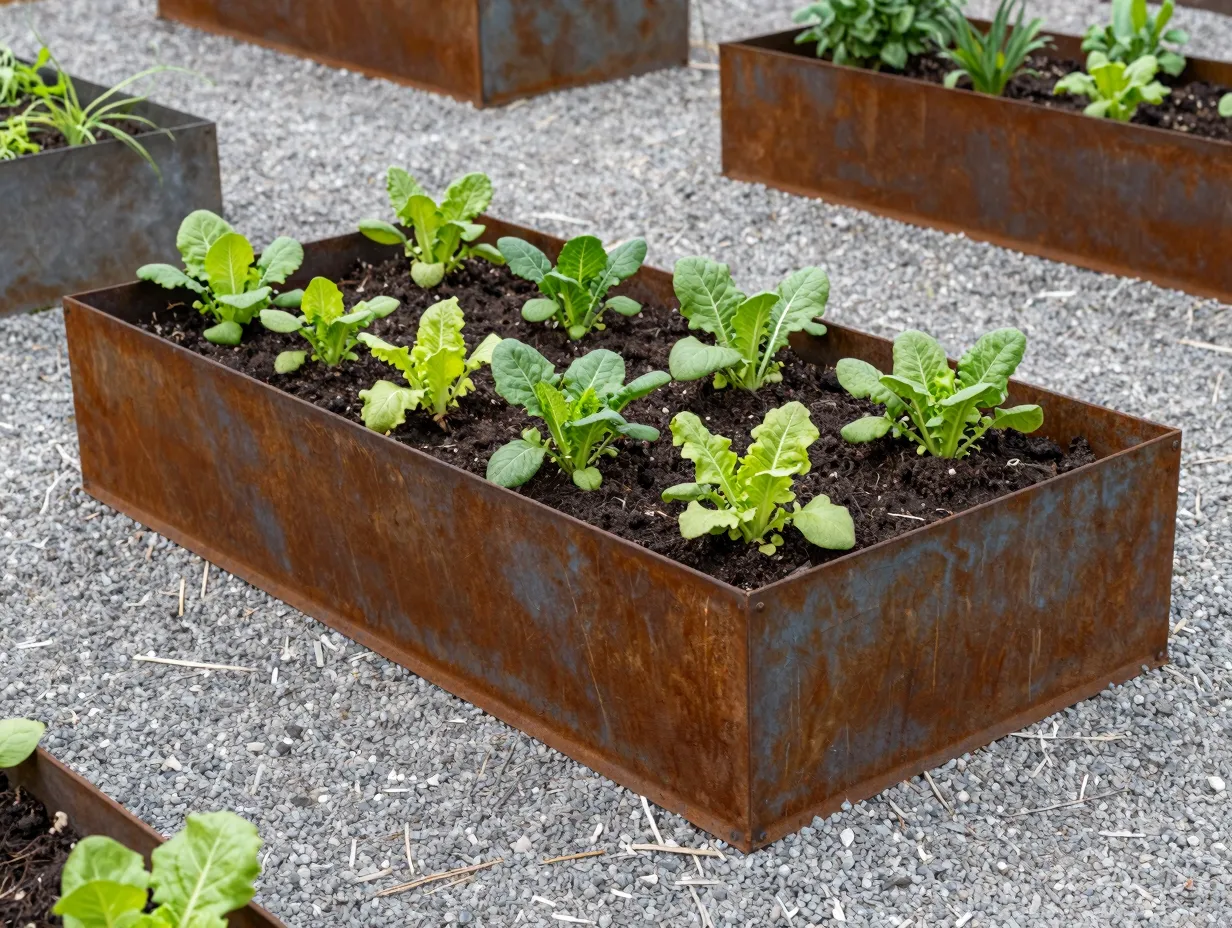
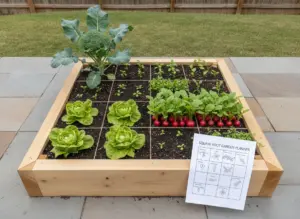
Raised beds are one of the most versatile elements you can add to a small outdoor space. They define zones, improve soil quality, make gardening physically easier, and look structured and intentional even when plants are young and sparse [6].
For small spaces, the key is proportion. A raised bed that is too tall or too wide will dominate the garden and make it feel smaller. The sweet spot for most compact gardens is:
- Height: 30 to 45 cm (allows good root depth without overwhelming the space)
- Width: no more than 90 cm (so you can reach the center from either side without stepping in)
- Length: scaled to the available space, with at least 60 cm of clear path around each bed
Materials matter for aesthetics as well as longevity. Hardwood timber, weathered steel (Corten), and recycled composite boards all weather well and look attractive over time. Avoid pressure-treated softwood in beds where you plan to grow edibles.
Raised beds also allow you to grow plants that would struggle in your native soil. If your garden sits on heavy clay or thin sandy soil, a raised bed filled with quality loam gives you a controlled growing environment regardless of what lies beneath.
The 2026 Chelsea Flower Show featured several small yard designs that used low raised beds as both growing spaces and informal seating edges, doubling their function in tight plots [6].
8. Add a Focal Point to Anchor the Design
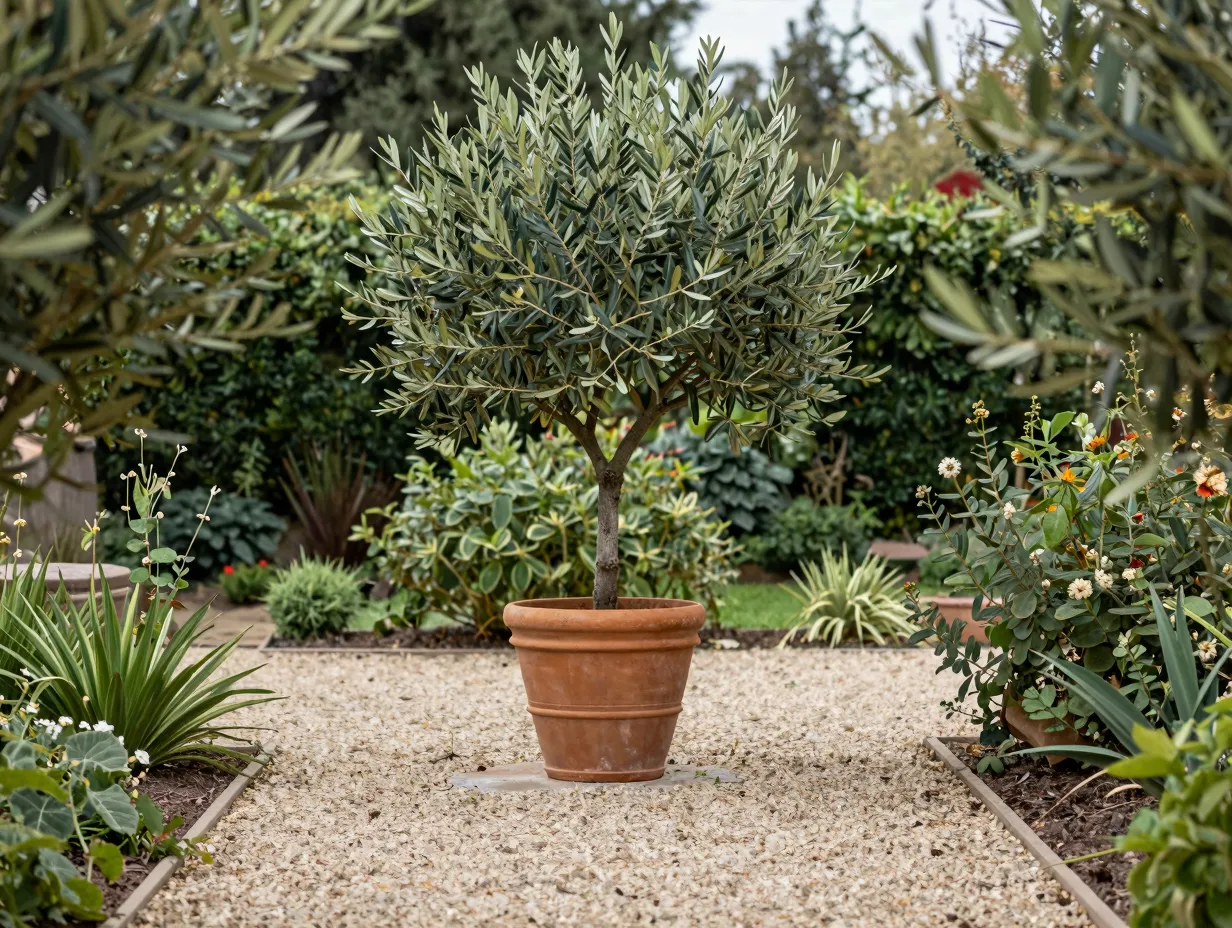
Every well-designed small garden has at least one focal point — an element that draws the eye and gives the space a sense of intention. Without one, a small garden can feel like a collection of unrelated objects rather than a designed space.
Focal points do not need to be expensive or elaborate. Effective options include:
- A single specimen plant with strong architectural form, such as a clipped box ball or a standard olive tree
- A small water feature, even a simple wall-mounted spout into a trough
- A piece of garden sculpture or a large decorative pot
- A painted timber obelisk or a metal arch draped with a climber
The focal point should sit at the natural end of the garden’s main sightline, which is usually the far boundary when viewed from the house. This placement draws the eye to the furthest point of the space, making the garden feel longer [5][8].
In the “Botanical Bento” zoning approach discussed in idea number two, the calm zone often holds the focal point, anchoring that area and giving it a reason to exist beyond just being a leftover corner [2].
A word of caution: resist the temptation to add multiple focal points. Two competing focal points cancel each other out and create visual confusion. Choose one strong element and let everything else support it.
9. Use Lighting to Extend the Garden Into the Evening
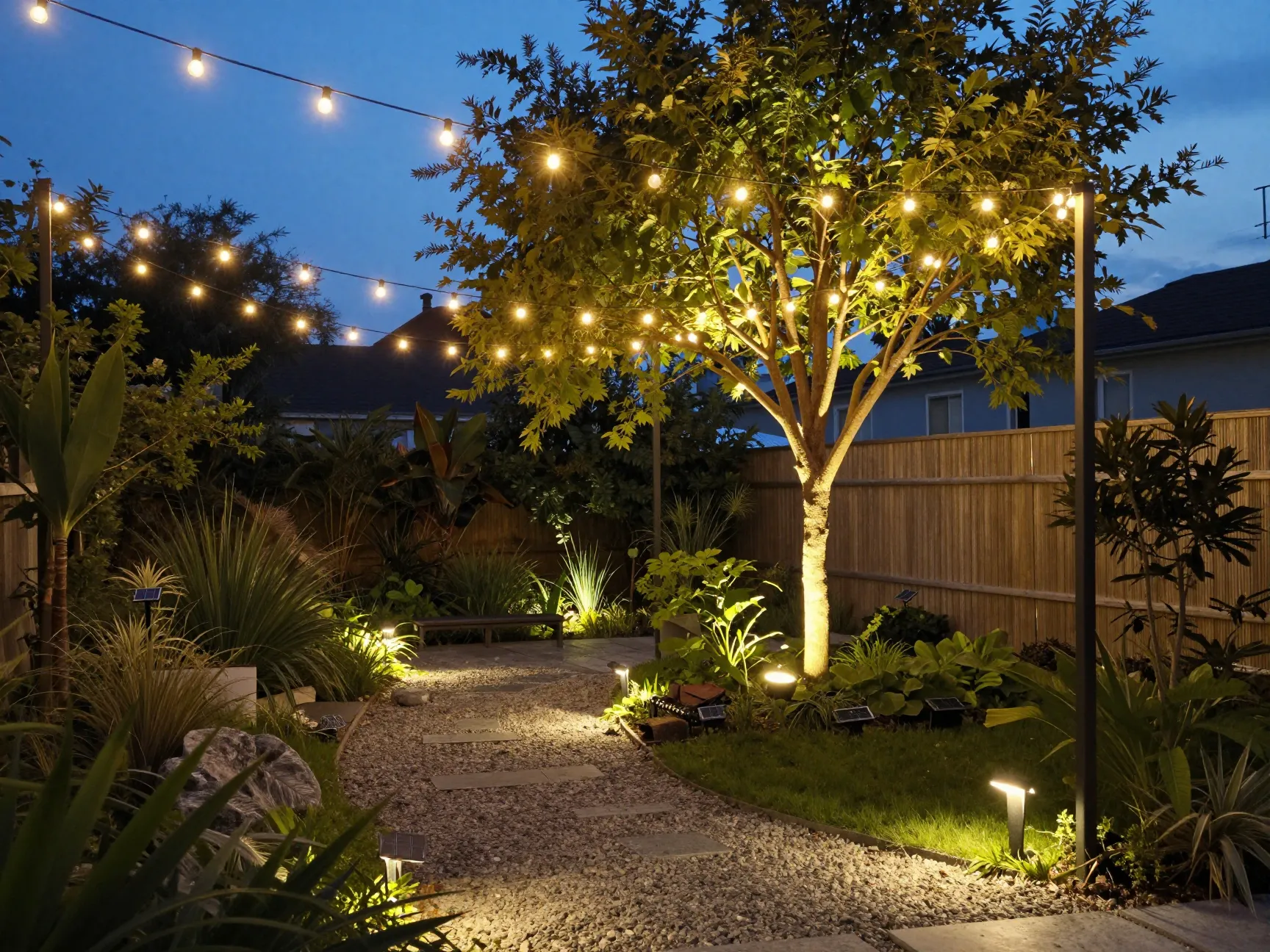
A small garden that looks beautiful in daylight but disappears after dark is only doing half its job. Good garden lighting extends the usable hours of an outdoor space and transforms it into something genuinely atmospheric after sunset.
The most effective lighting strategy for small gardens uses three layers:
Ambient lighting: String lights or festoon bulbs strung overhead create a warm canopy effect and are one of the most cost-effective ways to make a small garden feel magical in the evening.
Task lighting: Path lights or step lights provide safety and definition without overwhelming the space. Solar-powered options have improved significantly and are now reliable enough for most UK and northern European climates.
Accent lighting: Uplights positioned at the base of a specimen tree, a focal sculpture, or a textured wall create drama and depth. Even one or two well-placed uplights can transform the nighttime character of a small garden.
LED technology has made garden lighting far more energy-efficient than it was a decade ago. Warm white LEDs (around 2700K) are the standard recommendation for gardens because they render plant colors accurately and create a welcoming, rather than clinical, atmosphere.
One practical tip: run a single outdoor-rated cable to a weatherproof socket during any paving or construction work. Retrofitting electrical infrastructure later is expensive and disruptive. Even if you plan to use solar lights initially, having a hardwired option available gives you flexibility as the garden evolves.
How to Combine These 9 Home Garden Design Ideas For Your Small Outdoor Space
The real power of these ideas comes from combining them. A small garden that uses vertical planters, clear zoning, layered planting, diagonal paving, and a single strong focal point is operating at a completely different level than one that applies any single idea in isolation.
A practical sequence for implementing these ideas:
- Start with the hardscape: paving, raised beds, and any structural elements. These are the most disruptive to install and the hardest to change later.
- Define your zones using ground materials, containers, or low edging before you start planting.
- Install vertical structures, including trellises, wall planter systems, and mirror frames, while the garden is still clear.
- Plant in layers, starting with the structural back-layer plants and working forward.
- Add focal points, lighting, and decorative accessories last, once the bones of the garden are in place.
This sequence prevents the most common small garden mistake, which is filling the space with plants before the structure is sorted, and then finding there is no room for the bistro table or the path.
Conclusion
A small outdoor space is not a limitation. It is a design brief. The 9 home garden design ideas for your small outdoor space covered in this guide give you a complete toolkit: from the vertical surfaces you have been ignoring, to the zoning logic that makes compact plots feel purposeful, to the plant palettes and hardscape tricks that create the illusion of space and abundance.
Your actionable next steps:
- Walk your outdoor space today and identify your longest wall or fence. That is your first vertical gardening opportunity.
- Sketch a rough zone plan, even on paper, before buying a single plant or piece of furniture.
- Choose one focal point element and commit to it. Build the rest of the design around that anchor.
- Select a plant palette of no more than eight to ten species and stick to it. Restraint is the hallmark of good small garden design.
- Plan your lighting infrastructure during any groundwork, even if you do not install the fixtures immediately.
Small gardens reward careful thinking more than large ones do. Every decision is visible, every plant matters, and every square foot counts. Start with the ideas that excite you most, apply the principles consistently, and the space will reward you far beyond what its size suggests is possible.
References
[1] Making The Most Of Limited Space Small Garden Ideas For Spring 2026 – https://vegplotter.com/blog/making-the-most-of-limited-space-small-garden-ideas-for-spring-2026
[2] Small Garden Design Ideas 2026 Trends Layouts Plans – https://gardenornaments.com/blog/Small-Garden-Design-Ideas-2026-Trends-Layouts-Plans/
[3] Watch – https://www.youtube.com/watch?v=iSqH1IK2ncg
[4] Watch – https://www.youtube.com/watch?v=0fPzH5lrnBE
[5] Small Garden Ideas – https://www.theenglishgarden.co.uk/gardens/small-gardens/small-garden-ideas/
[6] 8 Creative Small Yard Ideas From The 2026 Chelsea Flower Show – https://www.houzz.com/magazine/8-creative-small-yard-ideas-from-the-2026-chelsea-flower-show-stsetivw-vs~185365833
[8] Watch – https://www.youtube.com/watch?v=NfUoZf-HVag
[10] Garden Trends 2026 – https://www.countryliving.com/gardening/garden-ideas/a70160525/garden-trends-2026/
[12] Watch – https://www.youtube.com/watch?v=_yrcZD0kwck