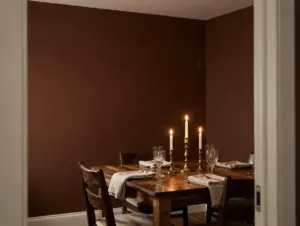
9 Pooja Room Design Ideas for a Serene and Sacred Home Altar
A 2023 survey by the National Sample Survey Office found that over 78% of Indian households maintain a dedicated space for daily worship, regardless of home size. Yet most of those spaces are designed as an afterthought, a cluttered shelf wedged into a corner, a dusty idol on a windowsill, or a cabinet that looks more like a storage unit than a sacred altar. In 2026, that is changing fast.
Disclosure: This post contains affiliate links. As an Amazon Associate, we earn from qualifying purchases, and at no extra cost to you.
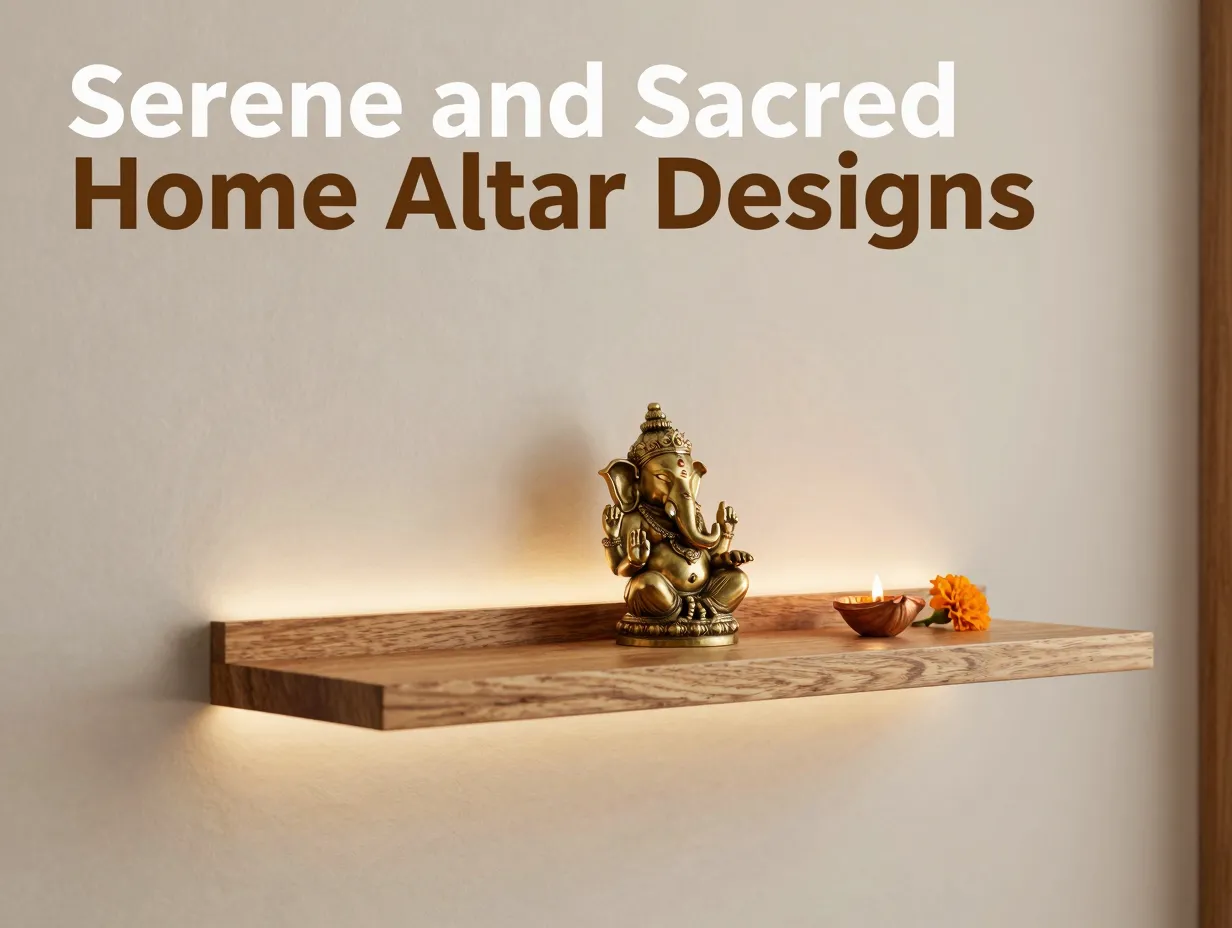
This guide on 9 Pooja Room Design Ideas for a Serene and Sacred Home Altar is built for homeowners who want their worship space to feel intentional, calming, and beautiful, whether they live in a 400-square-foot studio or a spacious family home. Each idea here draws from current interior design trends, practical space-planning principles, and the deep cultural significance that a home altar carries in Indian tradition.
Key Takeaways
- A dedicated pooja space does not require a full room, wall-mounted and corner units work equally well in compact apartments
- Minimalist design with light-coloured walls and simple wooden altars is the dominant trend in 2026
- Lighting is a core design element, not an afterthought, layered LED and diya light creates the right sacred atmosphere
- Natural materials like teak, marble, and stone add authenticity and longevity to any altar design
- Clutter is the biggest enemy of a serene pooja space, built-in storage is essential
Why Your Pooja Room Deserves Thoughtful Design
Before diving into the 9 Pooja Room Design Ideas for a Serene and Sacred Home Altar, it helps to understand why design matters here at all.
A pooja room is not just decorative. It is the emotional and spiritual anchor of a home. When I visited my grandmother’s house in Chennai as a child, the first thing she did every morning was light a lamp in the small granite-topped altar tucked into the northeast corner of the kitchen. That corner was always clean, always fragrant, always calm. It set the tone for the entire household.
Modern homes have lost some of that intentionality. Busy schedules, smaller apartments, and the pressure to make every square foot “functional” in a commercial sense have pushed worship spaces into awkward spots. The result is a space that feels neither sacred nor practical.
Good design solves both problems. A well-designed pooja room is easy to maintain, visually calming, and spiritually meaningful. It does not need to be large or expensive, it needs to be considered.
According to design experts at DesignCafe, the key principles for a modern pooja room are clean lines, natural materials, controlled lighting, and dedicated storage for puja items [7]. When those four elements come together, even a small niche in a wall becomes a genuine sanctuary.
The 9 Pooja Room Design Ideas for a Serene and Sacred Home Altar
1. The Wall-Mounted Floating Mandir
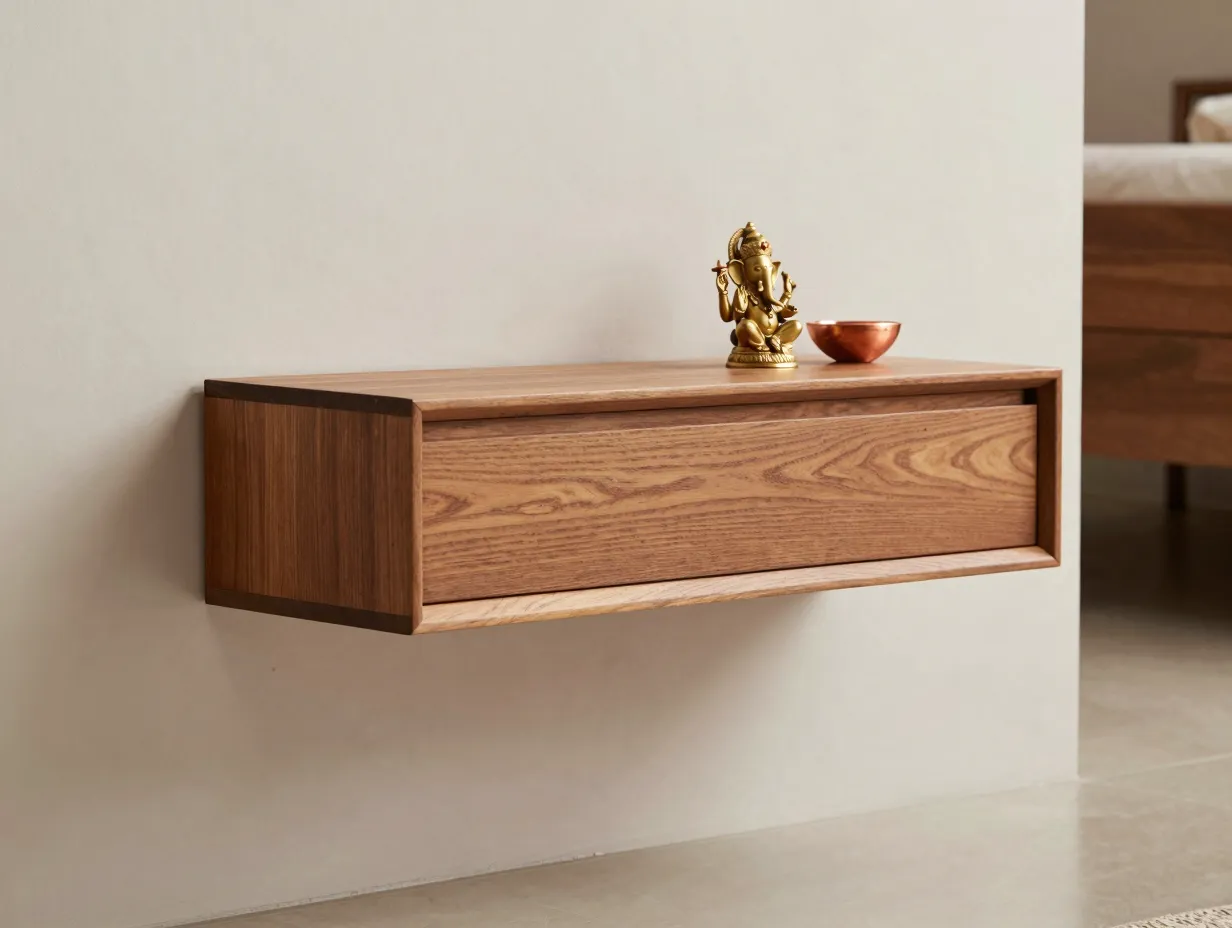
Wall-mounted and floating mandirs have become the single most recommended solution for modern apartments. The concept is simple: a slim wooden or MDF unit is fixed directly to the wall, keeping the floor completely clear. This makes the space feel larger and easier to clean, both practical and aesthetically important.
Nerolac’s 2026 design update highlights compact wall-mounted units with concealed drawers as a top trend for small homes [3]. The concealed storage is the key detail. Incense sticks, matchboxes, small diyas, and extra flowers all need a home. When that storage is built into the unit itself, the visible surface stays clean and focused.
Best for: Studio apartments, 1BHK flats, homes without a dedicated pooja room.
Design tip: Choose a unit in teak or sheesham wood with a natural oil finish. Avoid high-gloss laminates, they reflect light harshly and age poorly.
| Feature | Wall-Mounted Unit | Freestanding Cabinet |
|---|---|---|
| Floor space used | None | Moderate |
| Ease of cleaning | High | Medium |
| Storage capacity | Medium | High |
| Installation cost | Low-Medium | Low |
2. The Minimalist White-and-Wood Altar
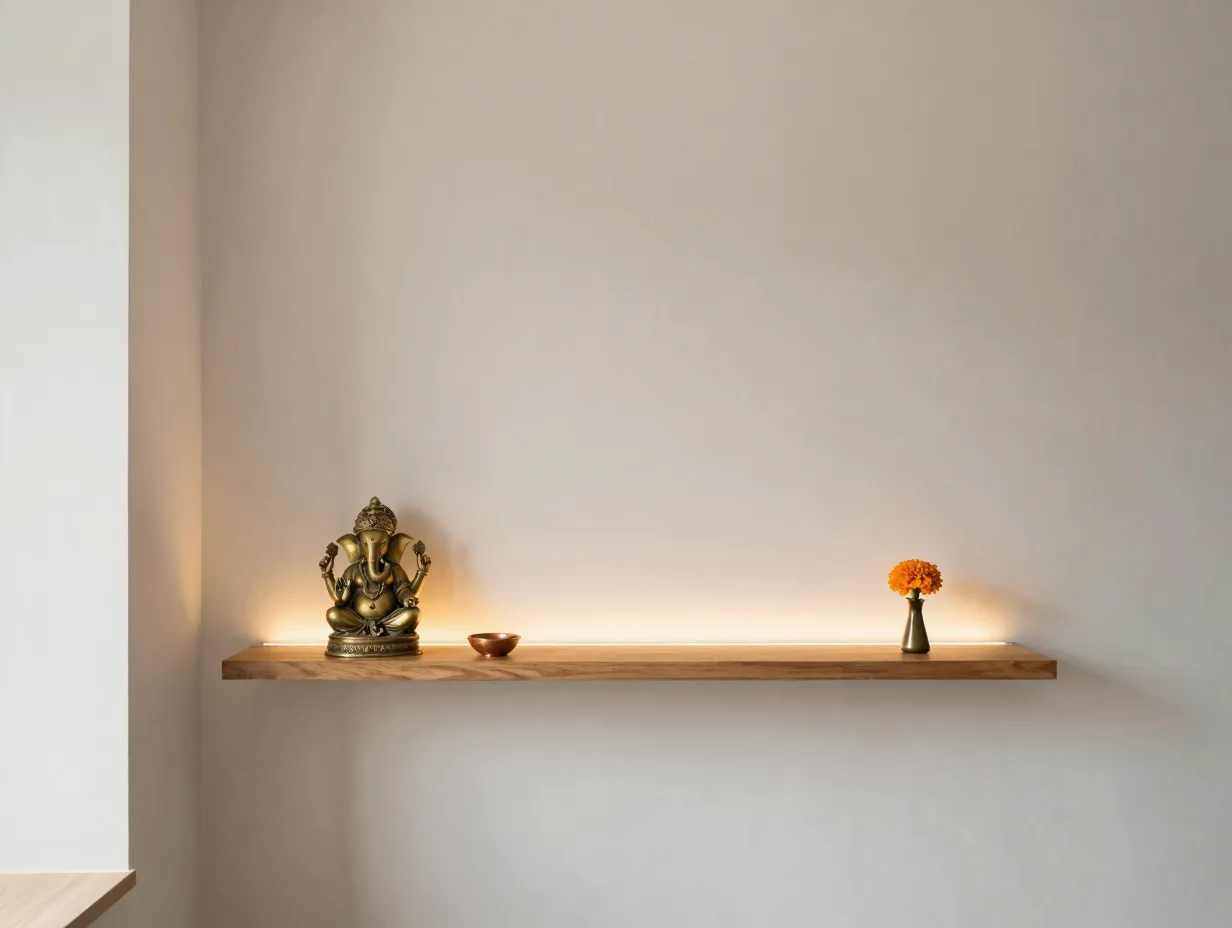
Minimalism is not a compromise, it is a philosophy. In a pooja room context, it means removing everything that does not serve the act of worship. Light-coloured walls in white, beige, or soft pastels, paired with a simple wooden altar table, create a space that feels open and meditative.
InteriorxDesign’s 2025 feature recommends white or soft pastel walls combined with wooden tables and hidden LED lighting to keep the visual focus entirely on the idols and the ritual itself [4]. The logic is sound: when the background is quiet, the sacred objects in the foreground become more prominent and meaningful.
I have seen this approach work beautifully in a Mumbai apartment where the homeowner used a single floating white shelf against an ivory wall, with a small brass Ganesha and a copper diya as the only objects. The restraint was striking. Nothing competed for attention.
Key elements of a minimalist altar:
- White or off-white wall paint
- Simple wooden shelf or altar table in natural finish
- Maximum three to five idols or sacred objects
- Hidden LED strip lighting beneath the shelf
- A single fresh flower or small plant as the only decoration
CustomFurnish’s 2025-26 trend report confirms that wooden puja rooms with simple backdrops and soft lighting are the primary direction for contemporary Indian interiors [9].
3. The Tall Wooden Backdrop Panel
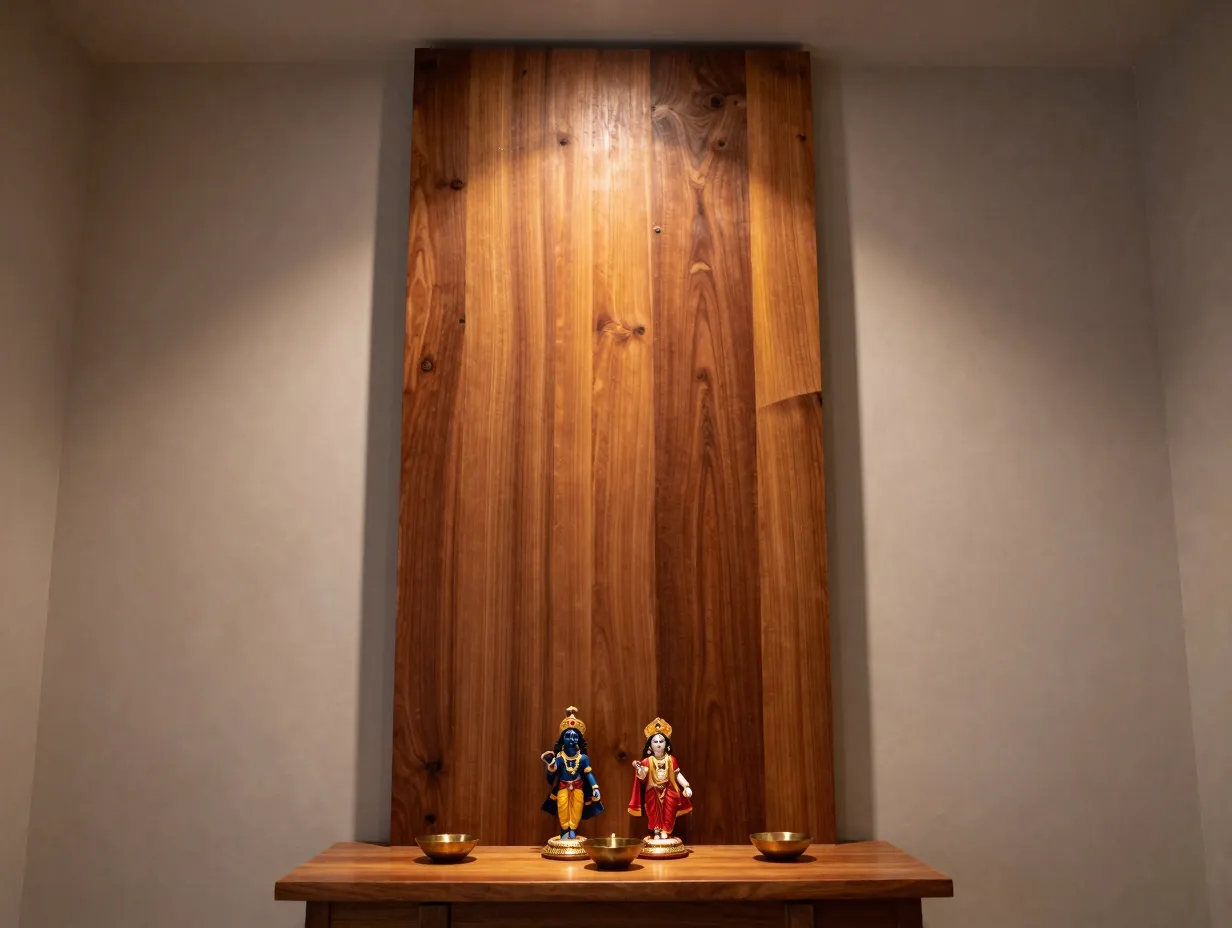
For homes that want a visual statement without a full room, a tall wooden plank or carved backdrop panel creates a dramatic focal point. The panel runs from counter height to ceiling, framing the altar below it and drawing the eye upward, a design move that also makes ceilings feel higher.
NoBroker’s 2026 guide recommends a simple tall wooden plank or backdrop with an altar as one of the most practical and visually effective pooja solutions for middle-class homes [5]. The beauty of this approach is its flexibility. The panel can be plain teak for a modern look, or carved with traditional motifs for a more classical feel.
Backdrop material options:
- Teak wood with natural oil finish, warm, durable, contemporary
- MDF with carved jali pattern, affordable, detailed, traditional
- Reclaimed wood planks, rustic, sustainable, unique
- Stone-effect cladding tiles, cool, minimal, modern
StudioMatrx’s 2026 guide describes the new norm in Indian pooja room design as “restrained, warm, layered, and ritually honest,” and explicitly warns against neon lighting and over-decorated surfaces [10]. A tall natural wood panel embodies exactly that philosophy.
4. The Corner Altar with Angled Shelving
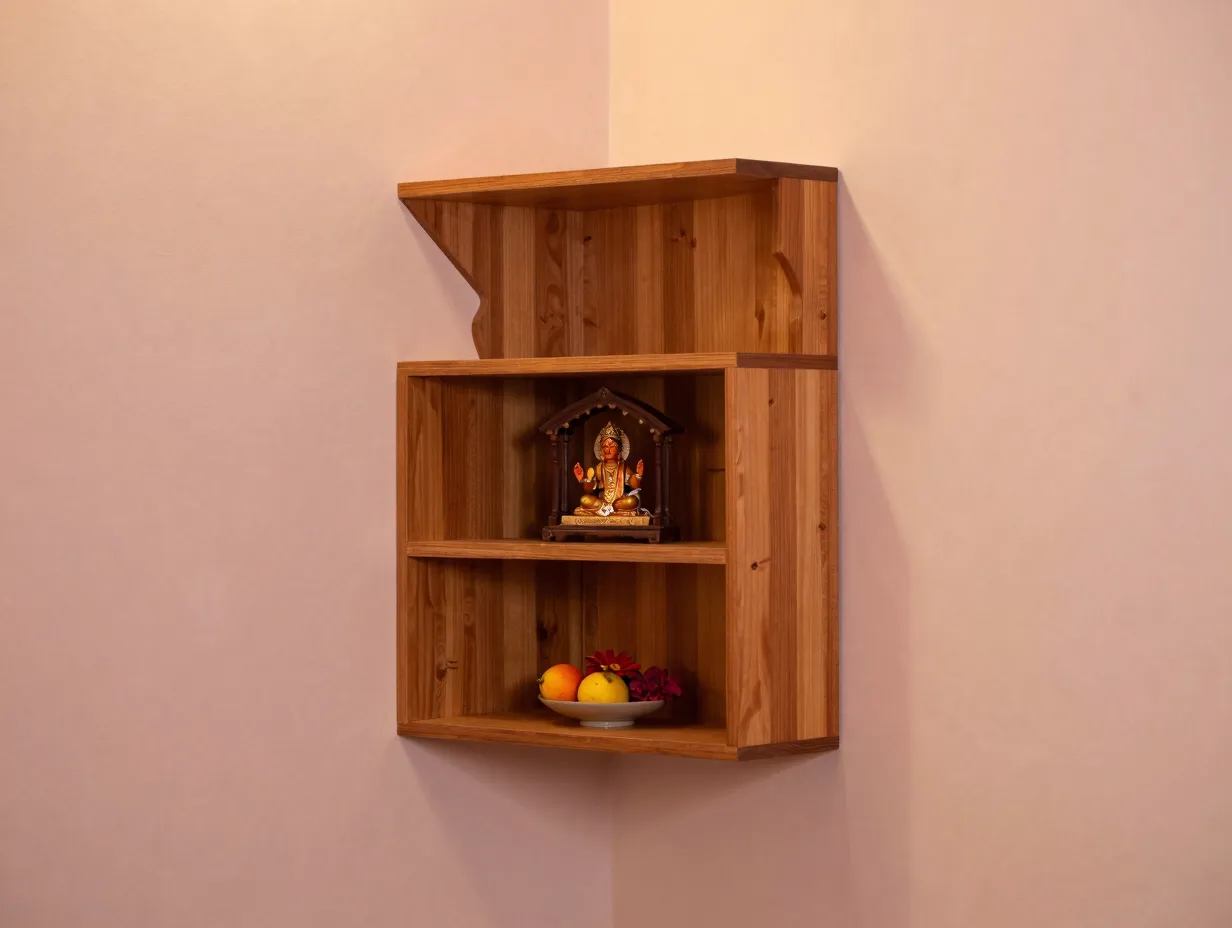
Corner spaces are chronically underused in Indian homes. An angled corner altar turns a dead zone into the most meaningful spot in the room. The shelving fits into the 90-degree corner, with the altar facing outward into the room, creating a natural focal point that can be seen from multiple angles.
CustomFurnish notes that compact corner layouts are among the leading space-saving trends for 2025-26 [9]. The corner placement also has traditional Vastu significance, the northeast corner of a home is considered the most auspicious direction for a pooja space.
Design considerations for corner altars:
- Use angled shelves that fit flush into the corner, no wasted space
- Install a small canopy or arch above the main idol shelf for visual framing
- Keep the two adjacent walls in a coordinating colour, avoid clashing patterns
- Add a small step or platform at the base for offerings
Bricktab’s guide on Indian-style pooja room designs notes that corner units with carved wooden arches are among the most enduring traditional formats, adapted now for modern compact homes [2].
5. The Niche or Recessed Alcove Altar
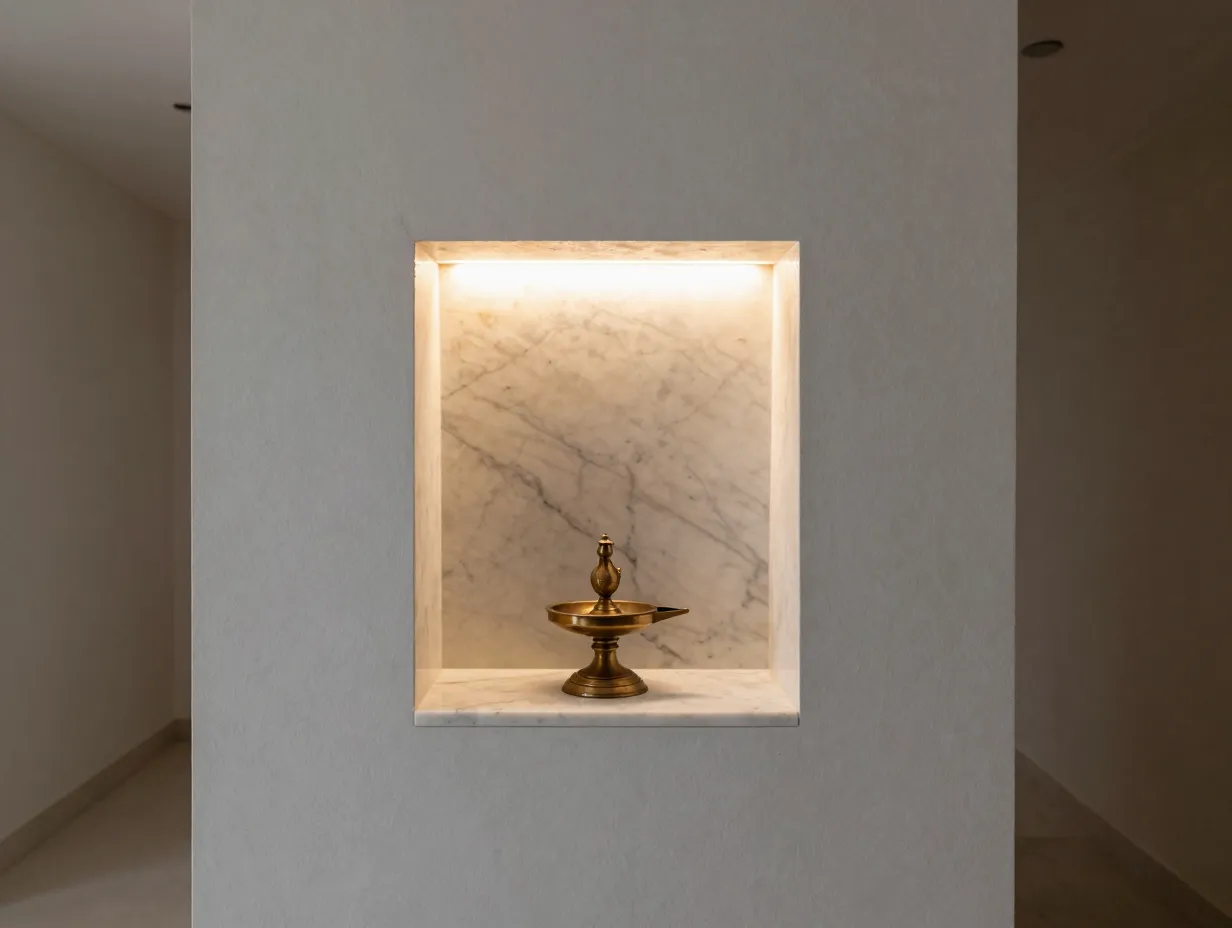
A recessed niche built directly into a wall is arguably the most elegant solution for a pooja space. The altar sits flush with the wall surface, creating a framed, gallery-like presentation. There are no protruding shelves to dust around, no freestanding units to move, and the overall effect is architectural rather than decorative.
Gharpedia’s guide on puja room design recommends recessed niches as one of the most space-efficient and visually refined options, particularly when the niche is lined with marble or stone [1]. The material inside the niche matters enormously, marble reflects light beautifully, while stone adds texture and warmth.
A recessed niche works best when:
- The wall is thick enough to accommodate a 12-18 inch recess
- The interior is lined with marble, stone, or a contrasting wood finish
- LED strip lighting is installed inside the niche to illuminate the idols
- A small arched or rectangular frame defines the opening
This is a renovation-level investment, but the result is a pooja space that feels permanent, intentional, and genuinely architectural. It cannot be moved or cluttered because it is part of the building itself.
6. The Glass-Front Mandir Cabinet
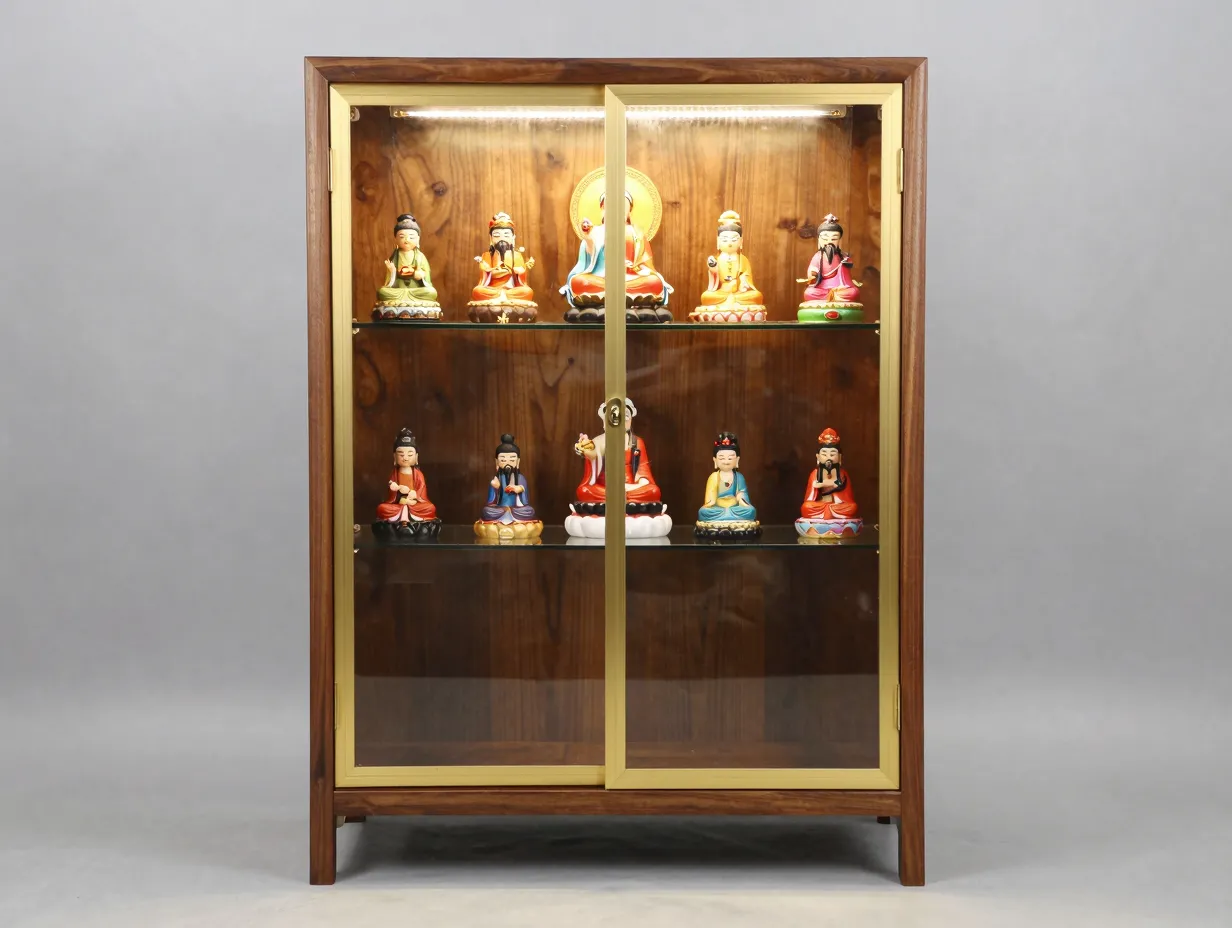
A glass-front mandir cabinet offers the best of both worlds: the idols and sacred objects are fully visible and beautifully displayed, while the interior is protected from dust. This is particularly practical in cities with high pollution levels or in homes with young children.
Cityfurnish’s pooja room decor guide highlights glass-front cabinets as a popular choice for families who want a clean, protected altar that still feels open and accessible [6]. The glass panels, whether clear, frosted, or etched with traditional patterns, add a layer of visual refinement.
Glass-front cabinet design tips:
- Choose etched or sandblasted glass with a floral or geometric pattern for a traditional feel
- Use clear glass with slim brass or gold-finish frames for a contemporary look
- Install interior LED lighting to illuminate the idols from above
- Include a lockable door if the cabinet is in a high-traffic area
The cabinet format also makes it easier to maintain a consistent arrangement of idols and offerings, since everything has a defined, enclosed space.
7. The Layered Lighting Design
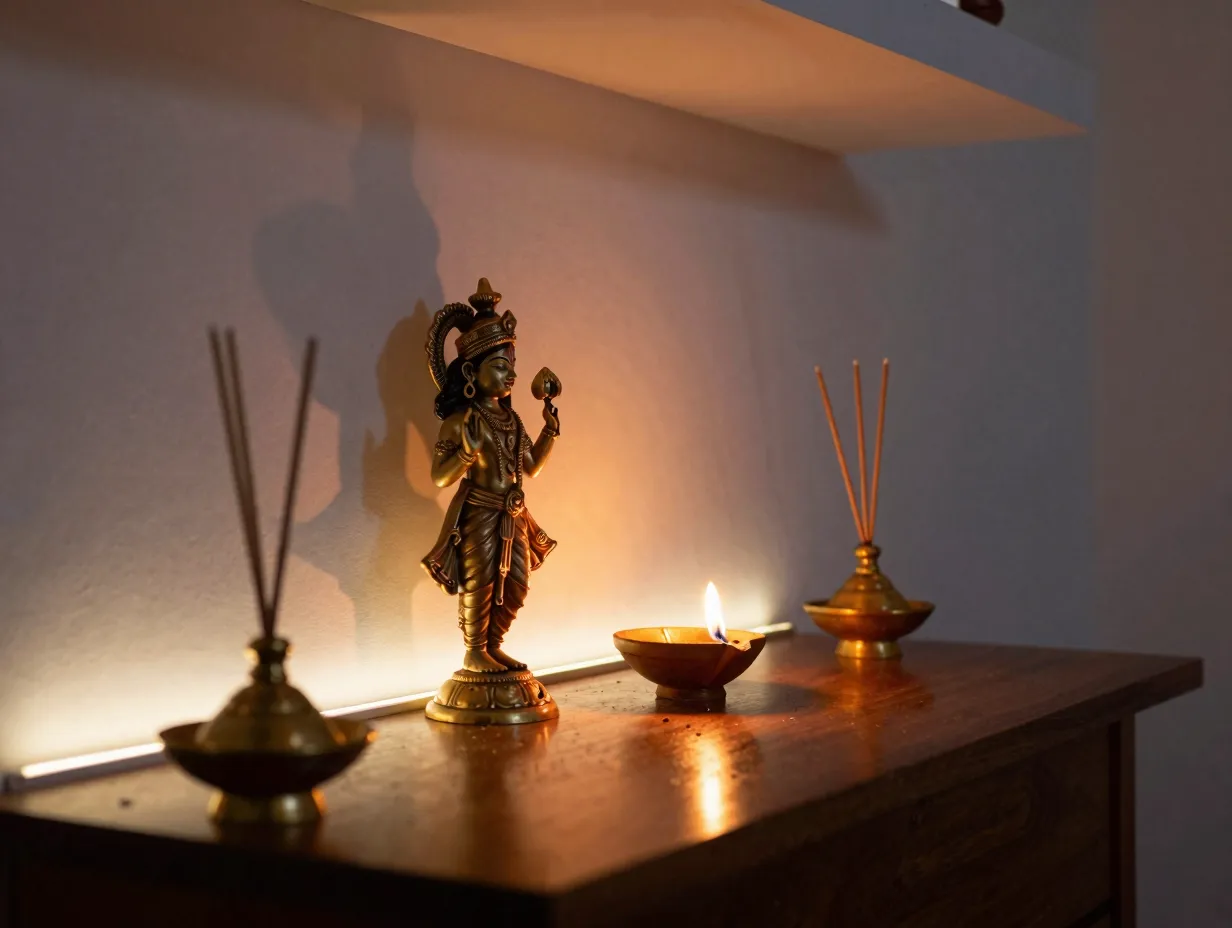
Lighting in a pooja room is not a single decision, it is a system. The most effective sacred spaces use at least three layers of light working together: ambient light for the overall room, task lighting for the altar surface, and accent lighting to highlight specific idols or architectural features.
DesignCafe’s pooja room design guide treats lighting as one of the most critical technical elements, recommending warm white LEDs (2700K-3000K colour temperature) for the primary altar light, combined with the natural flicker of diyas for the ritual layer [7]. Homestyler’s guide on modern pooja room design echoes this, noting that LED strip lights concealed beneath shelves create a floating, ethereal effect that enhances the sacred atmosphere [8].
The three-layer lighting system:
- Ambient light: A ceiling-mounted warm white light or a small chandelier for general illumination
- Task/altar light: LED strips beneath shelves or inside niches, pointed at idols
- Ritual light: Diyas, oil lamps, or candles for the actual puja ceremony
StudioMatrx explicitly warns against neon or coloured LED strips, which create a festive rather than sacred atmosphere [10]. The goal is warmth and calm, not spectacle.
8. The Marble and Stone Traditional Mandir
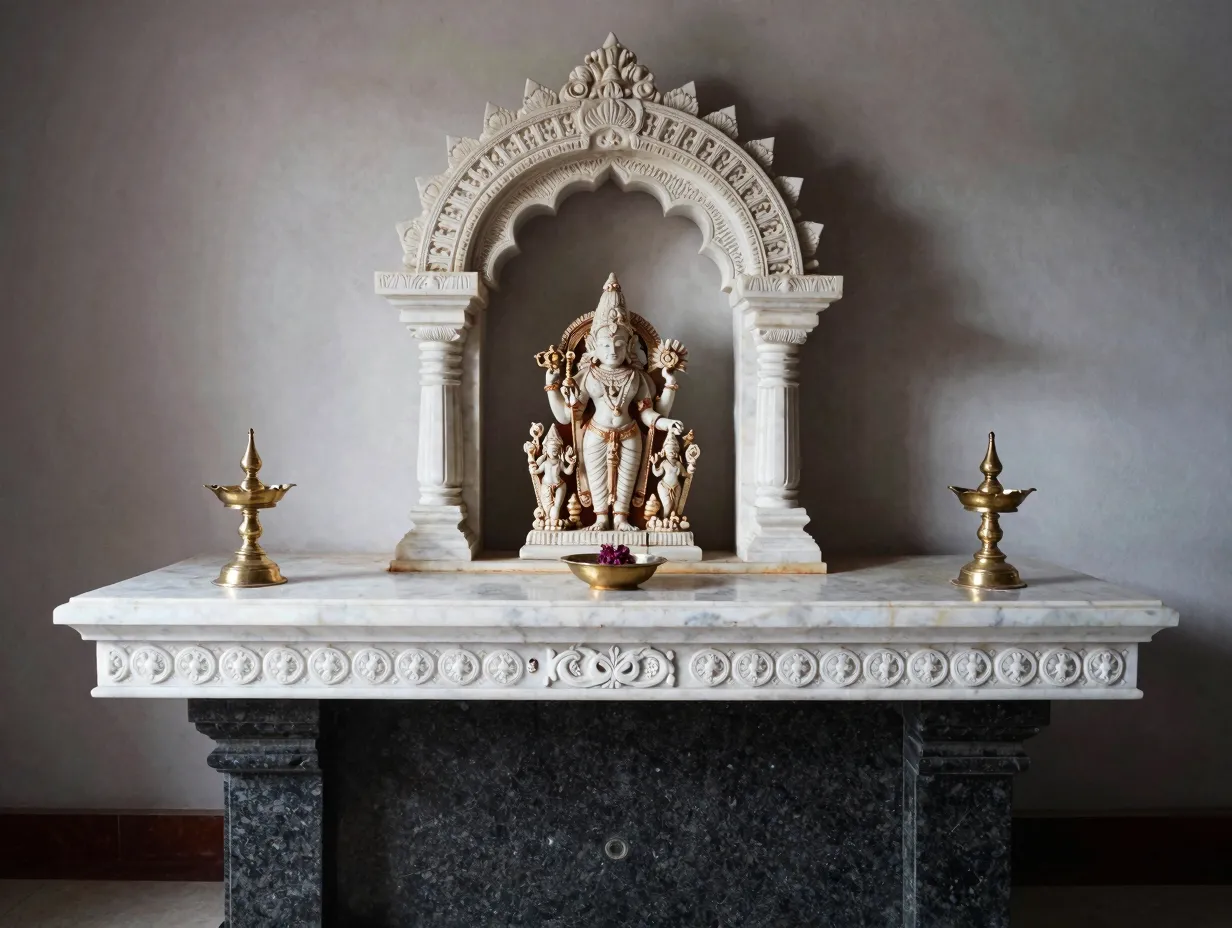
For homeowners who want a pooja room that connects directly to classical Indian temple architecture, marble and stone are the materials of choice. White Makrana marble, black granite, and Kota stone have been used in Indian sacred spaces for centuries. Bringing them into a home altar creates an immediate sense of permanence and reverence.
Gharpedia’s design guide notes that marble altars with carved stone detailing remain the gold standard for traditional pooja rooms, particularly in South Indian and Rajasthani home design traditions [1]. The material’s natural coolness, its reflective surface, and its association with temple architecture all contribute to a deeply sacred atmosphere.
Marble and stone design elements:
- White marble shelf with carved edge detail as the main altar surface
- Black granite base or step for offerings
- Stone-carved torana (arch) above the main idol
- Brass or copper fixtures for lamps and incense holders
The investment in natural stone is significant, but the material is virtually maintenance-free and improves with age. A marble altar in 2026 will look as beautiful in 2046.
9. The Multi-Purpose Pooja Unit with Hidden Storage
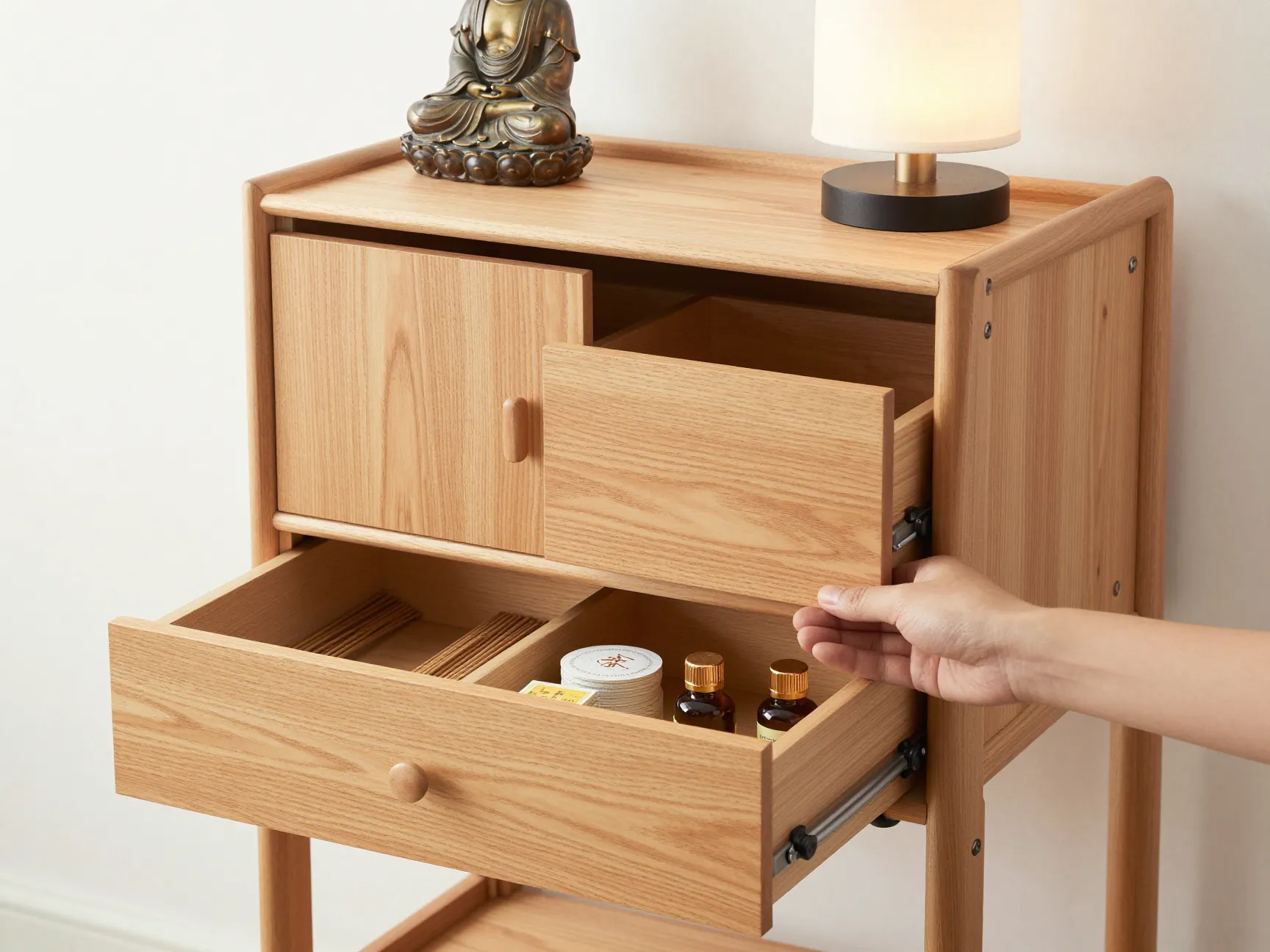
The final idea in this list of 9 Pooja Room Design Ideas for a Serene and Sacred Home Altar addresses the most common practical challenge: storing all the items needed for daily and festival puja without creating clutter. A multi-purpose unit combines the visible altar with concealed storage for puja essentials.
Nerolac’s 2026 update specifically highlights compact wall-mounted units with concealed drawers as a top trend [3]. The design principle is straightforward: everything needed for worship should be within arm’s reach but out of sight when not in use. Incense sticks, matchboxes, extra flowers, camphor tablets, small oil bottles, and festival decorations all have a home inside the unit.
Storage zones in a multi-purpose puja unit:
- Top open shelf: main idols and sacred images, always visible
- Middle closed cabinet: daily puja items (incense, camphor, flowers)
- Bottom drawer: festival items, extra decorations, spare diyas
- Side compartment: prayer books, mantras, small photo frames
Bricktab’s guide on Indian-style pooja room designs notes that the most functional modern mandirs are those that integrate storage seamlessly, so the visible altar surface remains clean and focused [2].
Common Mistakes to Avoid in Pooja Room Design
Even with the best intentions, several design errors consistently undermine a pooja space. Knowing them in advance saves both money and frustration.
Overcrowding the altar: More idols do not mean more devotion. A crowded altar is harder to clean, harder to light properly, and visually chaotic. Choose a small, meaningful collection of idols and sacred objects.
Using the wrong lighting colour: Cool white or blue-tinted LEDs (above 4000K) create a clinical, office-like atmosphere. Always use warm white LEDs in the 2700K-3000K range for sacred spaces [7].
Ignoring ventilation: Incense smoke and diya flames require adequate ventilation. A pooja room or niche without airflow will accumulate soot on walls and idols. Plan for at least one ventilation point.
Choosing high-maintenance materials: Highly polished marble shows every fingerprint. Dark wood shows dust. Choose materials that age gracefully and are easy to wipe clean.
Placing the altar in a high-traffic zone: A pooja space directly beside a television, in a busy corridor, or adjacent to a bathroom loses its sense of sanctity. Even in a small home, a degree of separation matters.
Conclusion
The 9 Pooja Room Design Ideas for a Serene and Sacred Home Altar covered in this guide range from the simplest wall-mounted shelf to a full marble niche, but they all share the same underlying principle: a pooja space should be intentional, calm, and easy to maintain.
Here are the most important next steps to take right now:
- Assess your available space. Measure the wall or corner you have in mind. Even 18 inches of wall width is enough for a meaningful altar.
- Choose one primary material. Whether it is teak wood, marble, or painted MDF, commit to a single dominant material and build the rest of the design around it.
- Plan your lighting first. Before finalising any shelf or cabinet, decide where your LED strips and diya placement will go. Lighting is the element most often added as an afterthought and most often regretted.
- Build in storage from the start. A beautiful altar that has nowhere to store its puja items will become cluttered within a week. Concealed drawers or cabinets are not optional, they are essential.
- Start simple and add over time. The best pooja rooms I have seen were not designed all at once. They grew gradually, with each element added thoughtfully. Start with a clean shelf and a single lamp, and let the space evolve.
A well-designed home altar does not just look beautiful. It changes how you begin and end each day, grounding you, centering you, and connecting you to something larger than the immediate demands of modern life. That is worth designing carefully.
References
[1] Puja Room Design – https://gharpedia.com/blog/puja-room-design/
[2] Indian Style Pooja Room Designs – https://bricktab.com/indian-style-pooja-room-designs/
[3] Puja Room Design Ideas – https://www.nerolac.com/colour-inspiration/puja-room-design-ideas.html
[4] 10 Latest Pooja Room Designs In 2025 – https://interiorxdesign.com/10-latest-pooja-room-designs-in-2025/
[5] Middle Class Indian Style Pooja Room Design – https://www.nobroker.in/interiors/design-guides/middle-class-indian-style-pooja-room-design/
[6] Pooja Room Decor Ideas – https://cityfurnish.com/blog/pooja-room-decor-ideas
[7] Pooja Room Design – https://www.designcafe.com/interior-design/pooja-room-design/
[8] How To Design A Modern Pooja Room – https://www.homestyler.com/article/how-to-design-a-modern-pooja-room
[9] Puja Room Design – https://www.customfurnish.com/blogs/puja-room-design/
[10] Pooja Room Design India – https://www.studiomatrx.org/guides/pooja-room-design-india