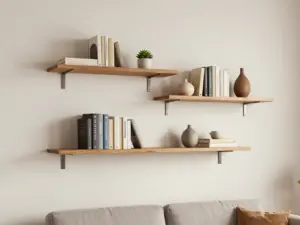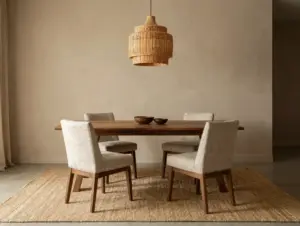
8 Elements For Creating A Cozy Vintage Apartment Vibe
A 2026 survey by Better Homes and Gardens found that thrifted and vintage decor is now the fastest-growing home styling trend, with searches for “vintage apartment aesthetic” up more than 60 percent year over year [3]. That number tells a story most of us already feel intuitively: there is something deeply comforting about a home that looks like it has lived a full life before you arrived.
Disclosure: This post contains affiliate links. As an Amazon Associate, we earn from qualifying purchases, and at no extra cost to you.
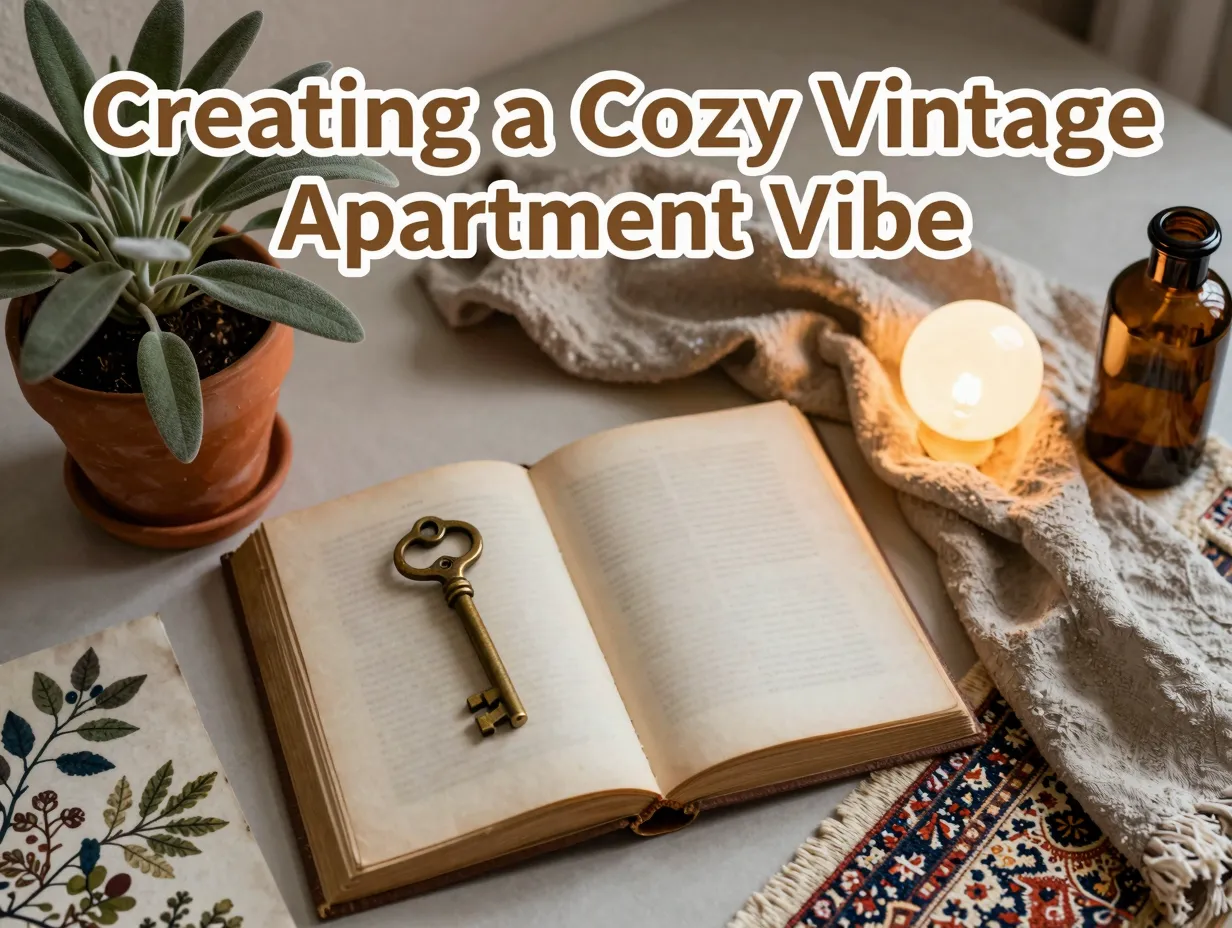
The 8 elements for creating a cozy vintage apartment vibe are not about recreating a museum or hoarding old furniture. They are about layering warmth, history, and personality into a space so that every corner feels intentional and inviting. Whether you live in a studio in a converted warehouse or a one-bedroom with original crown molding, these principles work across square footage and budget.
I have spent years helping friends transform sterile rental apartments into spaces that feel genuinely personal. The same eight elements keep appearing in every successful transformation, and I want to walk you through each one.
Key Takeaways
- A warm, nostalgic color palette is the single most powerful foundation for a vintage apartment aesthetic
- Patina-rich materials and curated thrifted furniture anchor the space and give it authentic character
- Layered textiles, warm lighting, and collected art work together to build depth and coziness
- Statement patterns and grandmillennial details add personality without overwhelming the room
- Consistency in tone and restraint in quantity are what separate a curated vintage space from a cluttered one
Why the 8 Elements For Creating A Cozy Vintage Apartment Vibe Actually Work
Before diving into the individual elements, it helps to understand the underlying logic. A cozy vintage apartment vibe is not a single style. It borrows from mid-century modern, cottagecore, grandmillennial, and European antique traditions. What unites these influences is a shared commitment to warmth, imperfection, and the sense that objects in the room were chosen over time rather than purchased all at once [4].
Interior designers call this “collected living.” The goal is a space that feels lived-in and layered, not staged. Each of the eight elements below contributes to that feeling in a specific and practical way. Used together, they create something greater than the sum of their parts.
1. A Warm, Nostalgic Color Palette
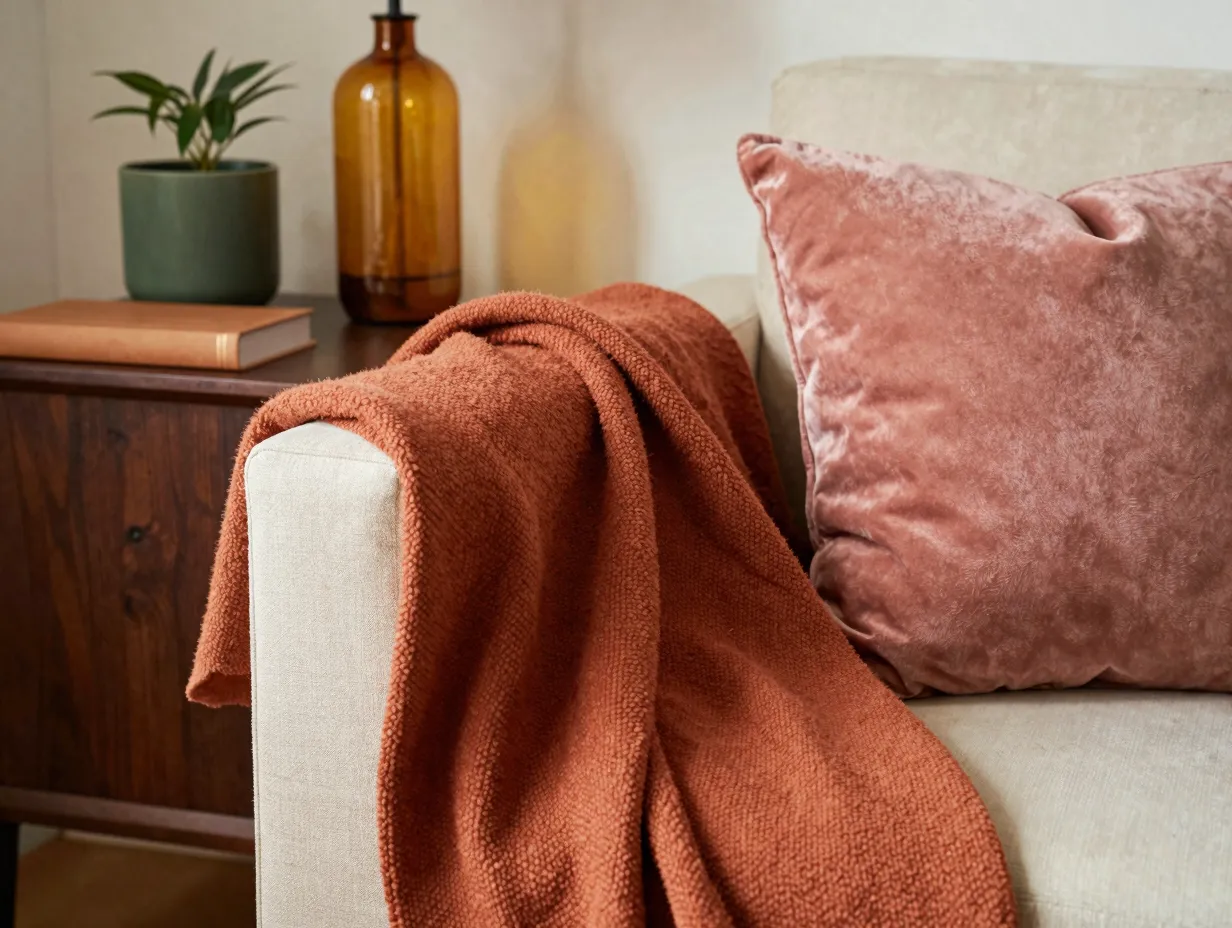
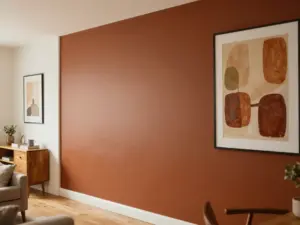
Color is the fastest way to shift the emotional temperature of a room. Cool grays and stark whites read as modern and minimal. Warm tones read as welcoming and old-world.
For a cozy vintage apartment vibe, build your palette around:
- Terracotta and rust – earthy, sun-warmed, and deeply nostalgic
- Dusty rose and mauve – soft without being saccharine
- Forest green and sage – grounded and botanical
- Cream, ivory, and warm white – far more livable than bright white
- Caramel, amber, and ochre – the colors of aged wood and candlelight
Good Housekeeping’s 2026 vintage decor trend report highlights warm amber and terracotta as the dominant palette choices for vintage-inspired interiors this year [1]. These tones work because they mimic the natural aging of organic materials. They make a room feel like it has been gently warmed by decades of afternoon sun.
Practical tip: You do not need to repaint every wall. A terracotta throw blanket, a dusty rose velvet cushion, and an amber glass lamp can shift the palette of an entire room without a drop of paint.
“Color is the invisible architecture of a room. Get the warmth right, and everything else falls into place.”
2. Patina-Rich Vintage Wood and Mixed Materials
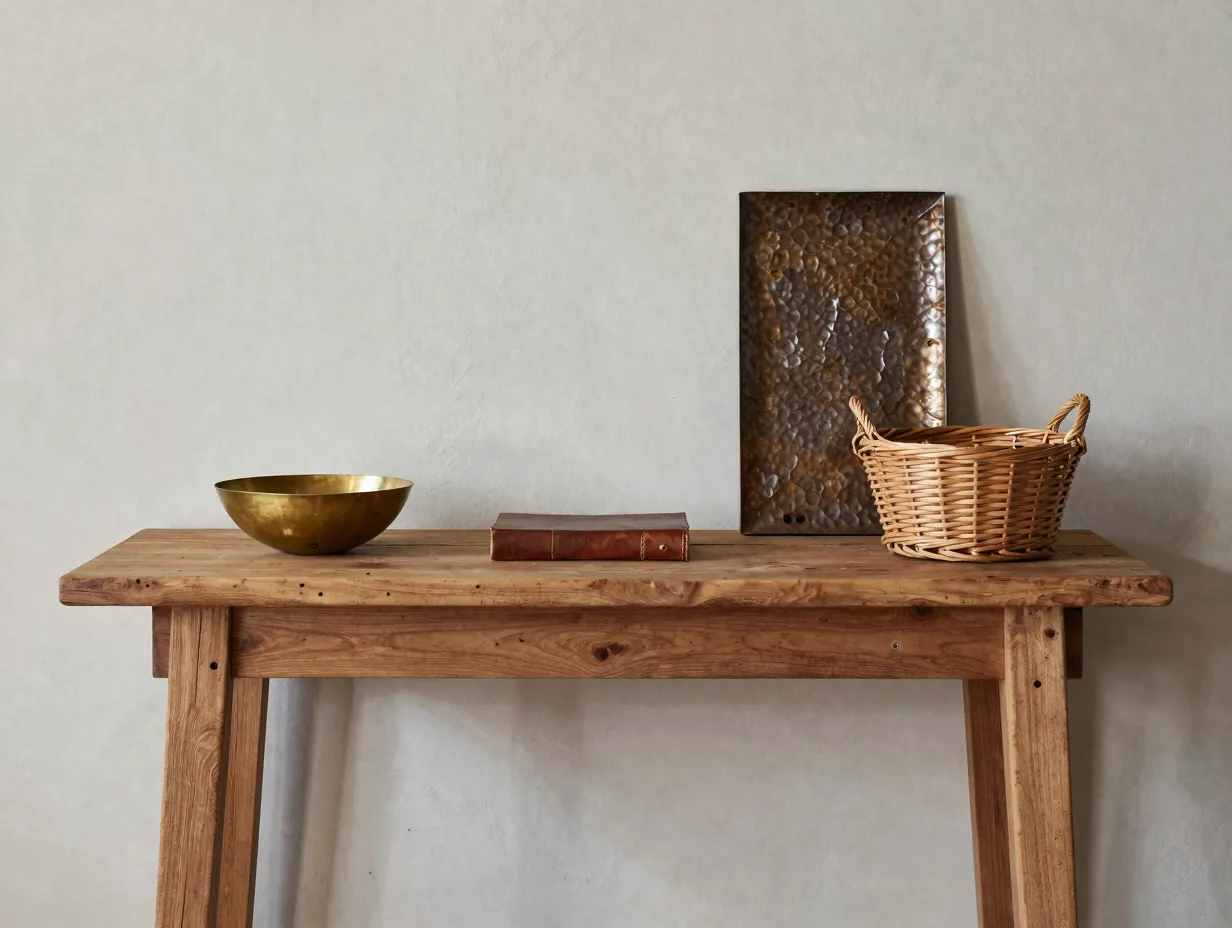
Nothing signals “vintage” more immediately than wood with visible age. Scratches, knots, grain variation, and the slight darkening that comes from years of use are not flaws. They are the material equivalent of a good story.
Look for:
- Reclaimed or solid wood furniture with visible grain and natural imperfections
- Brass and bronze hardware that has developed a warm, uneven patina
- Wicker and rattan in natural tones
- Aged leather in cognac, saddle brown, or forest green
- Cast iron and hammered metal for small accents
Mixing these materials is essential. A room furnished entirely in one material feels flat. The interplay between warm wood, cool metal, and soft textile is what creates visual richness [2].
One of my favorite moves is placing a reclaimed wood console table against a plaster wall and letting the natural variation in the wood grain do all the decorative work. No art needed. The material itself is the statement.
What to avoid: Furniture with a high-gloss lacquer finish or uniform, machine-perfect grain. These read as contemporary even when the shape is traditional.
3. Curated Thrifted and Vintage Furniture as Anchors
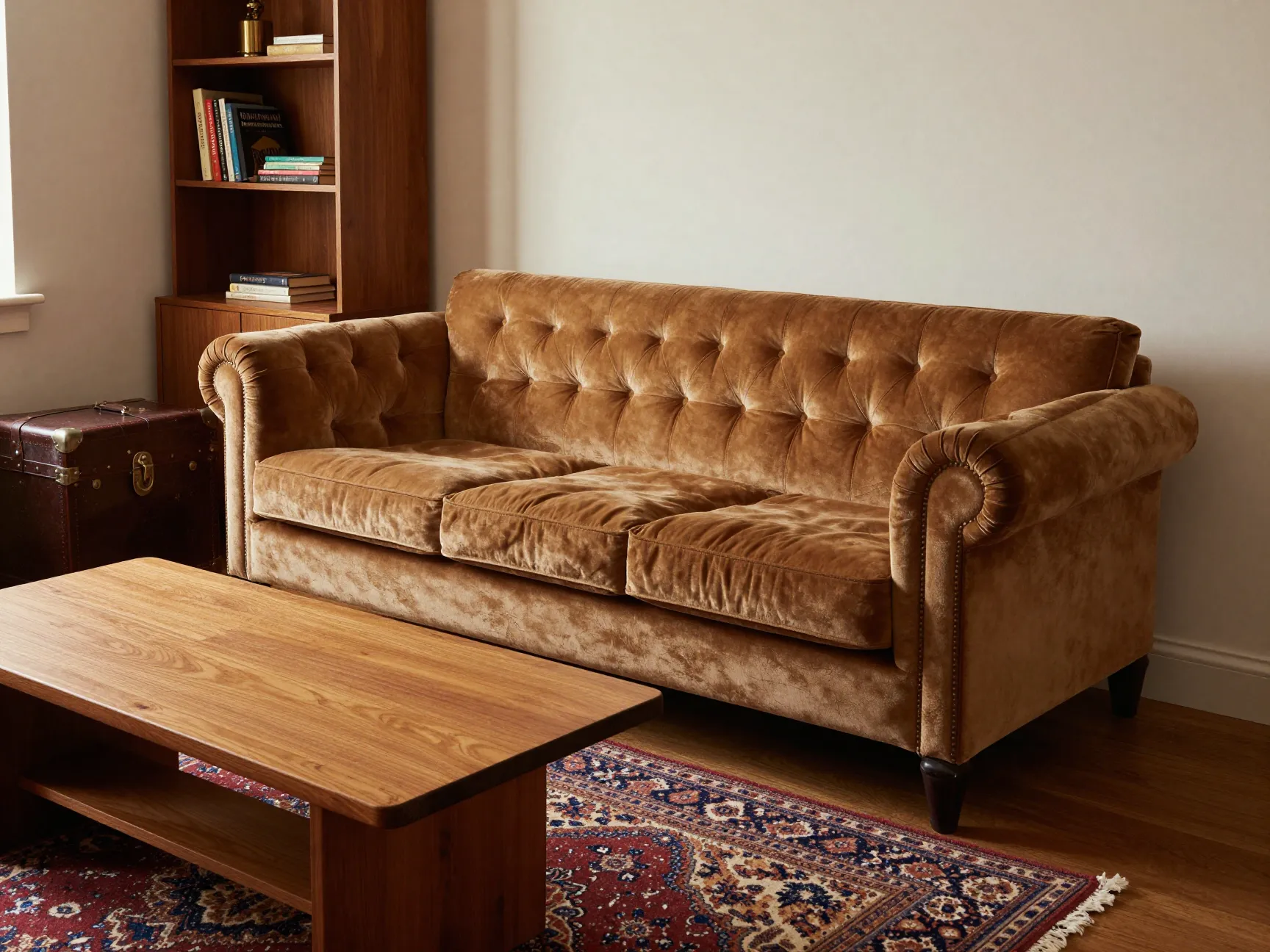
The anchor pieces in a vintage apartment are the large furniture items that define the room’s character. These are the items worth investing real time and patience in finding.
According to BHG’s thrifted and vintage decor trends for 2026, consumers are increasingly choosing one or two high-quality vintage anchor pieces over entire matching furniture sets [3]. A single well-chosen vintage sofa or armchair can do more for a room’s atmosphere than a full suite of new furniture.
The best anchor pieces to look for:
| Furniture Type | What to Look For | Where to Find It |
|---|---|---|
| Sofa | Tufted velvet, camelback silhouette, rolled arms | Estate sales, Facebook Marketplace |
| Armchair | Wingback, club chair, or rattan | Thrift stores, antique markets |
| Coffee table | Solid wood, trunk, or leather-topped | Flea markets, Craigslist |
| Bookcase | Open shelving with visible wood grain | Habitat ReStores, estate sales |
| Dining table | Pedestal base, turned legs, butcher block | Antique dealers, eBay |
The key word here is “curated.” You are not filling a room with every interesting old thing you find. You are selecting two or three pieces that speak to each other in terms of era, material, or color, and building the room around them [9].
4. Layered Textiles: Heritage Fabrics, Rugs, and Cozy Upholstery
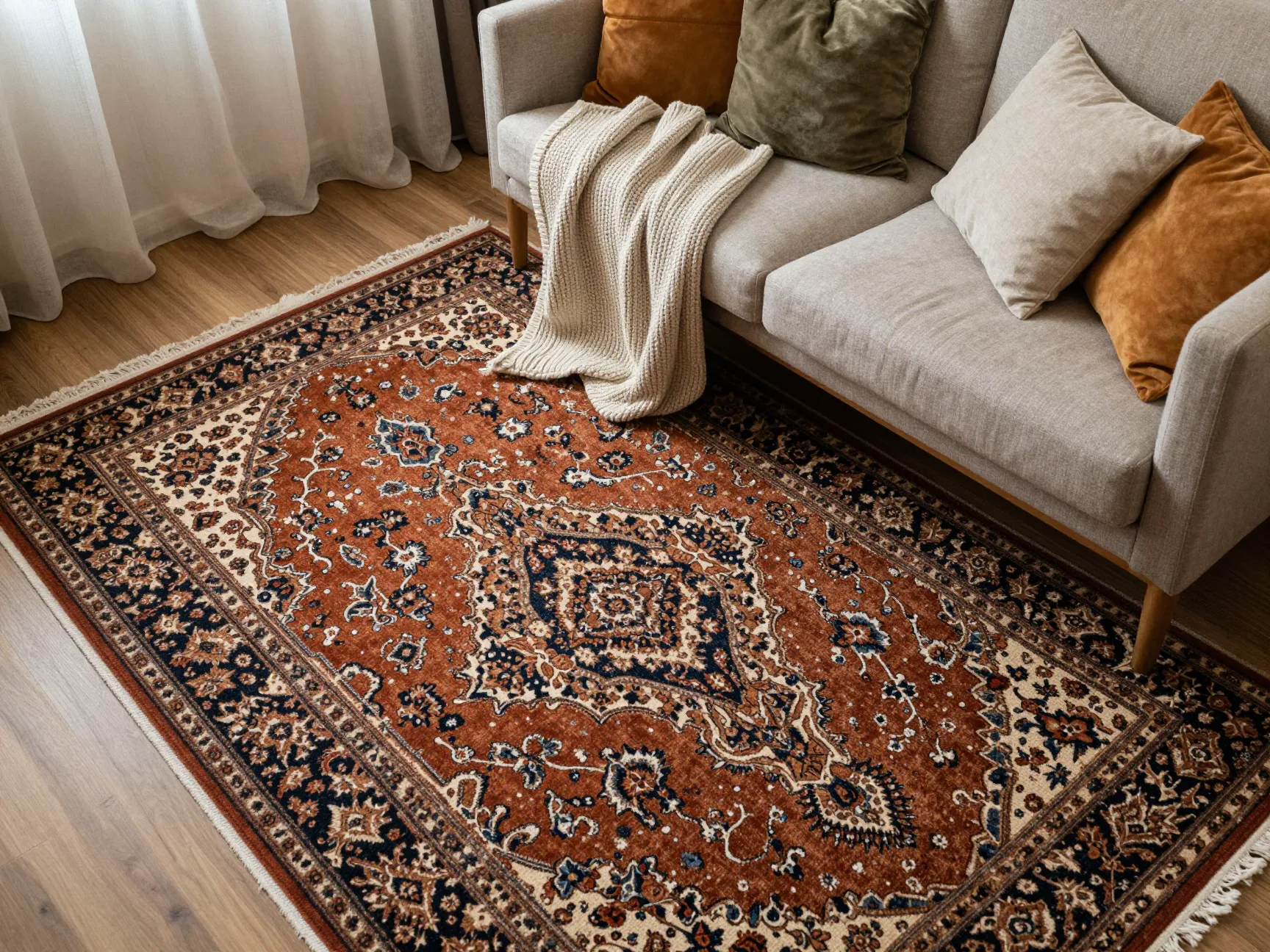
Textiles are the single most effective tool for adding warmth and coziness to any space. In a vintage apartment, layering is the operative word.
The layering formula:
- Start with a large area rug in a traditional pattern (Persian, Turkish, or kilim)
- Add a second smaller rug on top for depth if the space allows
- Layer throw pillows in at least three different but complementary fabrics
- Drape a chunky knit or woven throw over the sofa or armchair
- Use linen or velvet curtains that pool slightly on the floor
Heritage fabrics are particularly important. Linen, cotton velvet, wool, and tapestry weaves all carry a sense of age and craft that synthetic fabrics cannot replicate [8]. Even if the item is new, a linen pillow cover reads as timeless in a way that polyester never will.
A Persian or Turkish-style rug is arguably the single most transformative purchase you can make for a vintage apartment. It grounds the room, adds color and pattern, and immediately communicates that the space has been thoughtfully assembled over time [5].
Pro tip: Do not match your textiles too precisely. Slight variations in tone and pattern tension create the “collected over time” feeling that is central to the vintage aesthetic.
5. Warm, Layered Lighting with Vintage Silhouettes
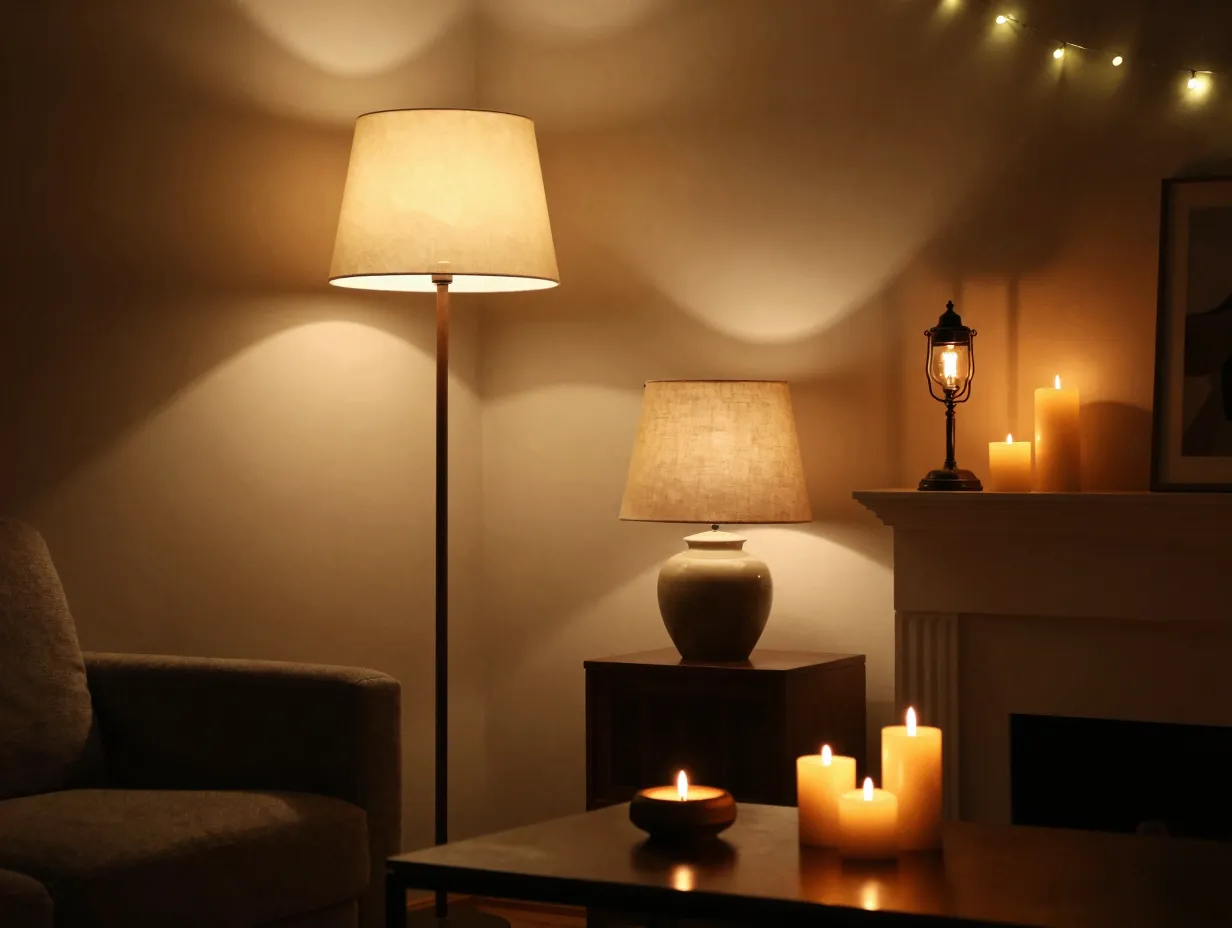
Lighting is where many vintage apartment attempts fall short. A single overhead fixture, especially a recessed LED or a flat flush-mount, will undermine every other vintage element in the room.
The goal is layered, warm light from multiple sources at varying heights.
The vintage lighting toolkit:
- Edison bulb floor lamps with fabric shades in cream or amber
- Table lamps with ceramic, brass, or glass bases and linen shades
- Candles in clusters on mantels, coffee tables, and bookshelves
- String lights with warm white bulbs for bedrooms and reading nooks
- Sconces with vintage silhouettes if your walls allow
Smellafterrain’s guide to warm apartment aesthetics emphasizes that the color temperature of your bulbs matters as much as the fixture itself [8]. Always choose bulbs in the 2200K to 2700K range. These cast the amber, candlelight-adjacent glow that makes a room feel genuinely warm rather than just well-lit.
Brocante Deco’s 2026 vintage renaissance report notes that antique-style lamp silhouettes, including pharmacy lamps, banker’s lamps, and art nouveau floor lamps, are among the most sought-after vintage lighting styles this year [4].
“The difference between a cozy room and a cold one is often just the color temperature of the light.”
Never use: Cool white or daylight bulbs (5000K-6500K) in a vintage-styled space. They will make even the most carefully chosen vintage furniture look clinical.
6. Vintage Art, Curiosities, and “Collected” Walls
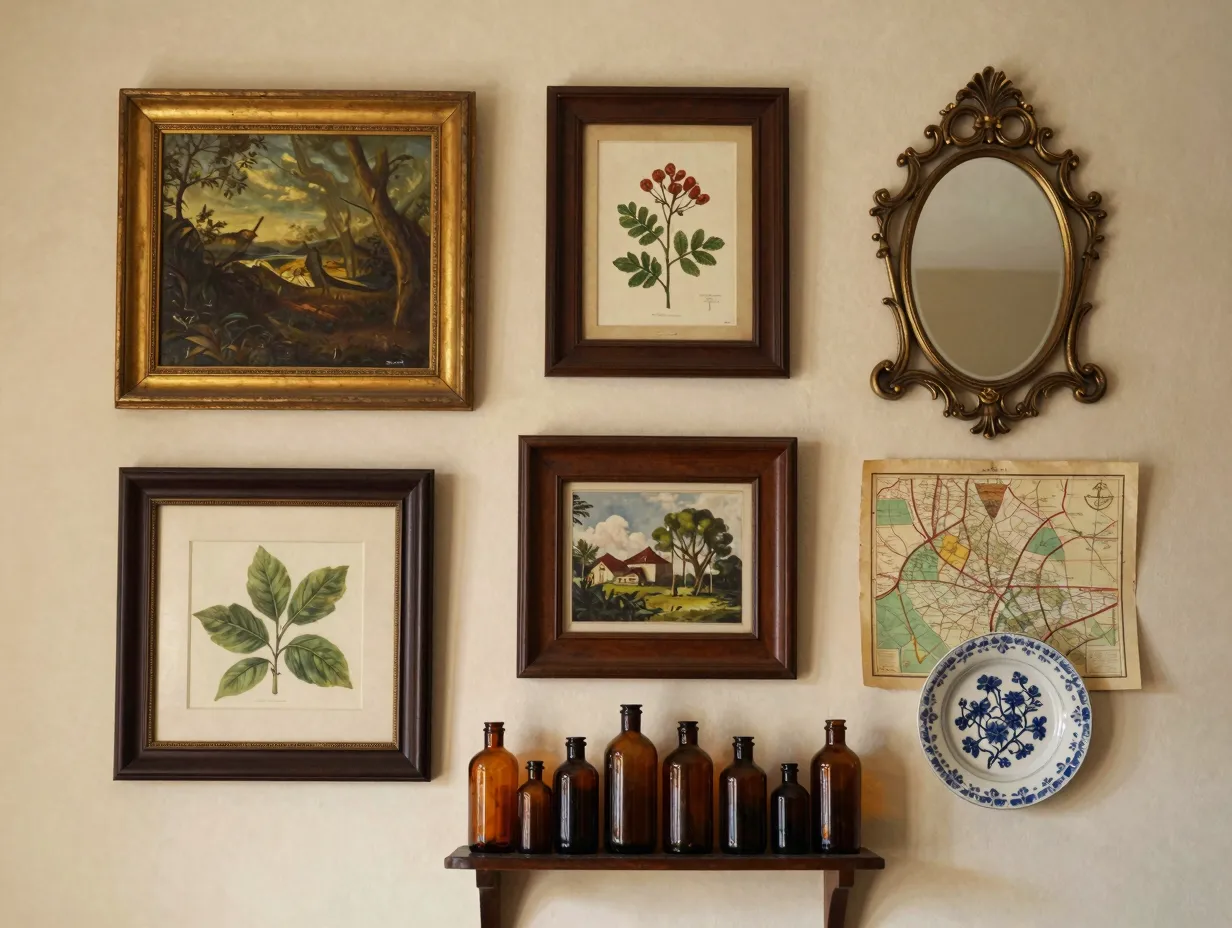
Walls in a vintage apartment should feel like a slow accumulation of things that matter, not a carefully planned gallery installation. The distinction is subtle but important.
A “collected” wall includes:
- Oil paintings or prints in mismatched gilded or dark wood frames
- Botanical and nature illustrations from old encyclopedias or calendars
- Vintage maps and travel ephemera
- Family photographs in antique frames
- Small mirrors with ornate frames scattered among the art
- Ceramic plates hung as decorative objects
- Taxidermy or natural history objects for those who appreciate them
The frames themselves are as important as what is inside them. Mixing ornate gilded frames with simple dark wood frames and the occasional distressed white frame creates the layered, over-time quality that makes a wall feel genuinely collected rather than purchased as a set [9].
Breaking Canvas’s guide to vintage apartment decor ideas recommends starting with one large anchor piece, such as an oil painting or oversized botanical print, and building outward from there rather than trying to plan the entire wall at once [9].
Curiosities and objects: Beyond the walls, a vintage apartment benefits from small collections of interesting objects. A cluster of amber glass bottles on a windowsill. A stack of weathered hardcover books on a side table. A brass compass, a ceramic figurine, a tarnished silver tray. These are the details that make a space feel inhabited and personal.
7. Statement Patterns and Grandmillennial Details, Used in Moderation
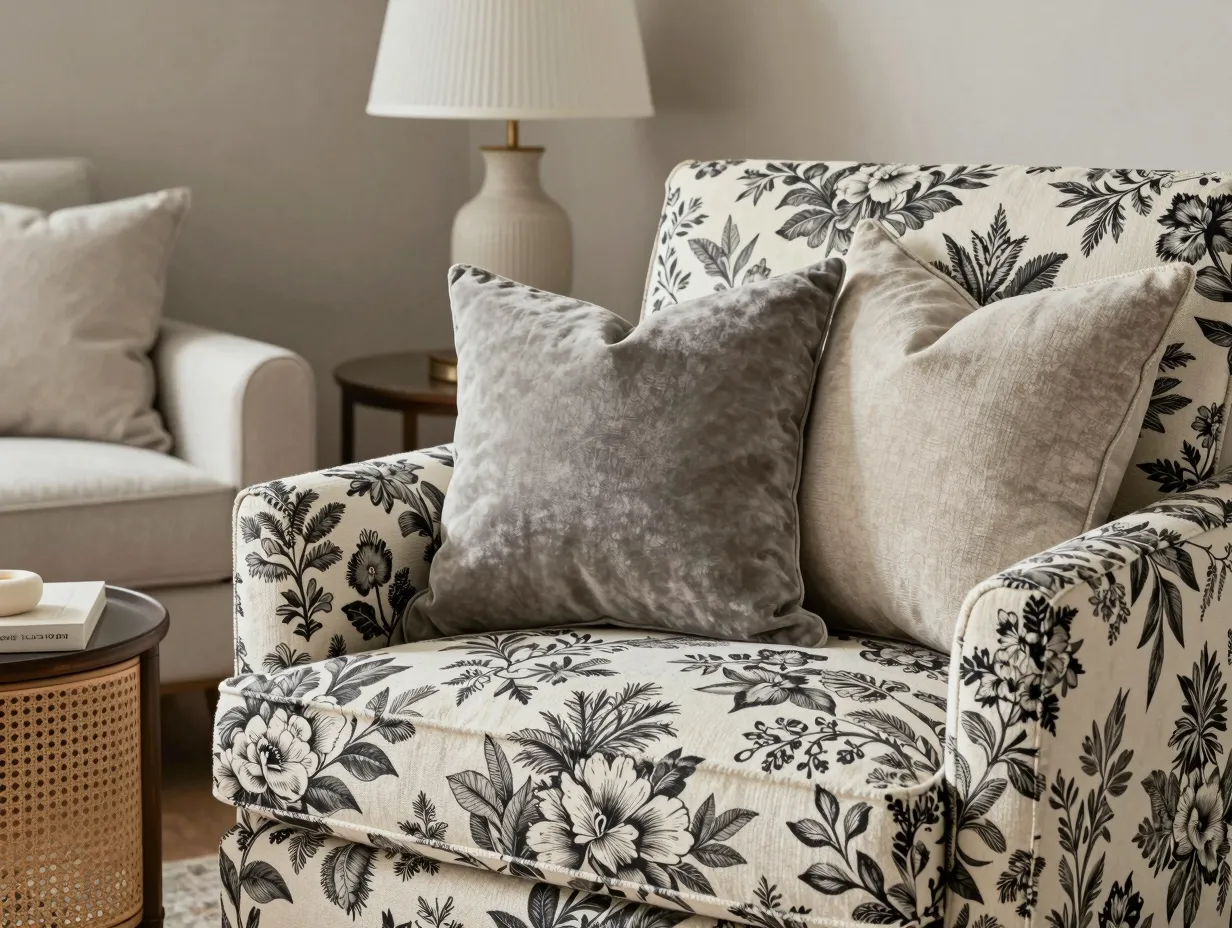
The grandmillennial aesthetic, which blends traditional, maximalist, and vintage sensibilities in a way that feels fresh rather than dated, has been one of the defining interior design movements of the mid-2020s [6]. In 2026, it continues to evolve toward greater restraint and sophistication.
The core idea is to use bold, traditional patterns as deliberate accents rather than as wallpaper-to-upholstery-to-rug maximalism.
Grandmillennial details that work in a vintage apartment:
- Floral wallpaper on a single accent wall rather than all four
- Chinoiserie or toile fabric on one chair or a set of cushions
- Needlepoint or tapestry pillows as accent pieces
- Ruffled or pleated lamp shades in a traditional fabric
- Cane and rattan furniture details on otherwise simple pieces
- Fringe and tassel trim on throws and curtains
MSN’s expert roundup of vintage design trends for 2026 notes that the most successful grandmillennial interiors use pattern as punctuation rather than as the dominant language of the room [6]. One floral chair in a room of solid-colored textiles reads as intentional and charming. Four floral items in the same room can read as overwhelming.
The moderation rule: For every patterned textile in a room, have at least two solid-colored ones. This ratio keeps the space feeling curated rather than busy.
8. Personal Collections and the Art of Intentional Clutter
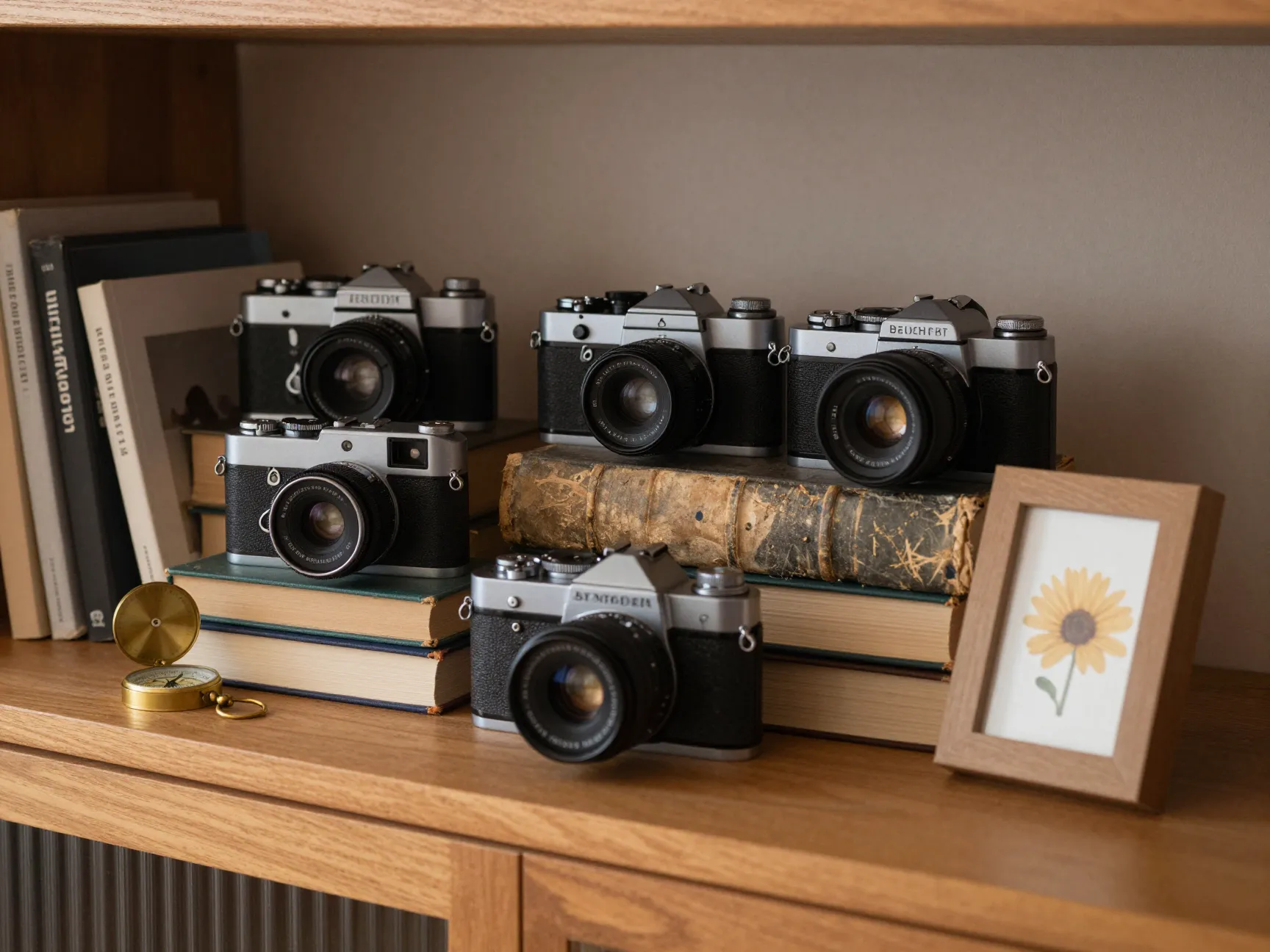
The final element is the one that most distinguishes a truly cozy vintage apartment from one that is merely vintage-styled. Personal collections transform a decorated space into a lived-in home.
The difference between clutter and intentional clutter is curation and grouping. Random objects scattered across every surface feel chaotic. The same objects grouped by color, material, or theme feel deliberate and interesting.
How to display collections effectively:
- Group objects in odd numbers (three, five, or seven items per cluster)
- Vary the heights within each grouping using books, small stands, or risers
- Connect items within a group by at least one shared quality: color, material, era, or subject
- Leave breathing room between groupings so the eye can rest
- Rotate collections seasonally to keep the space feeling fresh
Homestylevibe’s guide to old vintage apartment styling emphasizes that the most effective vintage interiors tell a story through their objects [2]. A collection of vintage cameras on a shelf does not just look interesting. It suggests a person who values craft, history, and the act of seeing. That narrative quality is what makes a vintage apartment feel genuinely personal rather than generically styled.
What counts as a personal collection:
- Vintage cameras, radios, or typewriters
- Ceramic or pottery pieces gathered from travels
- Vintage books organized by spine color
- Pressed flowers or botanical specimens in frames
- Antique keys, locks, or hardware
- Vintage postcards or travel ephemera pinned to a corkboard
The countess in the kitchen’s approach to cozy vintage apartment styling puts it well: the goal is a home that looks like it belongs to someone specific, not to a style category [5].
Putting the 8 Elements For Creating A Cozy Vintage Apartment Vibe Together
Understanding each element individually is useful. Knowing how to combine them is where the real skill lies.
A practical starting sequence:
- Establish your warm color palette first. Paint if you can, layer textiles if you cannot.
- Source one or two anchor furniture pieces in wood or velvet with genuine vintage character.
- Add a large area rug with a traditional pattern to ground the main living space.
- Layer your lighting by adding at least two table or floor lamps and removing or covering harsh overhead fixtures.
- Begin building your collected wall with a few key pieces and add to it over time.
- Introduce grandmillennial pattern through one or two textile accents.
- Start a small personal collection and display it intentionally.
- Assess the overall patina and material mix and fill gaps with brass, rattan, or aged leather accents.
This sequence works because it builds from the largest, most foundational elements (color and furniture) toward the smallest and most personal (collections and curiosities). Each step reinforces the ones before it.
Budget reality check:
You do not need to spend a lot of money to achieve this aesthetic. In fact, the vintage apartment vibe is one of the most budget-friendly interior styles available, precisely because its best sources are thrift stores, estate sales, and flea markets. A $15 thrifted lamp with a new shade can outperform a $200 mass-market alternative in terms of character and warmth.
Conclusion
The 8 elements for creating a cozy vintage apartment vibe come down to a single underlying principle: choose warmth over perfection and character over coordination. A warm color palette, patina-rich materials, curated vintage furniture, layered textiles, thoughtful lighting, collected walls, restrained pattern use, and personal collections each contribute to a space that feels genuinely lived-in and deeply personal.
Your actionable next steps:
- Audit your current space and identify which of the eight elements is most absent. Start there.
- Visit one thrift store or estate sale this month with a specific anchor piece in mind.
- Replace at least one cool-white bulb in your main living space with a 2200K-2700K warm bulb today.
- Start a single small collection of objects connected by one shared quality and display them as a group.
- Add one heritage fabric textile, whether a linen pillow, a wool throw, or a Persian-style rug, to your most-used room.
The cozy vintage apartment vibe is not a destination you arrive at all at once. It is a space you build slowly, one intentional choice at a time. That process of gradual accumulation is, fittingly, exactly what the aesthetic is meant to celebrate.
References
[1] Vintage Decor Trends 2026 – https://www.goodhousekeeping.com/home/decorating-ideas/g71073749/vintage-decor-trends-2026/
[2] Old Vintage Apartment – https://homestylevibe.com/2025/01/26/old-vintage-apartment/
[3] Thrifted And Vintage Decor Trends 2026 – https://www.bhg.com/thrifted-and-vintage-decor-trends-2026-11875982
[4] 2026 Interior Design Trends The Vintage Renaissance – https://brocantedeco.com/en/blog/17/2026-interior-design-trends-the-vintage-renaissance.html
[5] Cozy Vintage Apartment – https://www.countessinthekitchen.com/cozy-vintage-apartment/
[6] 7 Vintage Design Trends That Experts Predict Will Be Everywhere In 2026 – https://www.msn.com/en-us/lifestyle/home-and-garden/7-vintage-design-trends-that-experts-predict-will-be-everywhere-in-2026/ar-AA1SBMDx
[8] Warm Apartment Aesthetic 12 Secrets To Cozy Bliss – https://www.smellafterrain.com/warm-apartment-aesthetic-12-secrets-to-cozy-bliss/
[9] 18 Vintage Apartment Decor Ideas For A Cozy Home – https://breakingcanvas.com/18-vintage-apartment-decor-ideas-for-a-cozy-home/