9 Jaw-Dropping Unique Bedroom Design Concepts You Won’t See Anywhere Else
Only 26% of adults report being fully satisfied with their bedroom’s design, yet the bedroom is the one room in a home where people spend roughly a third of their lives. That gap between dissatisfaction and action is where great design lives. If you have been scrolling through the same beige-wall, white-linen setups and feeling underwhelmed, the 9 Jaw-Dropping Unique Bedroom Design Concepts You Won’t See Anywhere Else covered in this guide will change how you think about your most personal space.
Disclosure: This post contains affiliate links. As an Amazon Associate, we earn from qualifying purchases, and at no extra cost to you.
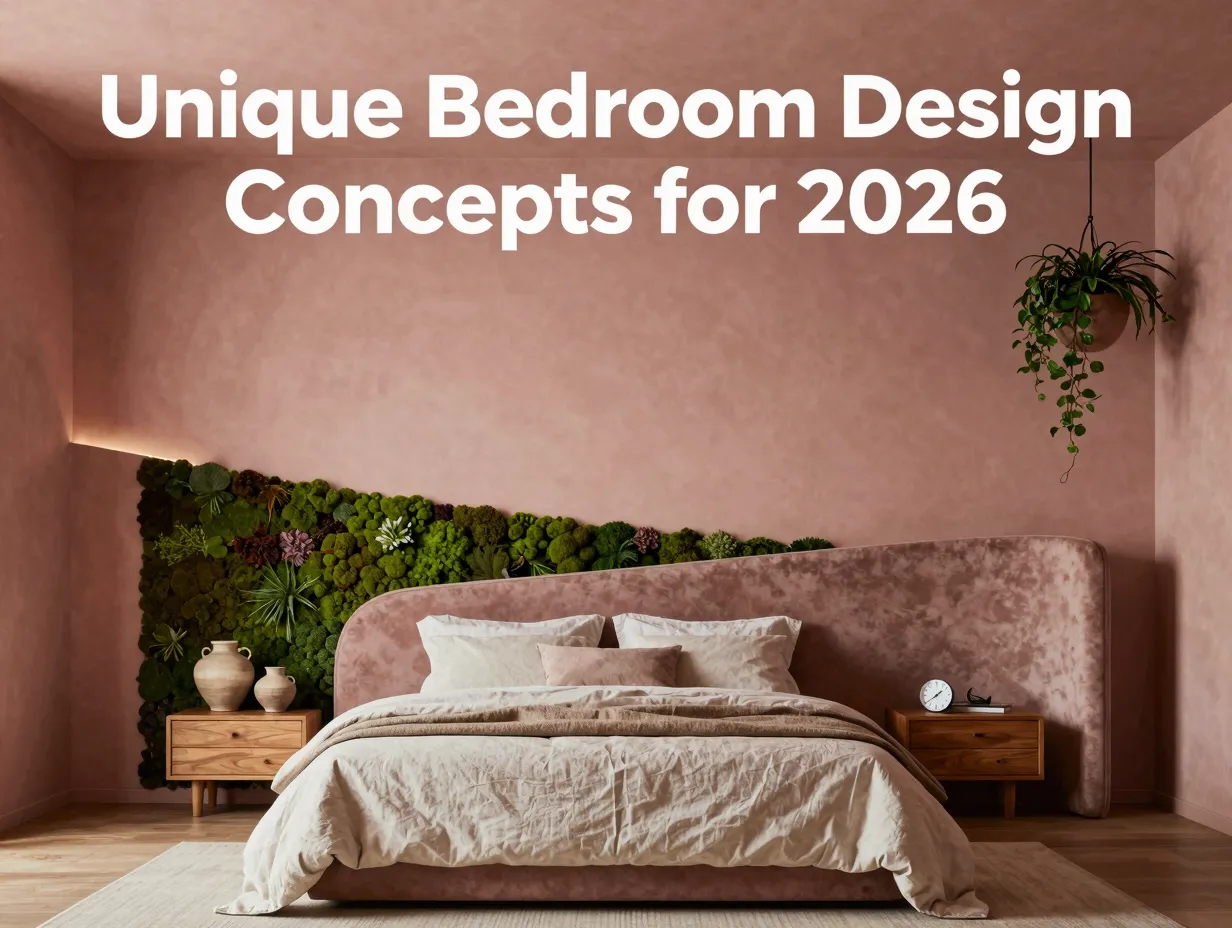
In 2026, bedroom design has moved far beyond simple decoration. Designers are now treating the bedroom as a full sensory environment, a place that actively supports rest, identity, and emotional well-being. From immersive cocoon rooms to analog tech-free sanctuaries, the ideas on this list push boundaries while staying livable and deeply personal.
Key Takeaways
- Cocoon and earthy layering concepts dominate 2026 bedroom design, prioritizing restorative comfort over visual drama
- Color-drenching, saturating an entire room in one tonal hue, creates powerful, immersive spaces that feel curated rather than chaotic
- Warm minimalism with natural materials is replacing cold, gray aesthetics for a softer, more livable feel
- Statement beds with sculptural frames, canopy structures, and illuminated headboard walls serve as the visual and emotional anchor of any unique bedroom
- Biophilic design has evolved from a few potted plants to fully integrated living environments that genuinely affect sleep quality and mood
What Makes a Bedroom Truly Unique in 2026
Before diving into the nine concepts, it helps to understand what separates a genuinely unique bedroom from one that simply looks different on a mood board. A truly distinctive bedroom does three things at once: it reflects the personality of the person sleeping in it, it serves a functional purpose beyond just holding a bed, and it creates a mood that is consistent from the ceiling to the floor.
The 9 Jaw-Dropping Unique Bedroom Design Concepts You Won’t See Anywhere Else in this article were selected because each one delivers on all three fronts. They are not novelty ideas. They are design systems, coherent approaches you can apply to a real room with real materials and a real budget range.
The 9 Concepts Explored in Full
1. The Earthy Cocoon Bedroom
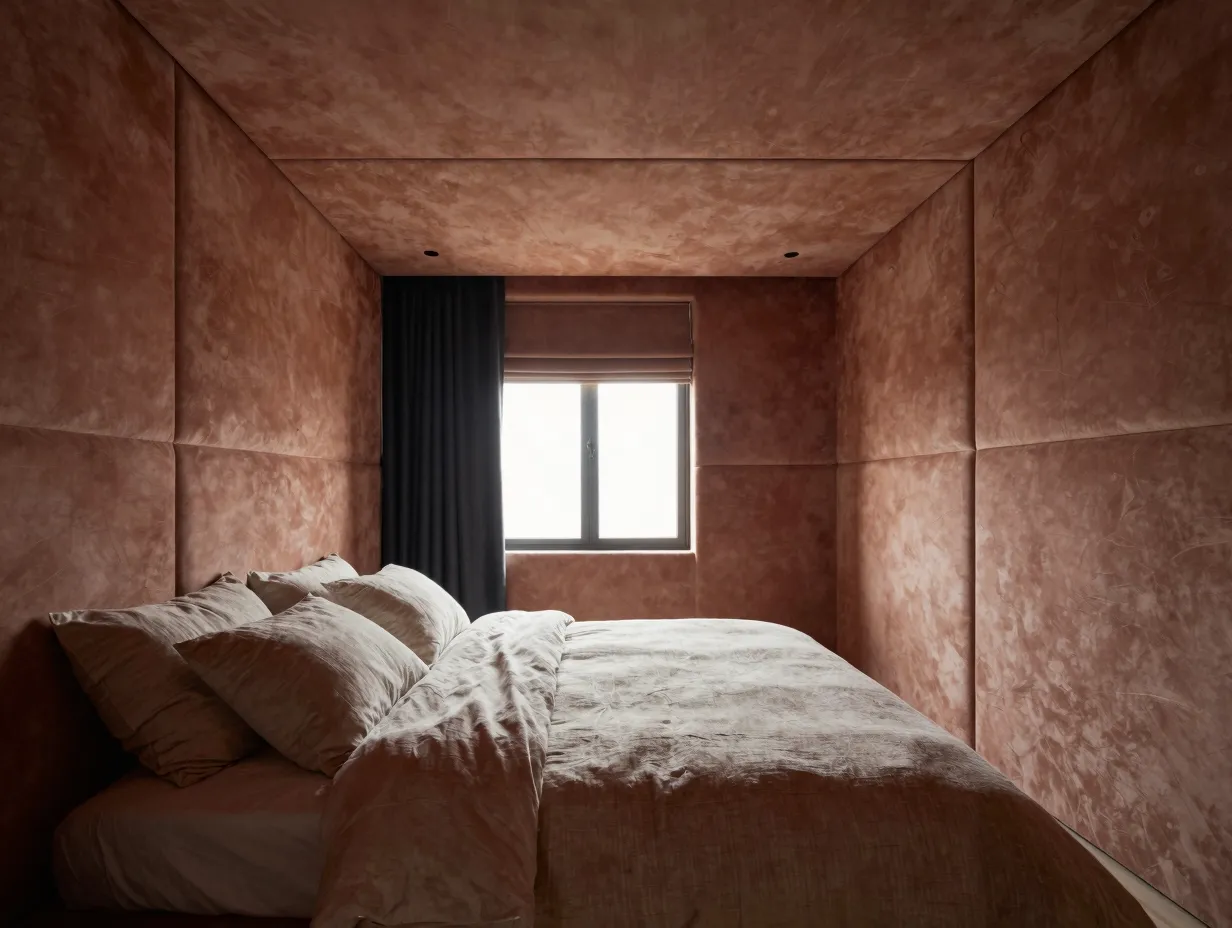
The earthy cocoon concept is arguably the defining bedroom idea of 2026. Designers describe it as a room that wraps around you rather than simply containing you [1]. Every surface, walls, ceiling, floor, and furniture, is treated with soft, padded, or upholstered materials that absorb sound and light in equal measure.
What defines this concept:
- Padded fabric wall panels in warm neutrals like oat, clay, and sand
- Blackout layering using both curtain systems and Roman blinds
- Warm-dim lighting that shifts from 3000K in the evening to 1800K at night
- Plush, oversized bedding with multiple textile layers
- Low-profile furniture that keeps the eye close to the ground
The cocoon bedroom is not about luxury for its own sake. It is about sensory regulation. I spoke with a designer in early 2026 who described a client project where replacing hard plaster walls with upholstered panels reduced the client’s average time to fall asleep by nearly 20 minutes. The science behind soft surfaces and sleep latency is real, and the cocoon concept takes it seriously [9].
“The bedroom should feel like the world has ended outside and none of it matters in here.”, a sentiment shared by multiple designers in 2026 trend reports [1]
2. Full Color-Drenching in a Single Saturated Hue
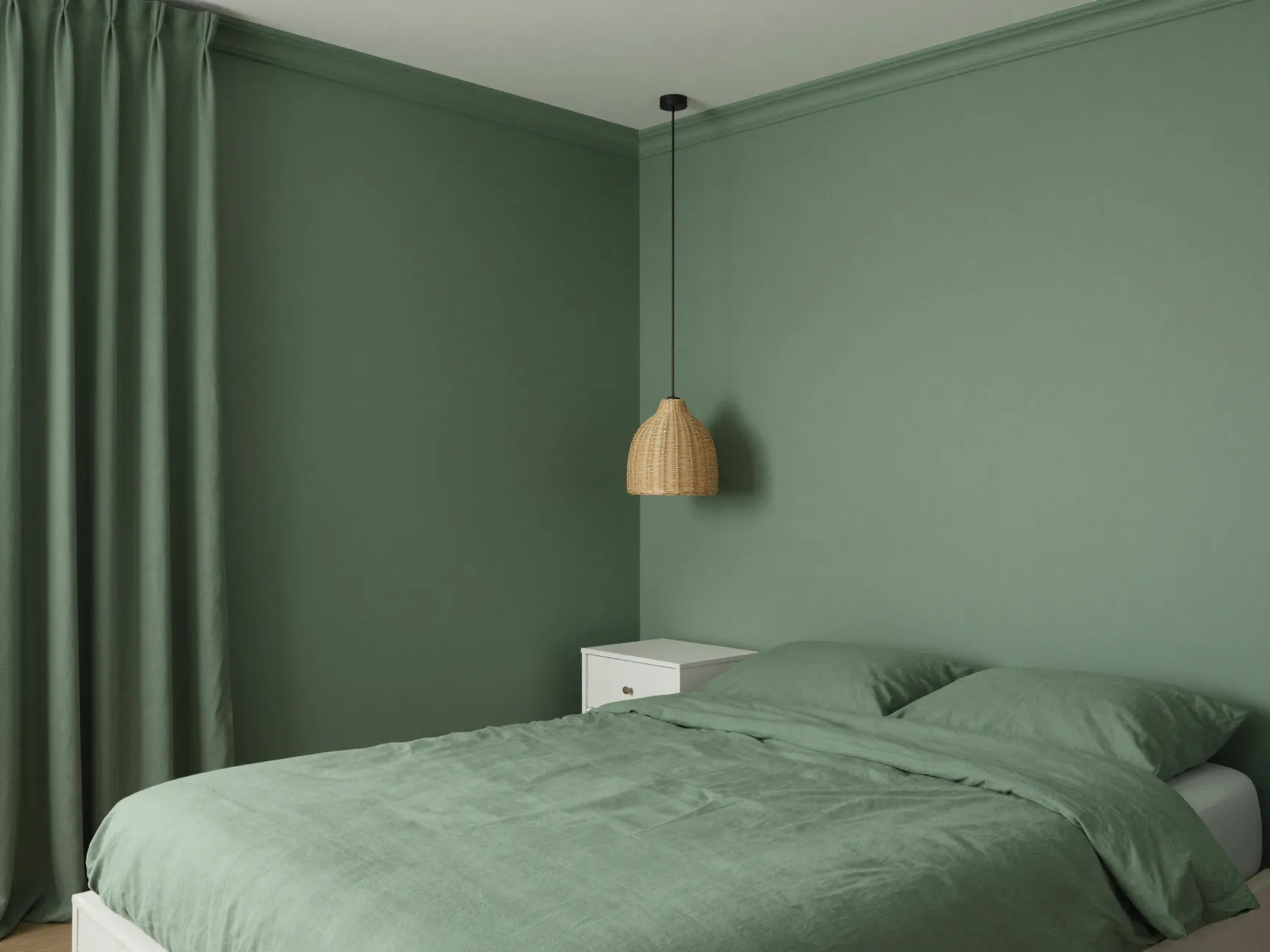
Color-drenching means painting, papering, and furnishing an entire room in one tonal color family, walls, trim, ceiling, curtains, bedding, and even furniture all pulled from the same palette [6]. The effect is immersive rather than overwhelming when done with restraint.
The most popular hues for this concept in 2026 include:
| Color Family | Mood Created | Best Paired With |
|---|---|---|
| Dusty plum | Dramatic, restful | Brass hardware, dark wood |
| Clay pink | Warm, nurturing | Terracotta, linen |
| Deep sage | Calm, earthy | Stone, natural rattan |
| Midnight navy | Bold, cocooning | White oak, warm brass |
| Warm terracotta | Energizing, grounded | Cream, aged leather |
Pantone’s 2026 “Cloud Dancer” anchors many softer versions of this concept, providing a near-neutral base that still reads as intentional [9]. The key is ensuring the saturation level stays consistent across materials, a matte wall paired with a glossy fabric in the same hue will fight rather than harmonize.
Pro tip: Start with the largest surface (the wall) and pull fabric and furniture samples against it in natural daylight before committing.
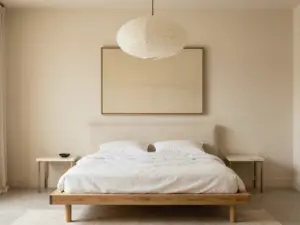
3. Warm Minimalism with Natural Material Layering
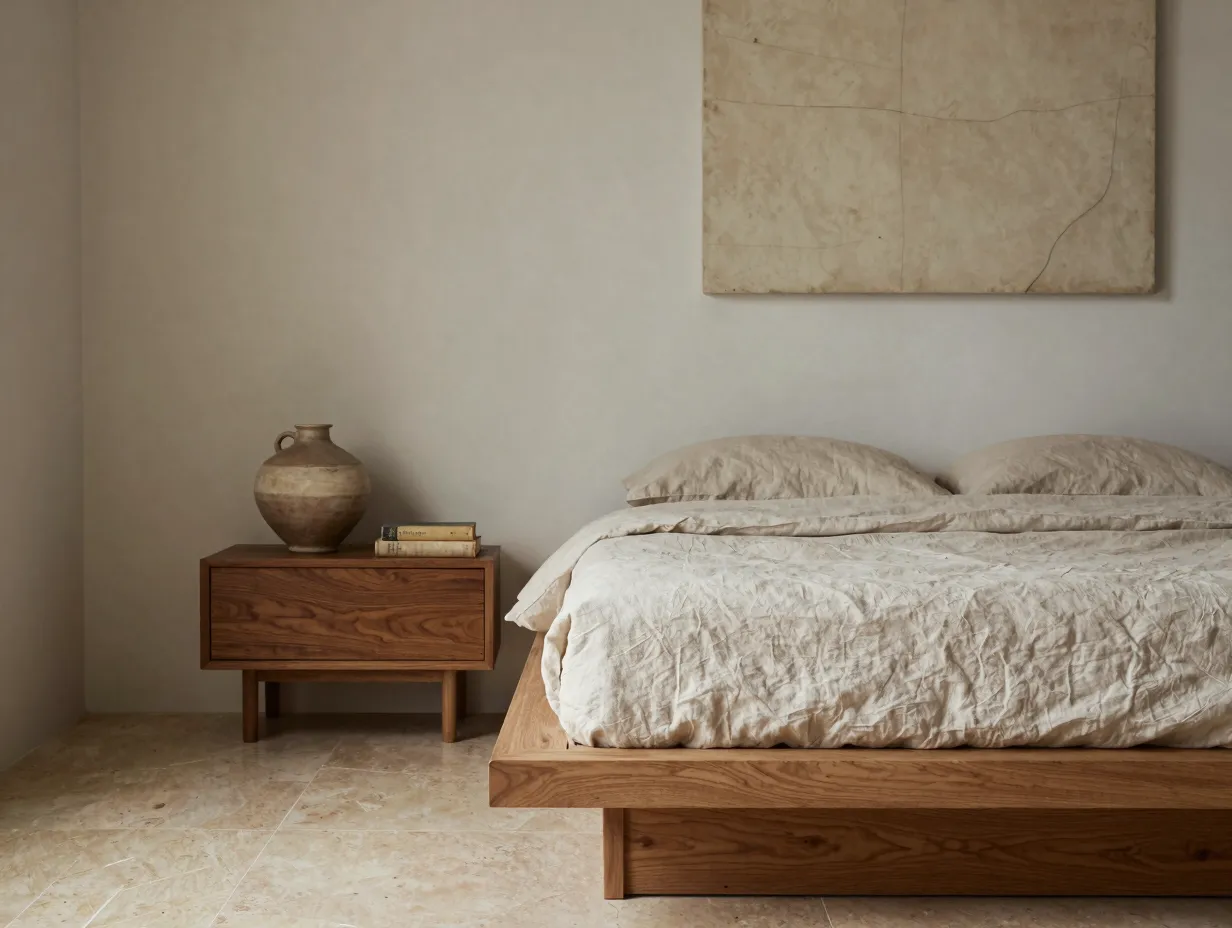
Cold gray minimalism had its decade. In 2026, the replacement is warmer, softer, and far more tactile [4]. Warm minimalism uses the same principles of reduction and calm, no clutter, no excess, but swaps concrete and chrome for honey-toned wood, handwoven linen, rough-cut stone, and aged leather.
The result is a room that feels quiet without feeling sterile. I find this concept particularly compelling because it solves the main complaint people have about classic minimalism: it looks beautiful in photos but feels cold to live in.
Core materials for warm minimalism:
- Honey oak or walnut for furniture and flooring
- Undyed or naturally dyed linen for bedding and curtains
- Honed limestone or travertine for accent surfaces
- Beeswax-finished wood for smaller decorative objects
- Handthrown ceramic vessels for bedside styling
The uncluttered layout is non-negotiable [11]. Every object earns its place. But unlike austere minimalism, warm minimalism allows for a single meaningful piece of art, a well-worn book on the nightstand, and a plant that has clearly been loved for years.
4. The Sculptural Statement Bed as Room Anchor
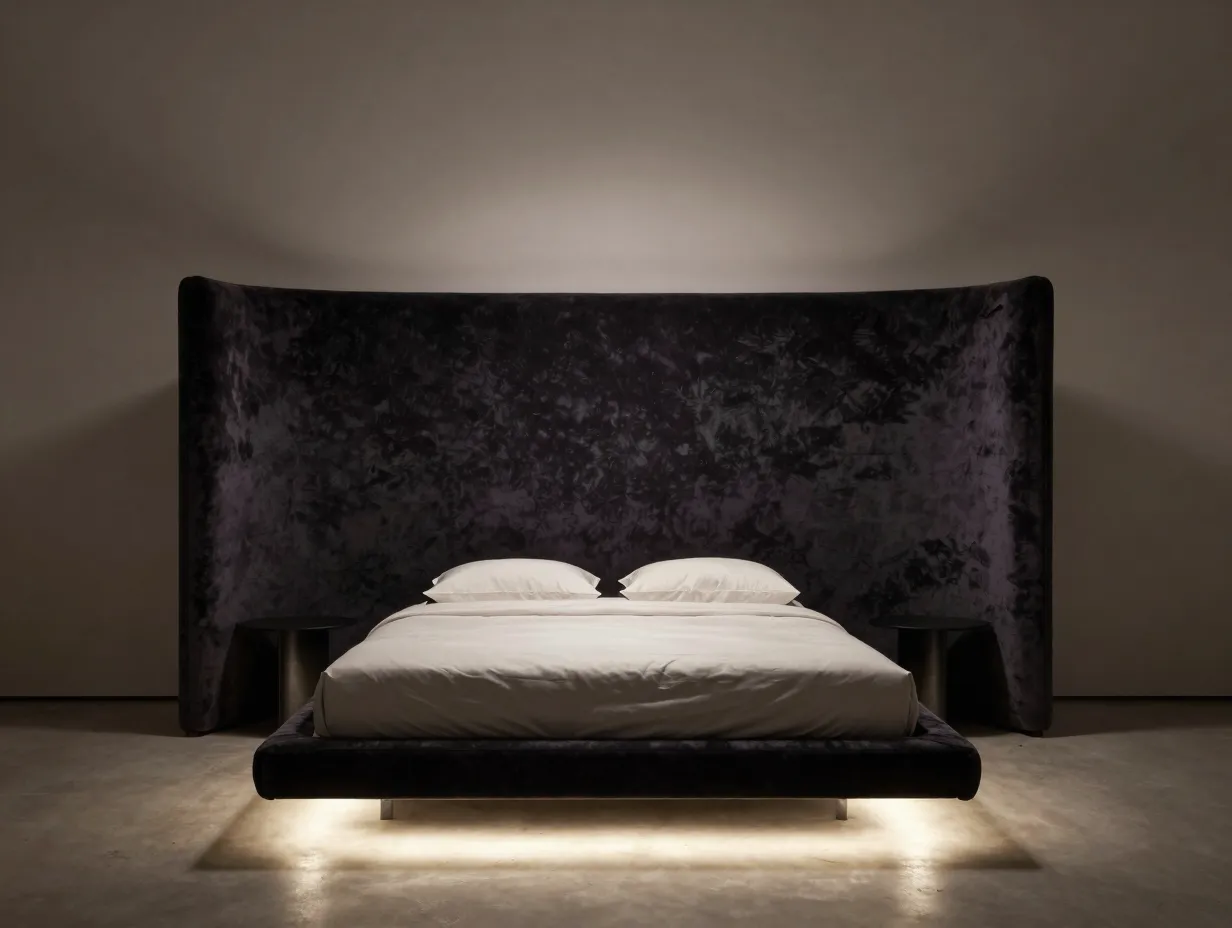
In 2026, the bed is no longer just furniture. It is architecture [2]. Designers are treating the bed frame, headboard, and surrounding wall as a single sculptural installation, the visual and emotional center of the entire room.
The most striking versions of this concept include:
- Curved and arched headboards upholstered in velvet or bouclé that extend nearly to the ceiling
- Modern canopy frames in blackened steel or warm brass with minimal or no fabric, creating a structural statement
- Illuminated headboard walls where integrated LED strips behind a bespoke panel create a soft halo effect at night [7]
- Floating platform beds with hidden base lighting that makes the bed appear to hover above the floor
- Four-poster beds reimagined with clean, geometric lines rather than traditional ornate carving [5]
The sculptural bed concept works best when the rest of the room steps back. Neutral walls, simple bedside tables, and restrained decor allow the bed to command full attention without competition.
5. Immersive Biophilic Bedroom Design
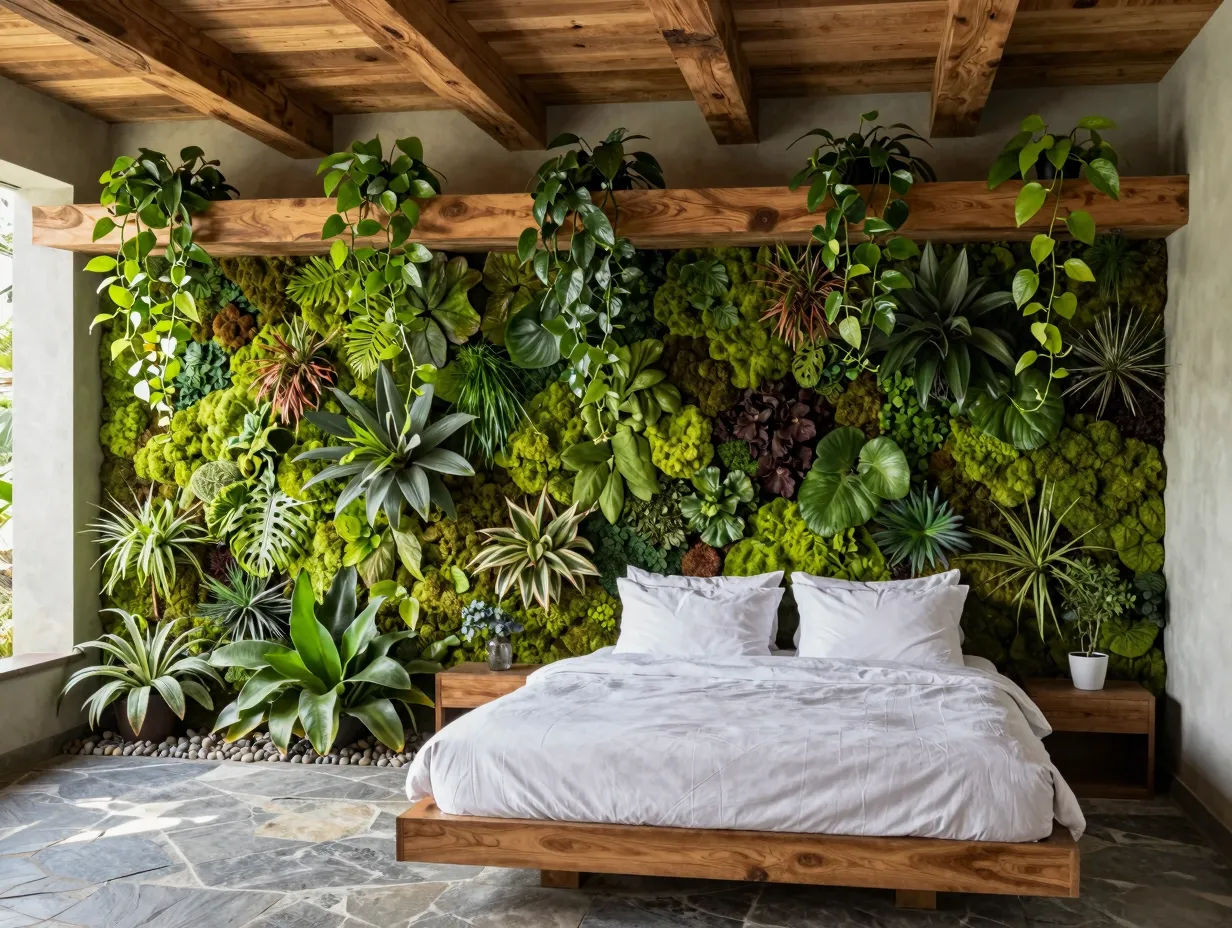
Biophilic design in the bedroom has matured significantly. Where it once meant a few potted succulents on a windowsill, it now means genuinely integrating living systems into the room’s architecture [3].
What immersive biophilic design looks like:
- A full living moss wall panel mounted behind the bed as a headboard alternative
- Botanical wallpaper with large-scale, painterly leaf patterns that cover all four walls
- A built-in planter shelf running the length of one wall at ceiling height, filled with trailing plants
- Natural wood ceiling beams left raw and slightly irregular for an organic feel
- Stone or pebble flooring in a small meditation corner within the bedroom
The research supporting plants in the bedroom has become more nuanced in 2026. Rather than simply claiming plants improve air quality (a claim that requires a very large number of plants to be measurable), designers now focus on the psychological benefit of visual greenery, the way it reduces perceived stress and increases the sense of being in a protected, natural environment [6].
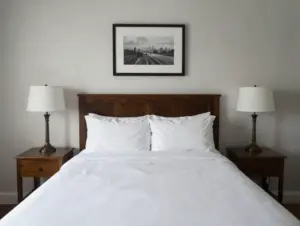
6. The Curated Vintage and Antique Collector’s Bedroom
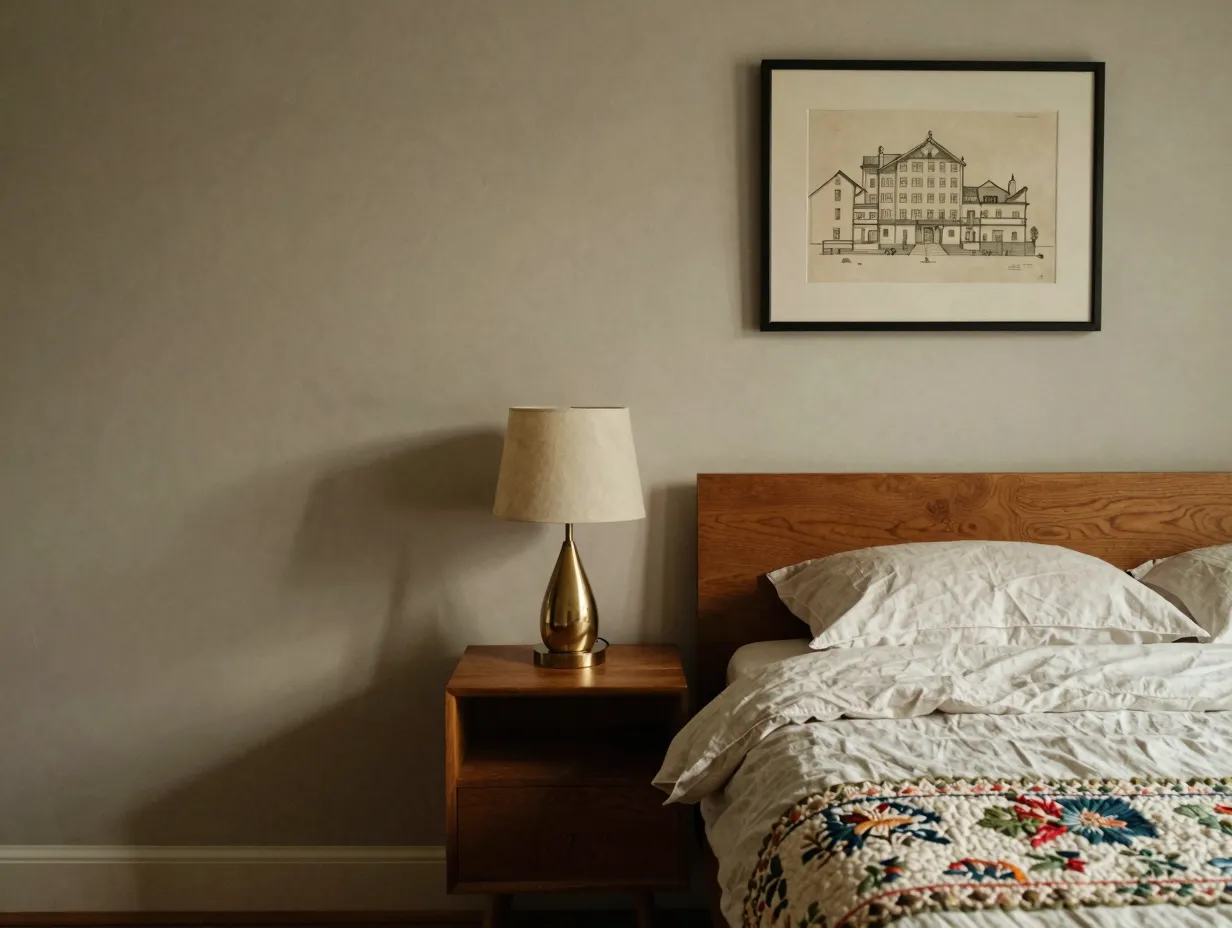
The showroom bedroom, where every piece matches perfectly and nothing looks touched, is losing ground fast [8]. In its place, designers and clients alike are embracing rooms built around collected, meaningful, and often old objects.
This concept is not about decorating with vintage pieces as a trend. It is about building a room that tells a story. A 1960s Italian bedside lamp. A hand-embroidered quilt from a grandmother’s estate. A framed architectural drawing found at a flea market. These objects give a room a sense of time and depth that no amount of matching furniture sets can replicate.
How to execute this concept without it looking chaotic:
- Choose one dominant era or aesthetic as your anchor (mid-century, Art Deco, rustic farmhouse)
- Limit the number of statement vintage pieces to three or four per room
- Use neutral, contemporary bedding to ground the older pieces
- Frame and hang art at consistent heights to create visual order
- Mix one or two new, quality pieces with the vintage finds to avoid a museum feel
Multiple 2026 design reports note a marked rise in bespoke and custom beds ordered specifically to avoid the standardized online-trend aesthetic [6]. Pairing a custom bed with carefully sourced vintage pieces creates a room that is genuinely one of a kind.
7. The Analog Sanctuary, A Tech-Free Sleep Environment
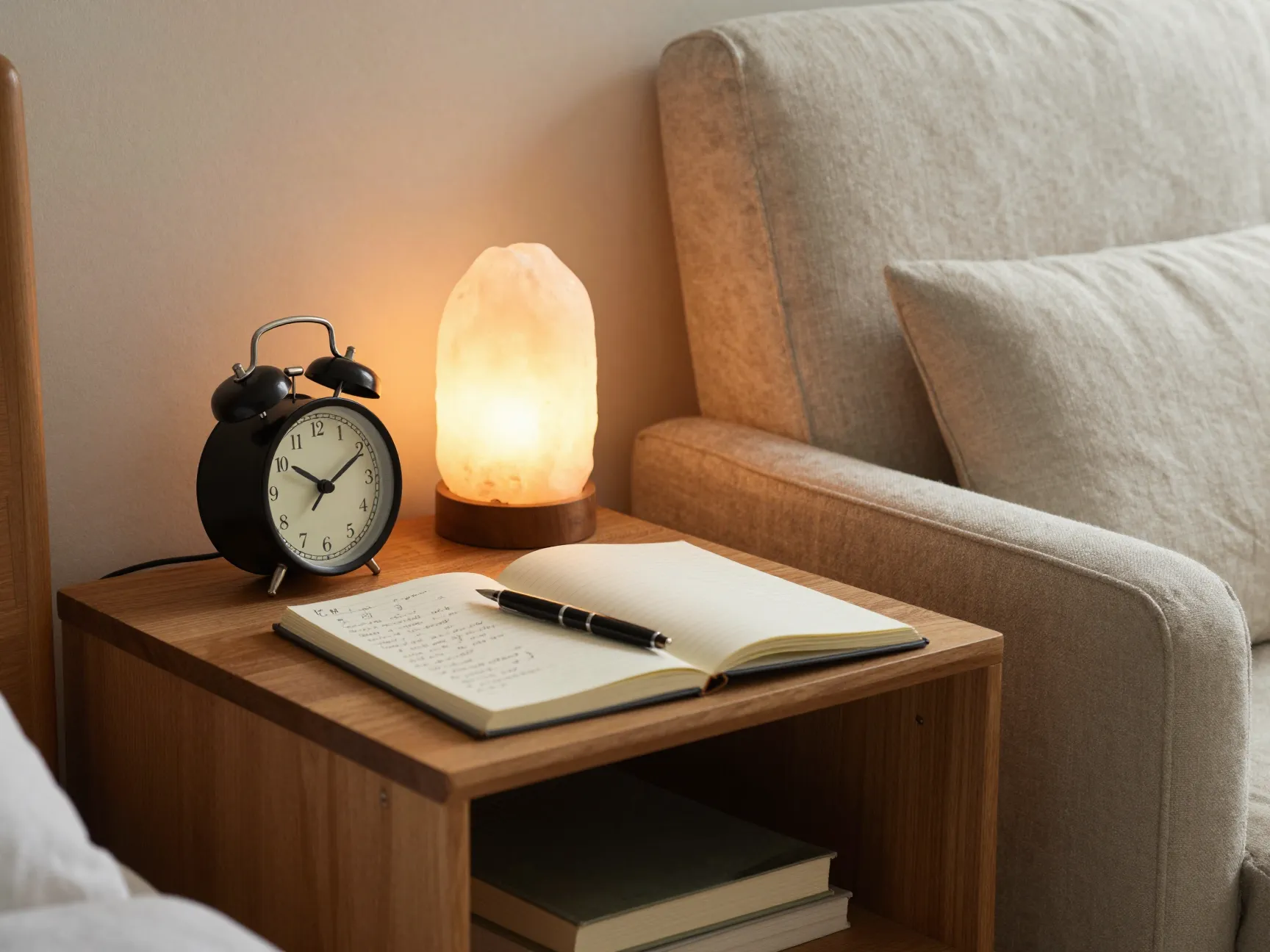
This concept is one of the most surprising entries in any list of 9 Jaw-Dropping Unique Bedroom Design Concepts You Won’t See Anywhere Else, because it is defined by what it removes rather than what it adds. Designers are reporting a surge in client requests to remove televisions, block Wi-Fi signals, eliminate charging stations from the bedroom, and replace digital alarm clocks with analog ones [8].
The analog sanctuary is a direct response to screen fatigue and the growing body of evidence linking bedroom technology to disrupted sleep. But beyond the science, there is a design philosophy at work: the bedroom should be the one room in the home where the demands of modern life cannot follow you.
What fills the space instead of screens:
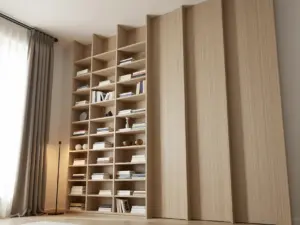
- A curated selection of physical books on open shelving
- A turntable or small analog radio for music
- A handwritten journal and quality pen on the nightstand
- Candles or a salt lamp as the primary evening light source
- A window seat or reading chair positioned to catch natural morning light
The design challenge with this concept is making the absence of technology feel intentional rather than austere. Warm materials, layered lighting, and carefully chosen analog objects do that work effectively.
8. The Color-Blocked Architectural Bedroom
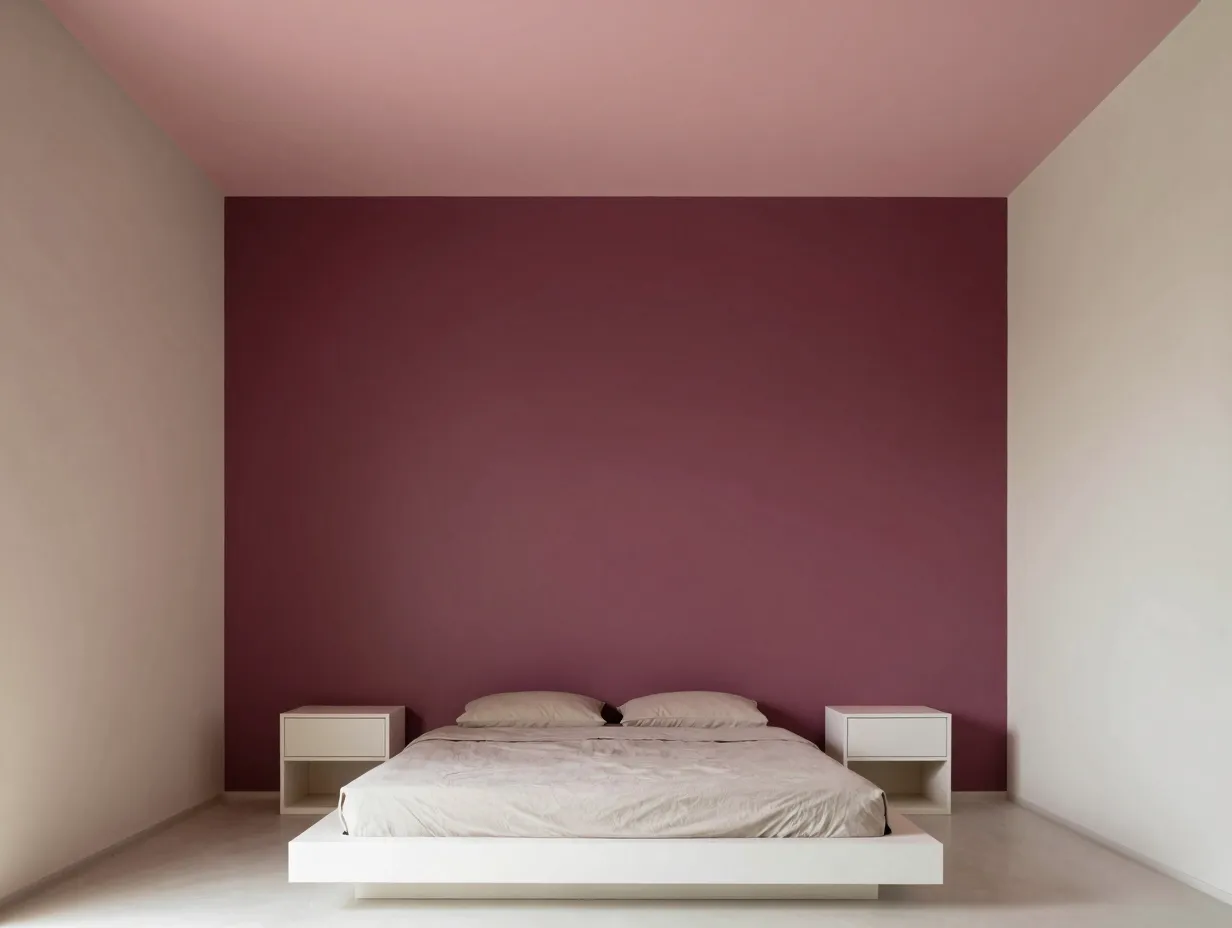
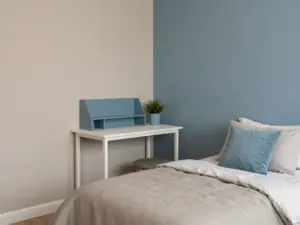
Where color-drenching uses one hue throughout, color-blocking uses two or three bold, contrasting colors applied to architectural zones of the room, one color for the wall behind the bed, a second for the ceiling, a third for the lower half of the remaining walls [9].
This concept requires confidence. It is not subtle. But when executed with precision, it turns the bedroom into a space that feels like a piece of graphic art.
Rules for successful color-blocking in a bedroom:
- Keep the bed and major furniture in neutral tones so the architecture carries the color
- Use flat, matte paint finishes to prevent color from competing with itself
- Align color transitions with architectural features, the point where wall meets ceiling, or where a built-in shelf creates a natural line
- Limit the palette to two or three colors maximum
- Test large paint samples (at least 12 inches square) on the actual walls before committing, viewed in both daylight and evening artificial light
The most effective color-blocked bedrooms in 2026 trend reports pair a deep, saturated color on the headboard wall with a warm neutral on the remaining walls and a soft, contrasting hue on the ceiling, creating a room that feels like a deliberate artistic decision rather than an accident [11].
9. The Multi-Sensory Wellness Bedroom
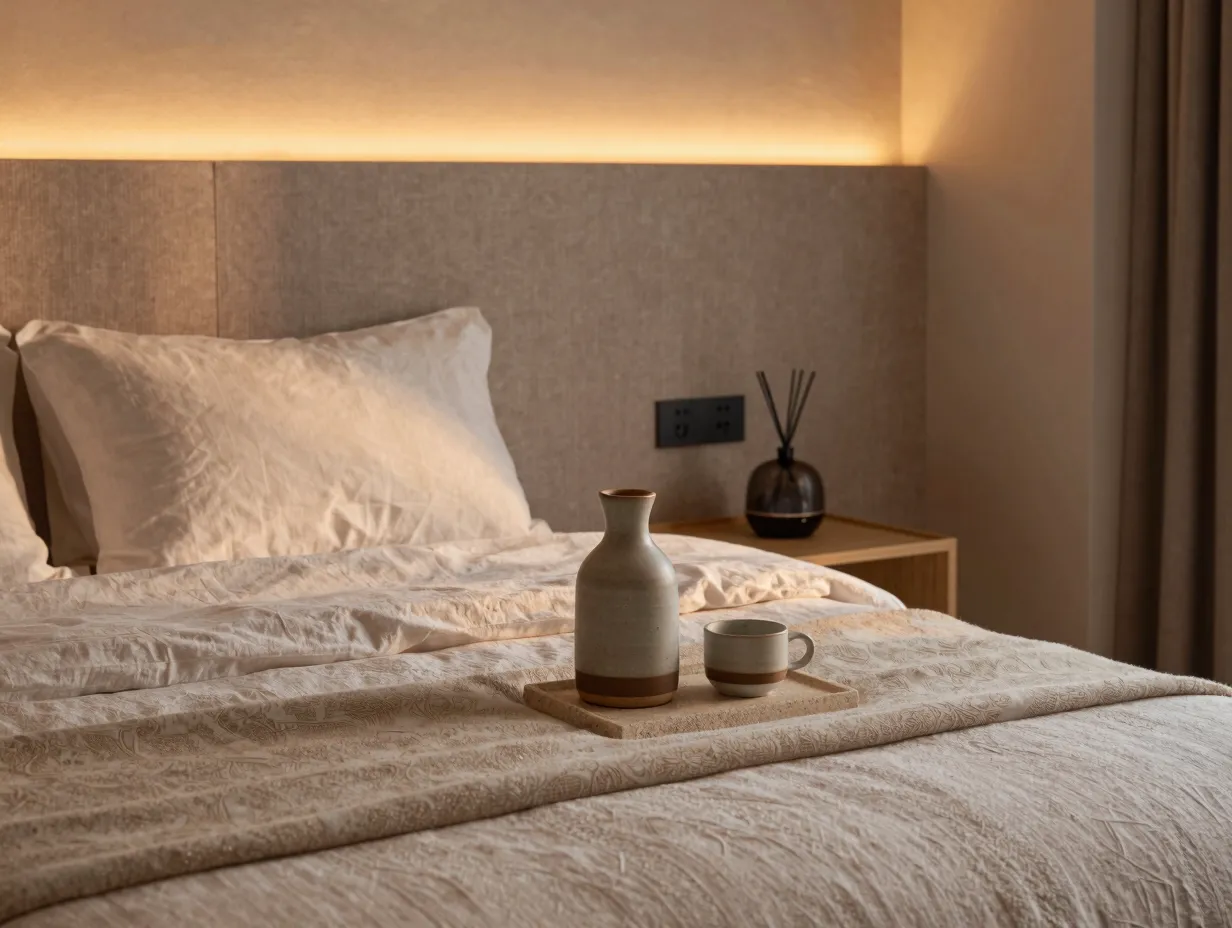
The final concept in this collection of 9 Jaw-Dropping Unique Bedroom Design Concepts You Won’t See Anywhere Else is the most holistic. The multi-sensory wellness bedroom is designed to engage all five senses in service of rest, recovery, and emotional regulation.
The five sensory layers:
- Sight, Warm-dim, tunable lighting on a circadian schedule that mimics sunset and sunrise; a calming, cohesive color palette; no harsh angles or bright surfaces near the sleeping area
- Sound, Acoustic panels disguised as art or upholstered wall sections to reduce echo; a white noise or nature sound system integrated into the room’s design
- Touch, Multiple textile weights and textures in the bedding system, a linen sheet layer, a cotton duvet, a weighted blanket option, and a cashmere throw for the foot of the bed
- Smell, A built-in diffuser system or a dedicated tray of essential oils and a candle on a stone surface; cedar lining inside wardrobes for a clean, natural scent
- Taste, A small, intentional bedside station with a ceramic carafe of water and a single herbal tea option, making the ritual of settling in for sleep a full sensory experience
This concept draws from hospitality design, the best hotel rooms have always engaged multiple senses deliberately, and brings that thinking into a residential context [7]. The result is a bedroom that does not just look beautiful but actively functions as a wellness tool.
How to Choose the Right Concept for Your Space
Not every concept suits every room or every person. Here is a quick framework for matching concept to context:
Small rooms (under 150 sq ft): Warm minimalism, analog sanctuary, or color-drenching work best. Avoid the sculptural statement bed unless the frame is low-profile.
Large master bedrooms: The cocoon concept, multi-sensory wellness bedroom, or immersive biophilic design can fully unfold in larger spaces without feeling crowded.
Rental or temporary spaces: The curated vintage collector’s bedroom and the analog sanctuary are the most portable, they rely on objects and textiles rather than architectural changes.
Budget-conscious redesigns: Color-drenching and warm minimalism deliver the highest visual impact per dollar spent, since both rely primarily on paint, textiles, and selective furniture choices rather than structural work.
Conclusion
The bedroom is the most personal room in any home, and in 2026, designers are treating it with the seriousness that fact deserves. The 9 Jaw-Dropping Unique Bedroom Design Concepts You Won’t See Anywhere Else explored in this guide are not trends in the fleeting sense of the word. They are design philosophies, each one grounded in a clear understanding of how people want to feel in their most private space.
Actionable next steps to take right now:
- Walk into your bedroom and identify the single element that bothers you most, the lighting, the clutter, the color, or the lack of a focal point. Start there.
- Choose one concept from this list that resonates with your personality and your room’s architecture. Do not try to blend more than two concepts in a single space.
- Pull three to five material samples, paint chips, fabric swatches, a wood finish, and live with them in your room for a full week before spending money.
- Invest in the bed first. As the sculptural statement bed concept makes clear, the bed is the anchor. Everything else follows from that decision.
- Remove one piece of technology from your bedroom this week. Note how the space feels different. That feeling is data.
Great bedroom design is not about following trends. It is about building a space that makes you feel exactly the way you want to feel the moment you walk through the door. These nine concepts give you the vocabulary to do exactly that.
References
[1] Bedroom Design Trends 2026 – https://www.housebeautiful.com/design-inspiration/a69619733/bedroom-design-trends-2026/
[2] 2026 Bedroom Trends Ideas – https://www.decorilla.com/online-decorating/2026-bedroom-trends-ideas
[3] Bedrooms – https://www.livspace.com/in/design-ideas/bedrooms
[4] 62 New Bedroom Ideas 2026 Modern Bedroom Design – https://my-inspo.com/62-new-bedroom-ideas-2026-modern-bedroom-design/
[5] Watch – https://www.youtube.com/watch?v=3h3C3UO_ihk
[6] Bedroom Trends 2026 11828783 – https://www.marthastewart.com/bedroom-trends-2026-11828783
[7] Bedroom Trends 2026 – https://www.homesandgardens.com/interior-design/bedrooms/bedroom-trends-2026
[8] Designers Bedroom Trends 2026 – https://www.goodhousekeeping.com/home/decorating-ideas/g70839014/designers-bedroom-trends-2026/
[9] Bedroom Design Trends 2026 – https://www.elledecor.com/design-decorate/a70001124/bedroom-design-trends-2026/
[10] Watch – https://www.youtube.com/watch?v=2arBlDi6ZLQ