8 Room Decor Ideas That Will Instantly Refresh Any Tired Living Space
A 2026 survey by interior design platform Houzz found that nearly 60% of homeowners describe their living room as feeling “stuck in time”, not broken, not ugly, just lifeless. That quiet dissatisfaction is more common than most people admit, and the good news is that it rarely requires a full renovation to fix.
Disclosure: This post contains affiliate links. As an Amazon Associate, we earn from qualifying purchases, and at no extra cost to you.
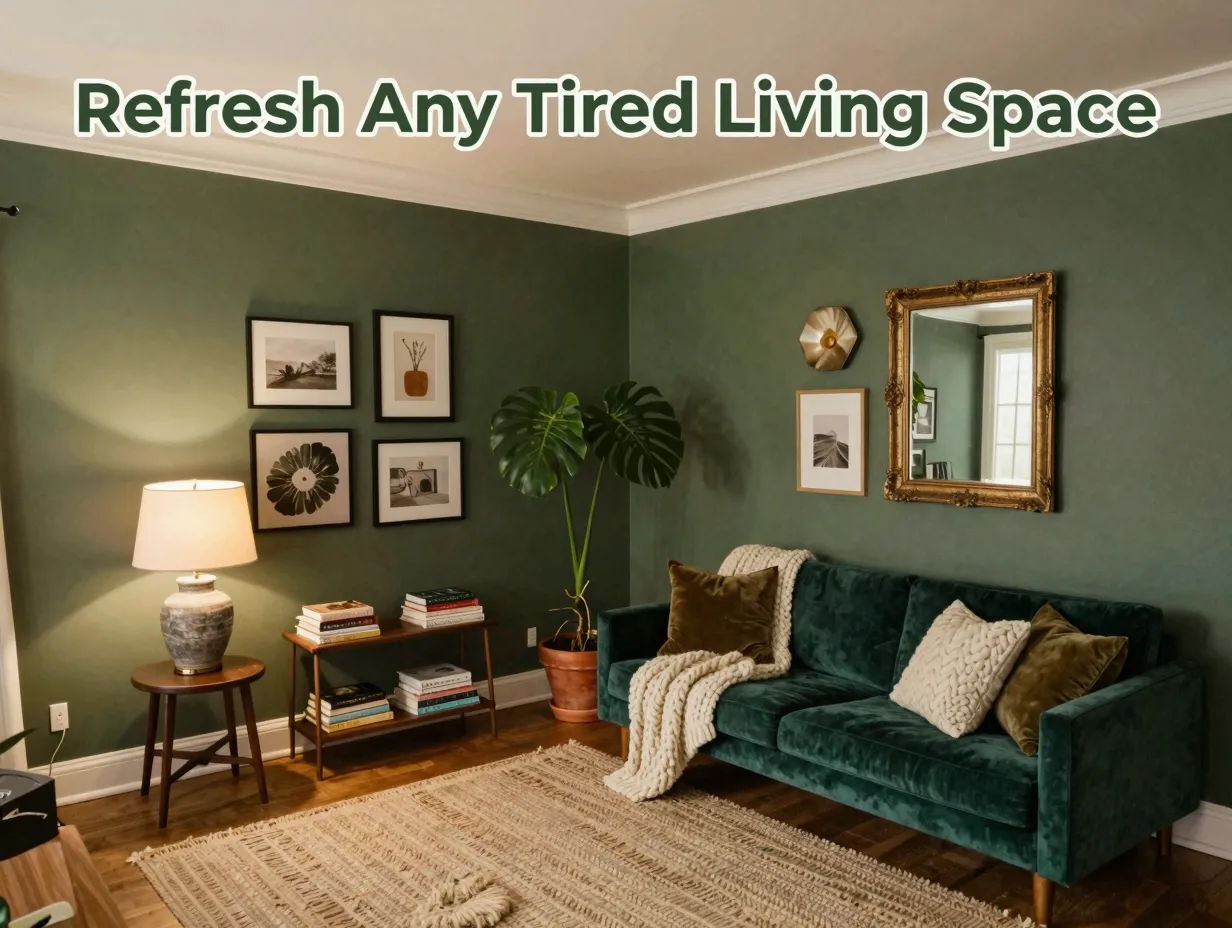
These 8 room decor ideas that will instantly refresh any tired living space are drawn from the latest designer forecasts, trend reports, and real-world transformations. Whether your room feels like a waiting room or just needs a personality injection, at least one of these ideas will change the way you see it by this weekend.
Key Takeaways
- Swapping out tired grey walls for warmer, richer tones is one of the fastest and most affordable ways to energize a living room in 2026
- Immersive paint techniques like color drenching and color capping can transform a space without moving a single piece of furniture
- Vintage and “collected” styling creates depth and personality that new, matching furniture sets simply cannot replicate
- Upgrading or reupholstering your sofa, or adding a statement armchair, delivers outsized visual impact for the investment
- Layering lighting, textiles, and natural elements together creates a room that feels intentionally designed rather than assembled by accident
Why Most Living Rooms Feel Tired (And How to Fix It Fast)
Before diving into the list, it helps to understand why so many living rooms lose their energy in the first place. The most common culprit is not age or budget, it is sameness. When every element in a room is equally neutral, equally sized, and equally spaced, the eye has nowhere interesting to land.
The 8 room decor ideas that will instantly refresh any tired living space in this guide all work on the same underlying principle: create contrast, depth, and a sense of story. Some cost very little. Others require a weekend of effort. All of them work.
8 Room Decor Ideas That Will Instantly Refresh Any Tired Living Space
1. Ditch Millennial Grey and Embrace a Mood-Boosting Color Palette
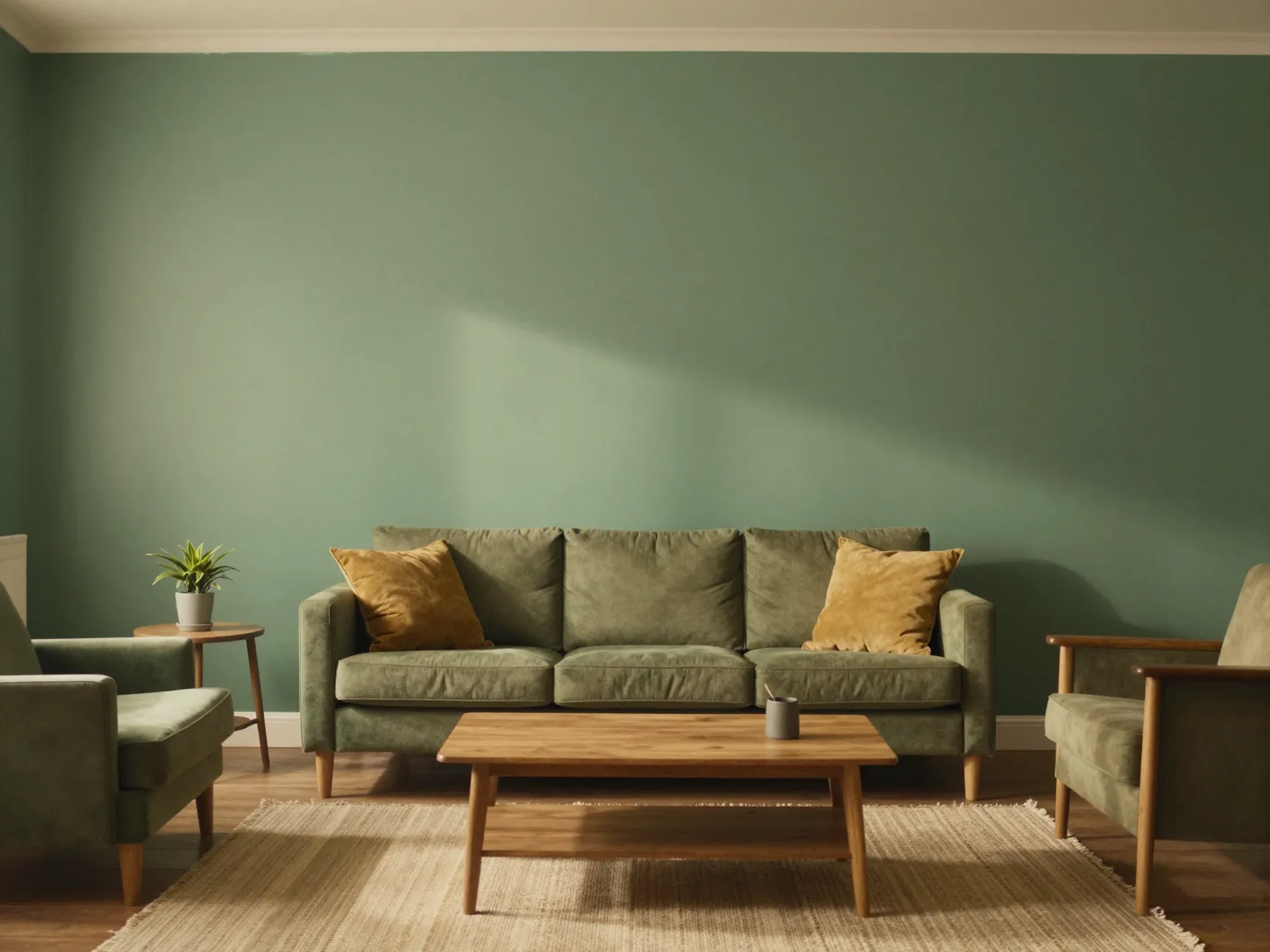
The single most impactful change you can make to a tired living room costs less than $100 and takes a single weekend: repaint it in a color that actually has a point of view.
Interior designers and color forecasters are unanimous about the direction for 2026. The flat, non-committal greys that dominated the last decade are giving way to warmer, more expressive palettes. Earthy greens, warm browns, merlot reds, oxblood, plum, deep teal, and mineral tones like clay and deep blue are being identified as the defining living-room colors of this year [5][6][7]. These are not trendy for trend’s sake, they are warm, they read beautifully in both natural and artificial light, and they make existing furniture look more intentional.
I repainted my own living room in a deep sage green two years ago, and the transformation was almost embarrassing in how dramatic it was. The furniture had not changed. The rug was the same. But suddenly the room looked like someone who had made a decision.
Quick color reference for 2026 living rooms:
| Color Family | Example Shades | Best For |
|---|---|---|
| Earthy Greens | Sage, moss, olive | Calm, nature-inspired spaces |
| Warm Browns | Caramel, tobacco, umber | Cozy, grounding atmospheres |
| Deep Reds | Merlot, oxblood, burgundy | Dramatic, intimate rooms |
| Mineral Tones | Clay, deep blue, slate | Modern, textured interiors |
| Plum and Teal | Aubergine, deep teal | Bold, expressive statements |
The move away from “millennial grey” is not just aesthetic, it is psychological. Warm, saturated colors have a measurable effect on how comfortable and energized people feel in a space [13][15].
2. Try Color Drenching or Color Capping for an Instant Architectural Upgrade
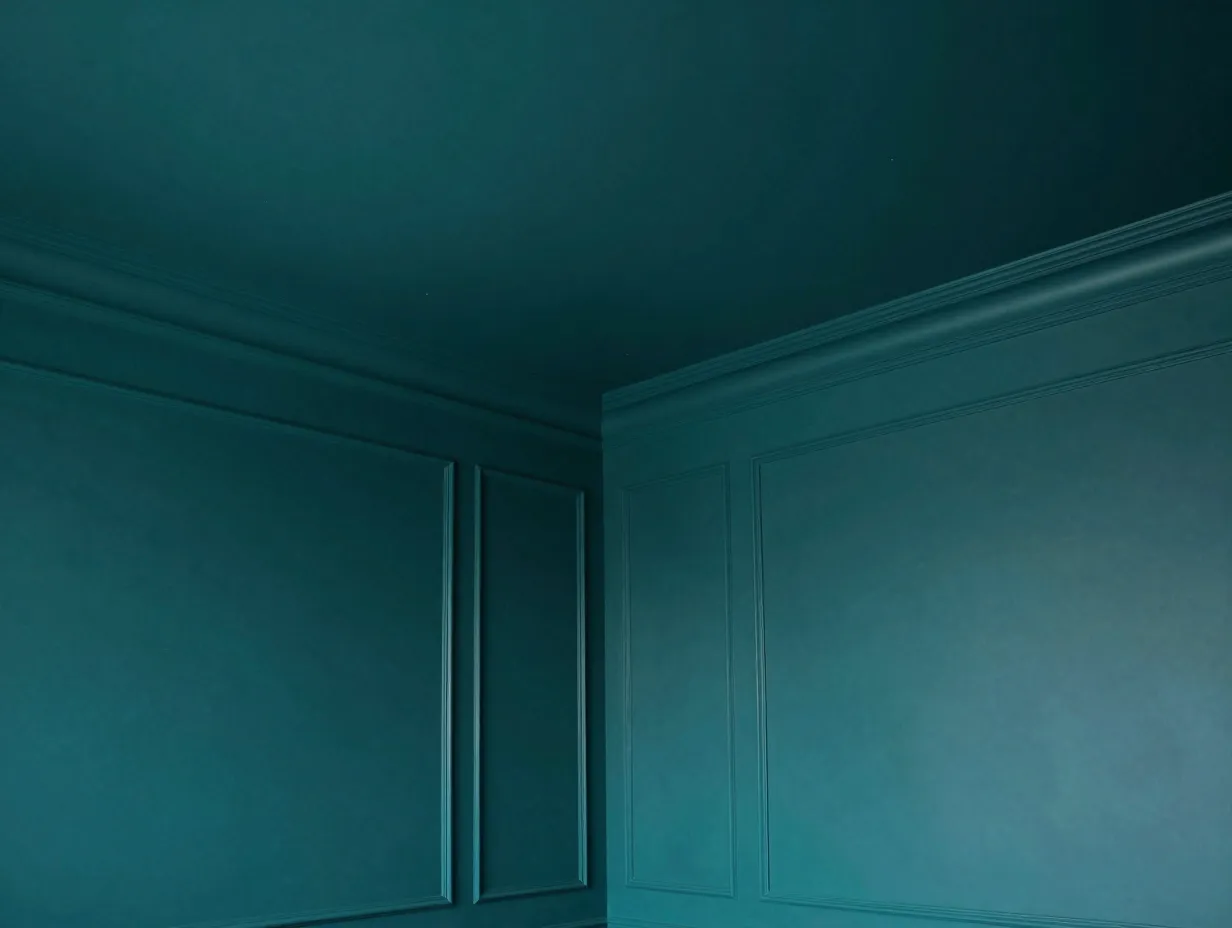
Once you have chosen a color you love, consider going further than just the four walls. Two immersive paint techniques are dominating living-room design conversations in 2026, and both deliver a surprisingly dramatic result with minimal effort [4][6][8].
Color drenching means painting the walls, trim, skirting boards, and even the ceiling in the same hue, or in closely related tones within the same family. The result is a room that feels enveloping, intentional, and architecturally rich. It works especially well in smaller rooms because it removes the visual interruption of contrasting trim.
Color capping takes a different approach: the lower portion of the wall stays in a lighter tone, while the upper section, including the ceiling, is painted in a deeper, richer shade. This creates the illusion of a lower, cozier ceiling and gives the room a sense of drama that feels almost theatrical.
“Color capping essentially gives a flat box of a room its own crown. It is one of the most underused tricks in residential design.”, Homes & Gardens, 2026 [4]
Neither technique requires professional help. Both require commitment, which is exactly the point. A room that commits to a look always feels more finished than one that hedges.
3. Build a “Collected Over Time” Display Instead of a Matched Set
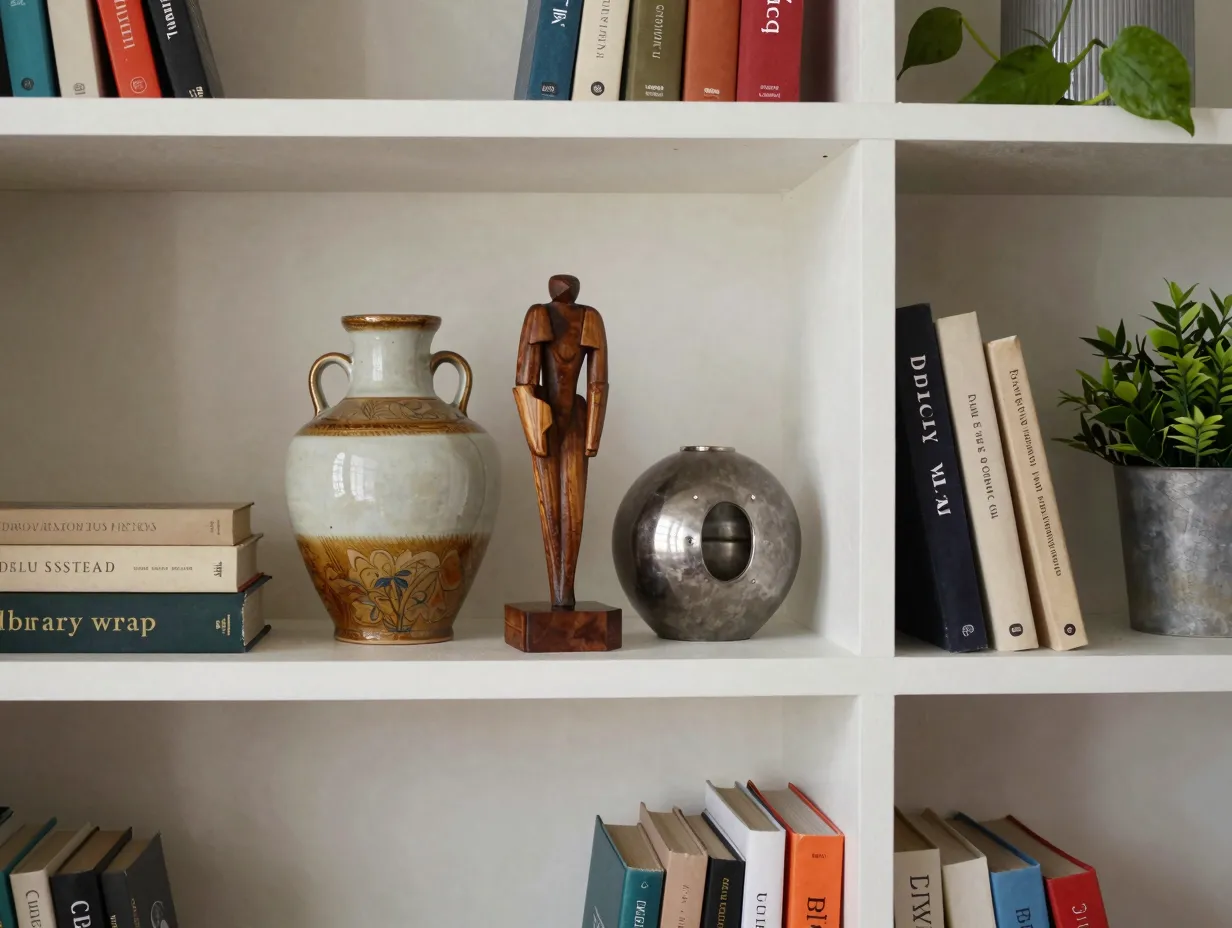
One of the clearest signals in 2026 living-room design is the rejection of the showroom aesthetic. Rooms that look like every piece was bought on the same afternoon from the same retailer feel impersonal, and increasingly, people know it [1][4][8].
The alternative is a space that looks collected over time: a mix of vintage finds, inherited pieces, travel souvenirs, and new items that have been chosen for their individual character rather than their ability to match a catalog page.
This does not mean cluttered. It means curated with a loose hand. A few specific ways to achieve this:
- Visit local antique markets or estate sales and buy one or two pieces with genuine age and patina
- Display objects in groups of odd numbers, threes and fives feel more natural than pairs
- Mix materials deliberately: ceramic next to wood next to metal
- Allow some empty space so the eye can rest between interesting objects
The “curiosity-led display” trend, as designers are calling it, also extends to bookshelves [4][8]. A wall of floor-to-ceiling shelving, sometimes called a “library wrap”, instantly adds character, warmth, and intellectual depth to a blank wall. Books, objects, plants, and art can all coexist on the same shelving unit without looking chaotic, as long as there is a loose organizing principle (by color, by height, by category).
4. Upgrade Your Sofa, or Make the One You Have Work Harder
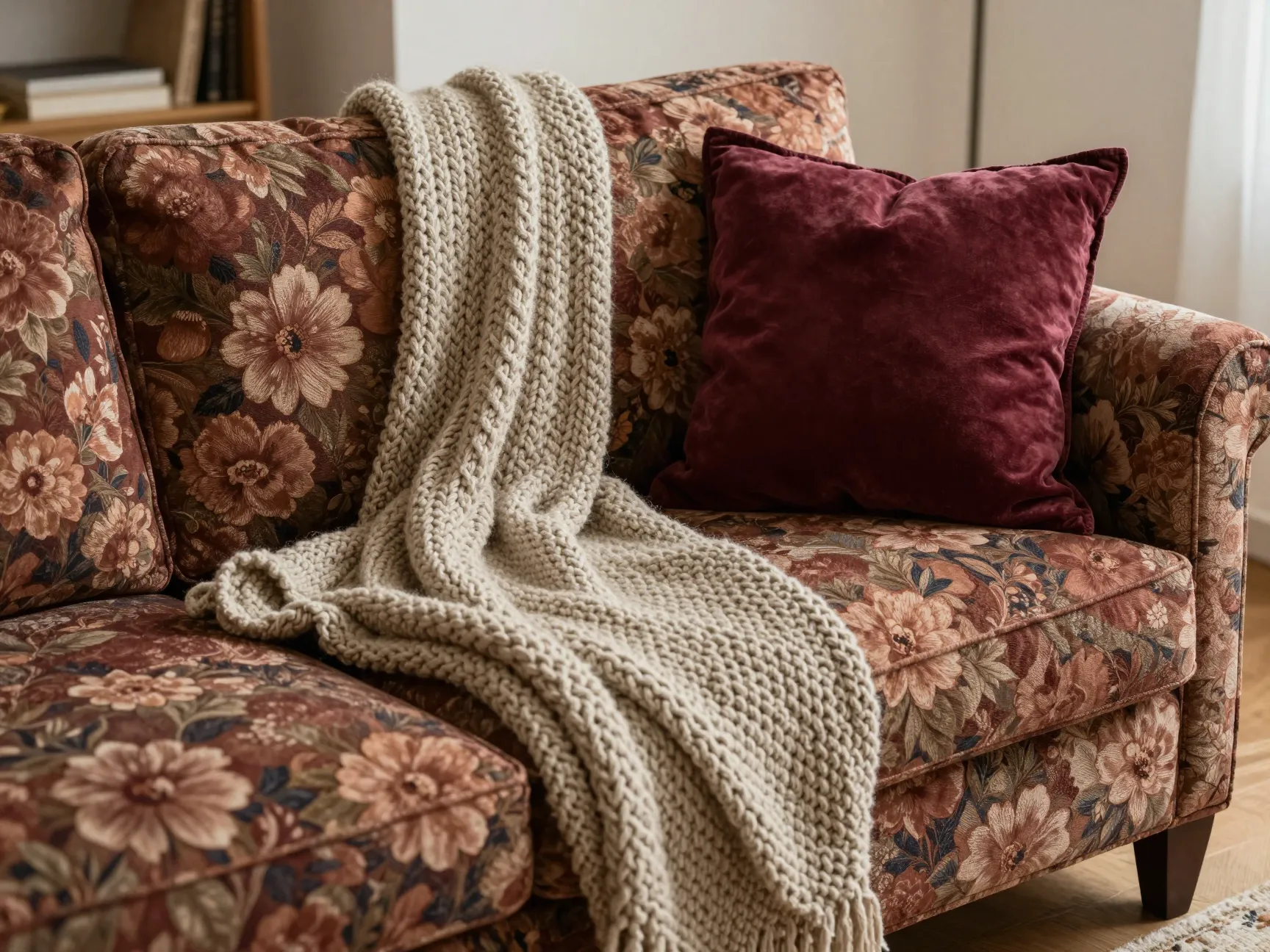
The sofa is the gravitational center of most living rooms. When it is wrong, everything around it suffers. When it is right, the whole room lifts.
Designer forecasts for 2026 point in two directions simultaneously, and both are worth knowing [2][8][10]:
Direction one: low-profile, architecturally clean silhouettes. These are sofas with slim arms, low backs, and a streamlined profile that feels modern without being cold. They work especially well in rooms with strong color or pattern on the walls, because they do not compete visually.
Direction two: large, deep, comfort-first sofas. The opposite of minimal, these are the sofas you sink into and do not want to leave. Deep seats, generous cushions, and a relaxed, lived-in quality. Romantic floral upholstery and slightly maximalist designs are also trending, offering a way to introduce pattern and personality through the largest piece of furniture in the room [8].
If a new sofa is not in the budget, consider these alternatives:
- Reupholster in a bolder fabric (a local upholsterer can often do this for less than you expect)
- Add a sofa throw in a contrasting texture, chunky knit, velvet, or woven cotton
- Replace tired scatter cushions with a smaller number of higher-quality ones in richer tones
- Add a single statement armchair in a complementary color to create a conversation area
5. Layer Your Lighting Instead of Relying on One Overhead Source
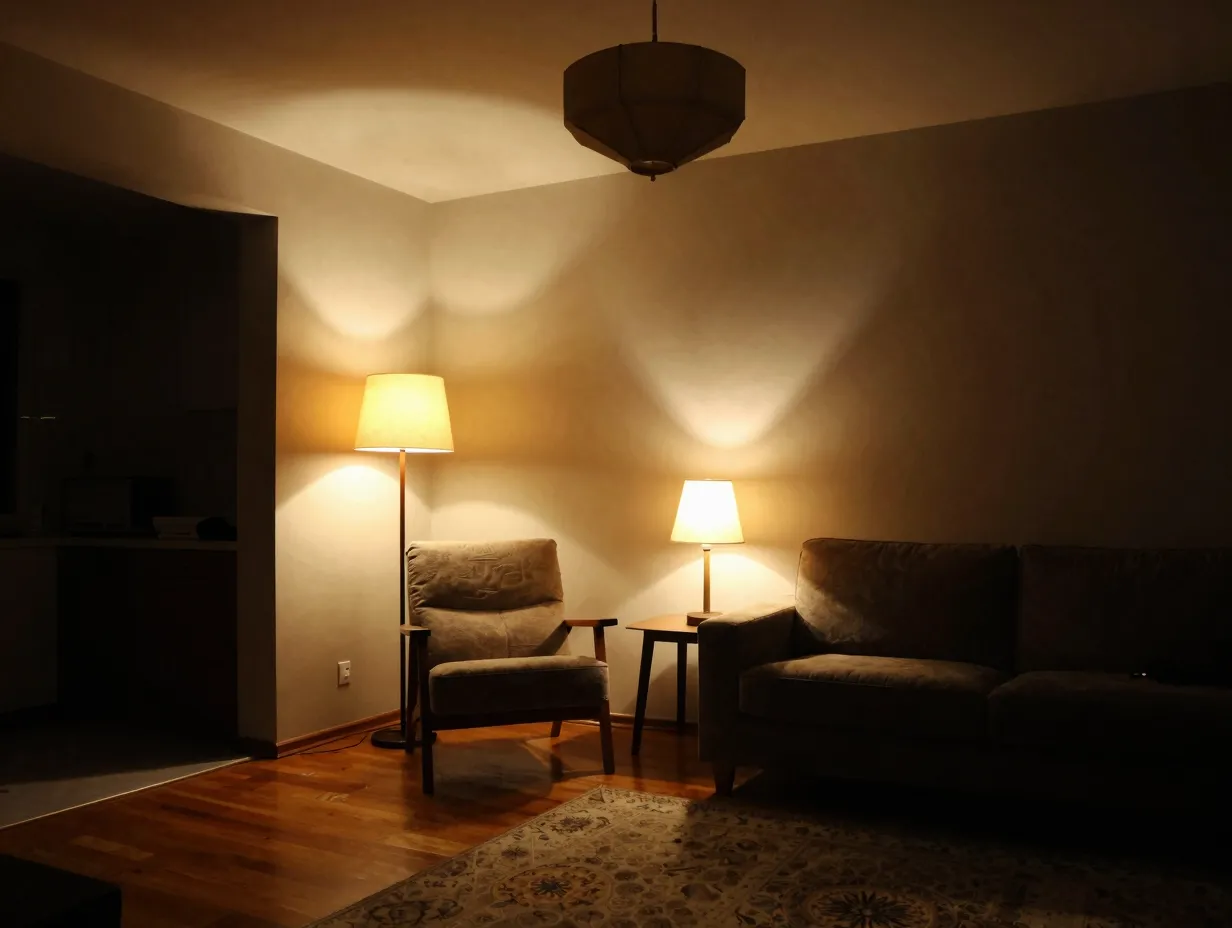
Single overhead lighting is the fastest way to make a room feel like a hospital waiting room. It flattens everything, eliminates shadow, and removes all sense of atmosphere.
The fix is layering: using multiple light sources at different heights and with different functions. A well-lit living room in 2026 typically includes:
- Ambient lighting: A ceiling fixture or recessed lights for general illumination, but not the only source
- Task lighting: A floor lamp or table lamp positioned near reading chairs or work areas
- Accent lighting: Wall sconces, picture lights, or LED strips that highlight artwork, shelving, or architectural features
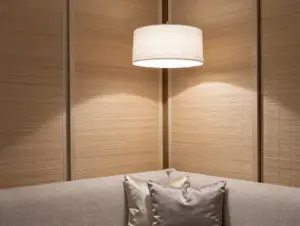
- Decorative lighting: A statement pendant or chandelier that functions as a design object even when switched off
Warm-toned bulbs (2700K to 3000K) make an enormous difference in how a room feels in the evening. If you have been living with cool-white bulbs, switching them out costs almost nothing and changes everything.
I added two table lamps and a floor lamp to my living room on a single afternoon, and my partner walked in that evening and asked if I had repainted. I had not. The light had done all the work.
6. Anchor the Room with a Statement Area Rug
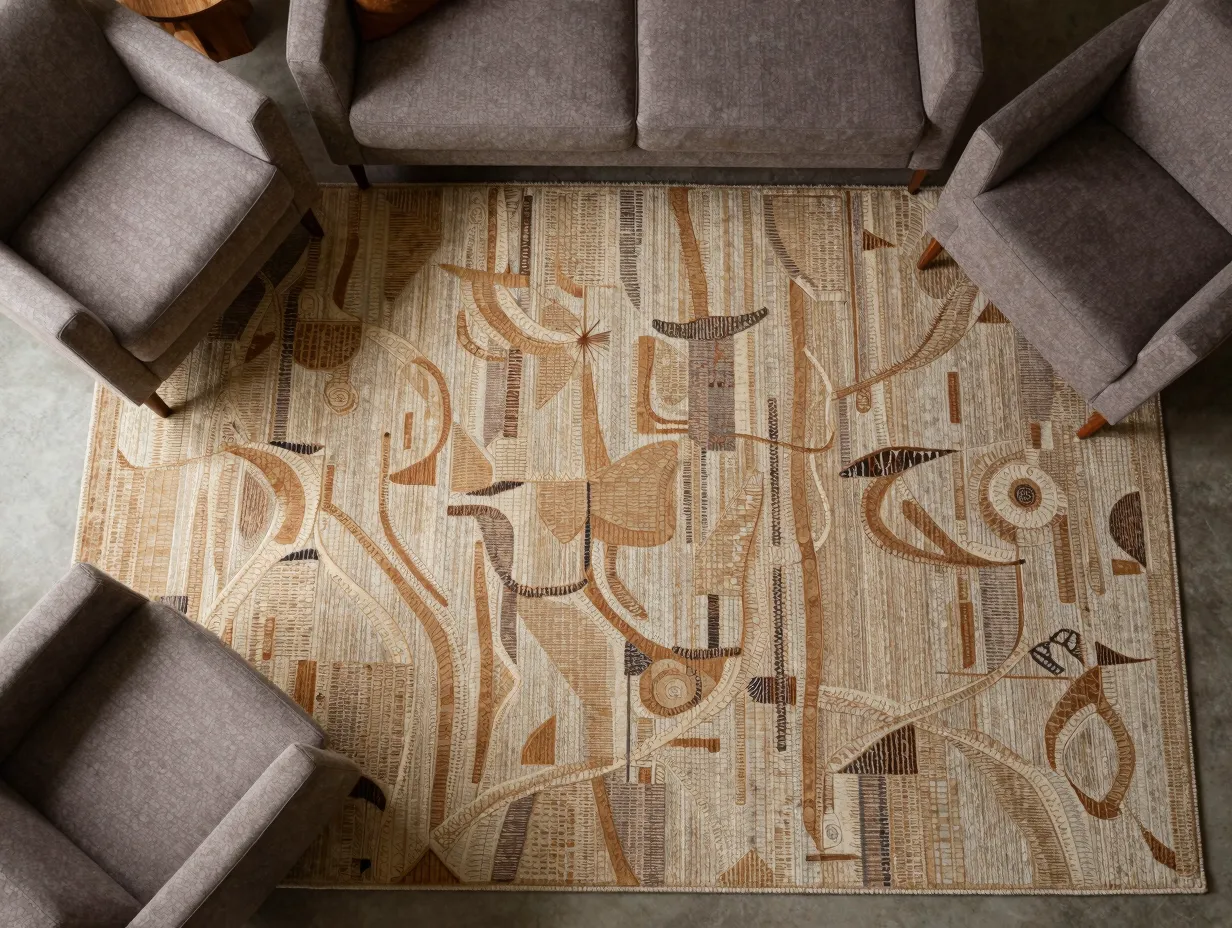
A bare floor under a sofa and coffee table is one of the most common reasons a living room feels unfinished. An area rug does three things at once: it defines the seating zone, adds texture and warmth underfoot, and introduces color or pattern in a way that is easy to change.
The most common mistake with area rugs is choosing one that is too small. A rug that only sits under the coffee table, with the sofa legs floating on bare floor, makes the room feel disconnected and smaller than it is. The correct approach:
- In most living rooms, all front legs of the sofa and chairs should rest on the rug
- Ideally, all four legs of every piece of seating should be on the rug
- The rug should extend at least 18 inches beyond the sofa on each side
For 2026, the most interesting rug choices lean into texture and craft: hand-knotted wool, natural jute and sisal, vintage-style Persian patterns in updated colorways, and abstract designs with an organic, irregular quality. A rug that looks like it has a history, even if it is new, fits perfectly with the “collected over time” aesthetic described in idea three.
7. Bring in Natural Elements and Living Plants
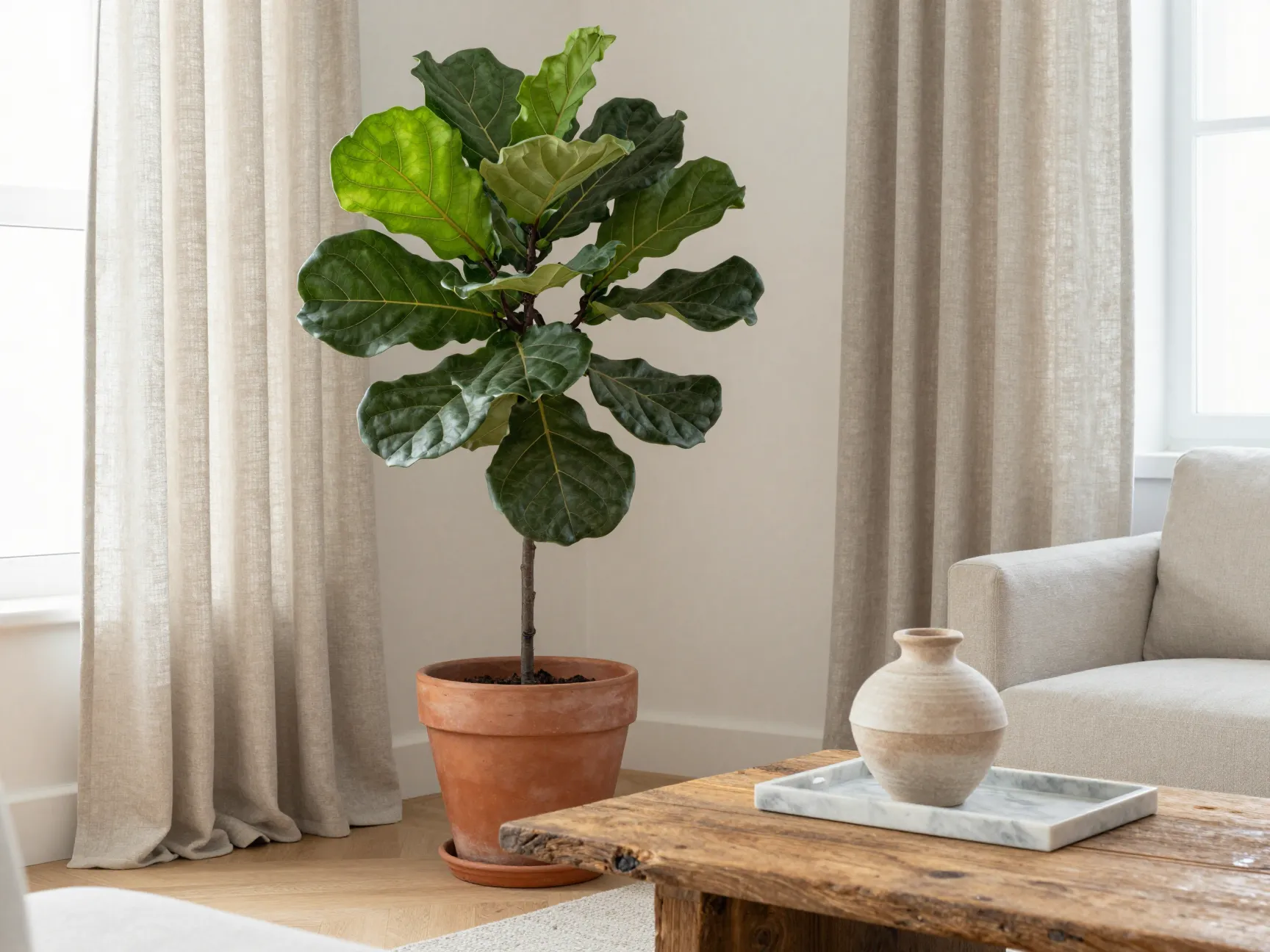
There is a reason every designer’s mood board in 2026 includes at least one large-leafed plant or a cluster of smaller ones. Natural materials and living greenery do something to a room that no paint color or furniture piece can fully replicate: they make it feel alive.
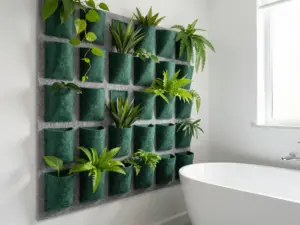
The trend toward biophilic design, incorporating natural elements into interior spaces, has moved well past a passing fad. It is now a core principle of residential design, backed by research showing that exposure to natural elements reduces stress and improves mood.
Practical ways to introduce natural elements:
- A large statement plant (fiddle-leaf fig, monstera, olive tree, or bird of paradise) in a corner that needs height
- A cluster of smaller plants on a windowsill or shelf, grouped at different heights
- Natural fiber textiles: linen curtains, jute rugs, cotton throws, rattan or wicker accessories
- Wood elements: a reclaimed wood coffee table, wooden picture frames, or a driftwood sculpture
- Stone and ceramic: a marble tray, terracotta pots, or a ceramic vase in an earthy tone
The key is not to overdo it. Two or three well-chosen natural elements make a stronger statement than a room full of competing textures.
8. Refresh Your Walls with Art, Mirrors, and Intentional Arrangement
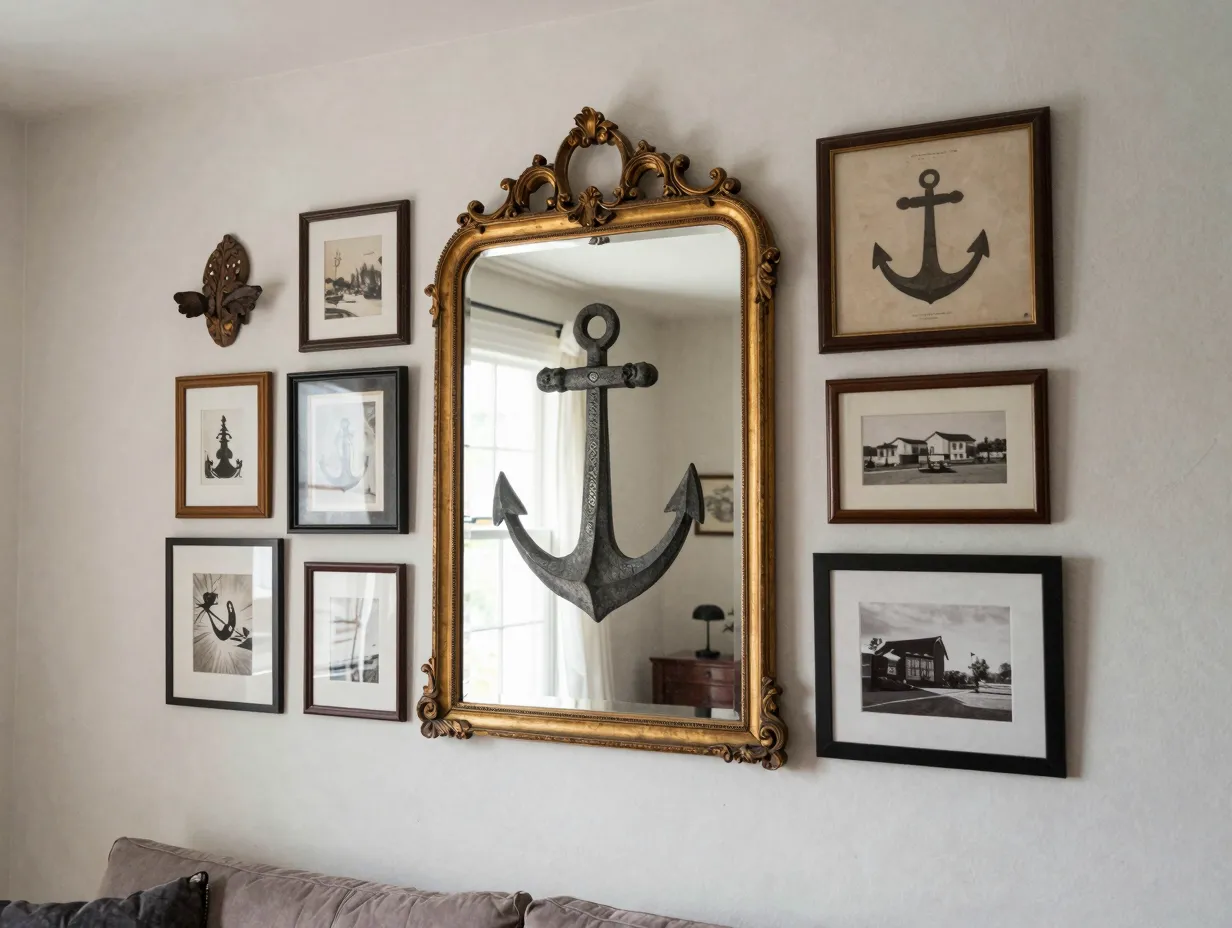
Blank walls are a missed opportunity. A single large piece of art, a carefully arranged gallery wall, or a well-placed mirror can transform a flat, forgettable surface into the most interesting part of the room.
In 2026, the most compelling wall arrangements share a few qualities:
- They feel personal rather than generic (original art, photography, or prints with meaning)
- They mix scales, a large anchor piece surrounded by smaller works
- They include at least one unexpected element: a vintage mirror, a textile, a sculptural wall object, or a shelf with objects rather than just flat frames
- They are hung at the right height (the center of the arrangement should be at eye level, roughly 57 to 60 inches from the floor)
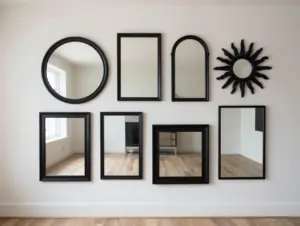
Mirrors deserve special mention. A large mirror placed opposite a window doubles the natural light in a room and creates the illusion of significantly more space. An ornate vintage mirror adds character that a plain rectangular one cannot. If your living room feels dark or small, a mirror is often the single most efficient fix.
Gallery wall arrangement tips:
- Lay all pieces on the floor first and photograph the arrangement before committing to nails
- Use paper templates taped to the wall to plan placement without damage
- Maintain consistent spacing between frames (3 to 4 inches is a reliable standard)
- Include at least one non-frame element to break up the flatness
How to Prioritize These Ideas for Your Specific Room
Not every room needs all eight ideas. The most efficient approach is to diagnose your room’s specific problem first:
- If the room feels cold and impersonal: Start with color (idea 1 or 2) and add natural elements (idea 7)
- If the room feels flat and unfinished: Focus on lighting (idea 5), the area rug (idea 6), and wall arrangement (idea 8)
- If the room feels generic and showroom-like: Invest time in the “collected” aesthetic (idea 3) and consider a sofa upgrade (idea 4)
- If the room feels small and dark: Prioritize mirrors (idea 8) and layered warm lighting (idea 5)
The most powerful transformations usually combine two or three ideas from this list rather than attempting all eight at once. Choose the pair that addresses your room’s most obvious weakness and start there.
Conclusion
A tired living room is not a permanent condition. The 8 room decor ideas that will instantly refresh any tired living space outlined in this guide share a common thread: they all work by adding depth, warmth, and a sense of intention to spaces that have lost their energy.
Your actionable next steps:
- Walk into your living room right now and identify the single element that bothers you most. That is your starting point.
- Choose one idea from this list that directly addresses that problem and commit to it fully before moving to the next.
- If you are unsure where to begin, start with paint. It is the highest-impact, lowest-cost change available to any room.
- Document the before state with a photograph. The difference after even one change will surprise you.
- Revisit the remaining ideas over the following weeks, layering changes gradually rather than attempting a single overwhelming overhaul.
The rooms that feel the most alive are rarely the ones with the biggest budgets. They are the ones where someone made a series of deliberate, confident choices, and that is entirely within reach, starting today.
References
[1] Living Room Trends 2026 – https://www.elledecor.com/design-decorate/trends/a69937526/living-room-trends-2026/
[2] Living Room Trends For 2026 A Designers Guide To Whats Next – https://domkapa.com/en/blog/inspiration/living-room-trends-for-2026-a-designers-guide-to-whats-next/
[4] Living Room Trends 2026 – https://www.homesandgardens.com/interior-design/living-rooms/living-room-trends-2026
[5] Interior Design Color Trends 2026 – https://luxesource.com/trends/interior-design-color-trends-2026/
[6] Color Trends 2026 – https://www.elledecor.com/design-decorate/color/a69178415/color-trends-2026/
[7] Color Trends 2026 – https://www.homesandgardens.com/interior-design/color-trends-2026
[8] 2026 Living Room Trends – https://www.housebeautiful.com/uk/decorate/living-room/a69838088/2026-living-room-trends/
[10] Living Room Trends 2026 – https://www.idealhome.co.uk/all-rooms/living-room/living-room-trends-2026