8 TV Wall Design Ideas That Instantly Upgrade Your Living Room
The average American household watches over four hours of television per day, yet most living rooms treat the TV as an afterthought, a black rectangle bolted to a bare wall with a tangle of cords dangling underneath. That gap between how much we use our screens and how little thought we give to displaying them is exactly where great interior design begins.
Disclosure: This post contains affiliate links. As an Amazon Associate, we earn from qualifying purchases, and at no extra cost to you.
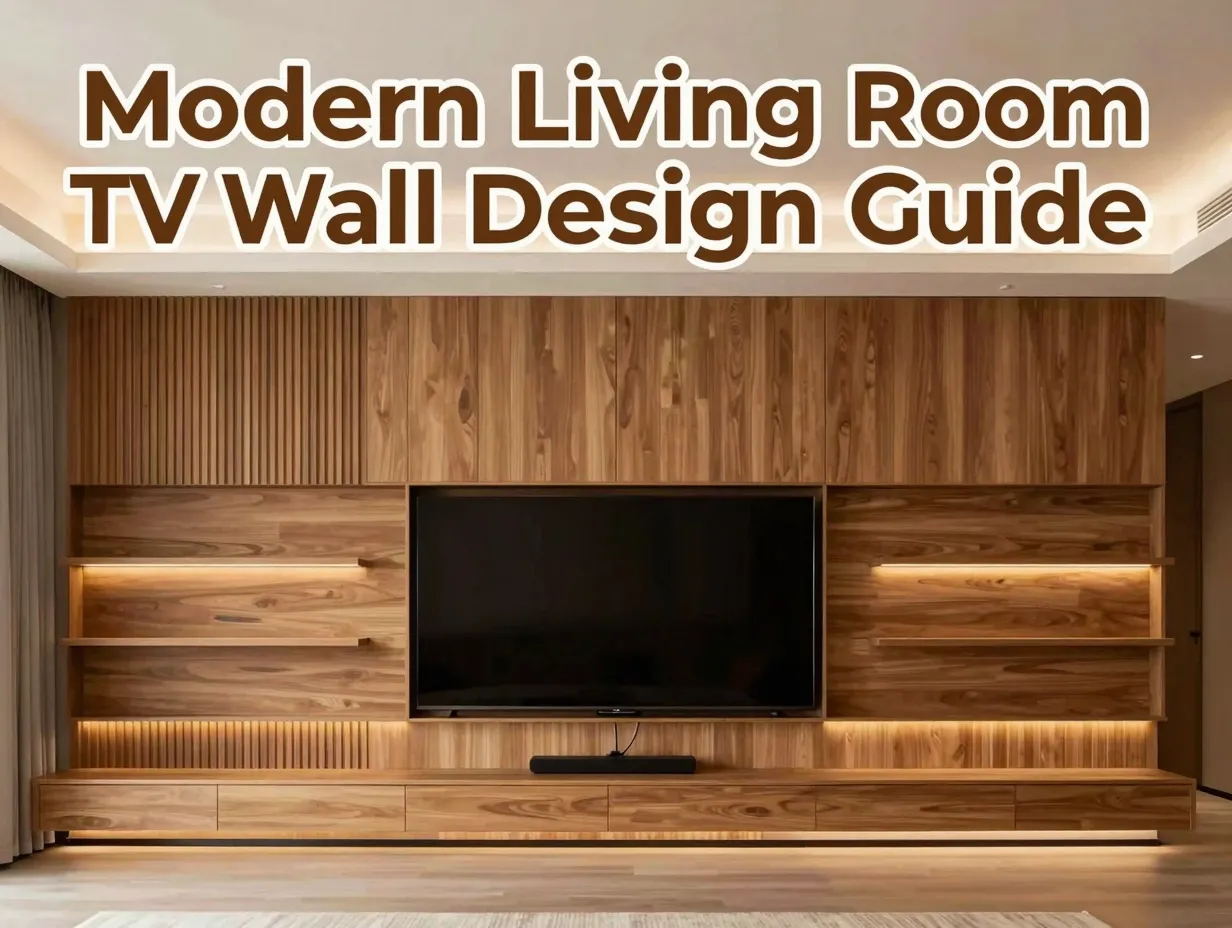
These 8 TV wall design ideas that instantly upgrade your living room close that gap. Whether you rent a small apartment or own a sprawling open-plan home, the right TV wall treatment transforms a functional necessity into a genuine focal point. I have spent considerable time researching the latest media wall trends, speaking with homeowners who have completed renovations, and studying what designers are recommending in 2026. The result is a practical, visually rich guide that covers everything from budget-friendly accent walls to full custom built-ins.
Key Takeaways
- A well-designed TV wall does double duty: it anchors the room visually and solves real storage problems.
- Combining a fireplace with a media wall is one of the most sought-after living room upgrades in 2026 [6].
- Full-height media walls with integrated cabinetry dramatically reduce clutter while making rooms feel larger [8].
- Lighting, especially LED backlighting and recessed spotlights, is the single easiest way to elevate any TV wall on a modest budget.
- Material choice (wood, stone, plaster, wallpaper) sets the entire mood of the room, so choose with intention.
Why Your TV Wall Deserves More Attention
Most of us arrange our furniture around the television without ever questioning whether the wall behind it is doing any work. A blank white wall behind a mounted screen creates visual imbalance. The TV becomes a dark void when switched off, and a glaring focal point when on. Neither outcome is flattering.
Interior designers consistently argue that the TV wall is the most underutilized canvas in the home. When treated thoughtfully, it can unify a room’s color palette, provide essential storage, and even add architectural interest that the space was previously missing. The eight ideas below represent the strongest approaches available in 2026, ranging from weekend DIY projects to full contractor builds [4].
The 8 TV Wall Design Ideas That Instantly Upgrade Your Living Room
1. The TV and Fireplace Media Wall Combination
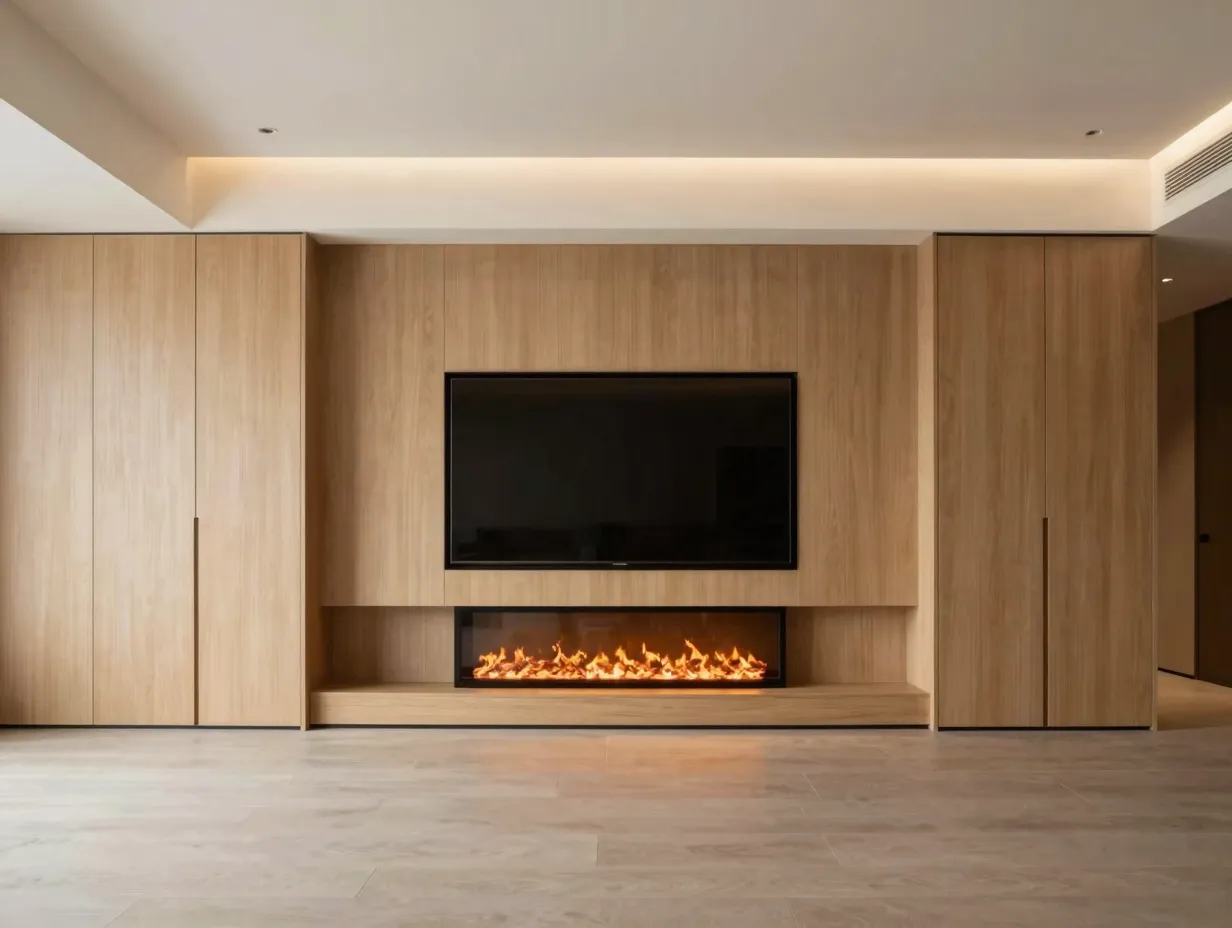
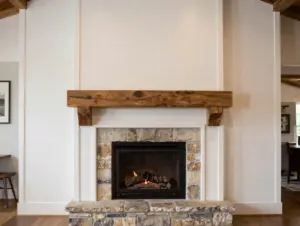
Few living room features generate as much desire as a fireplace-TV combination wall. The pairing works because both elements share a natural focal-point role, fire draws the eye just as a screen does, and combining them into one cohesive composition resolves the tension between the two.
In 2026, the dominant approach is the full-width media wall that spans the entire length of one room wall, housing a linear electric or gas fireplace at center height with the television mounted directly above it [6]. Flanking cabinetry in matching materials, typically matte lacquer, brushed oak, or concrete-effect panels, completes the look.
What makes it work:
- The fireplace provides warm ambient light that softens the screen’s glow during evening viewing.
- Integrated cabinetry on either side hides consoles, routers, and media equipment entirely.
- The floor-to-ceiling format makes low ceilings feel taller and narrow rooms feel wider [7].
One homeowner I spoke with described the transformation as “like adding an entire architectural feature that the house always should have had.” The project cost roughly $4,000 using an electric fireplace insert and MDF cabinetry with a veneer finish, far less than a structural fireplace, with no flue required.
Pro tip: Keep the fireplace surround and TV panel in the same material and tone. Contrast is tempting, but cohesion reads as more intentional and luxurious [4].
2. Full-Height Built-In Media Wall with Integrated Storage
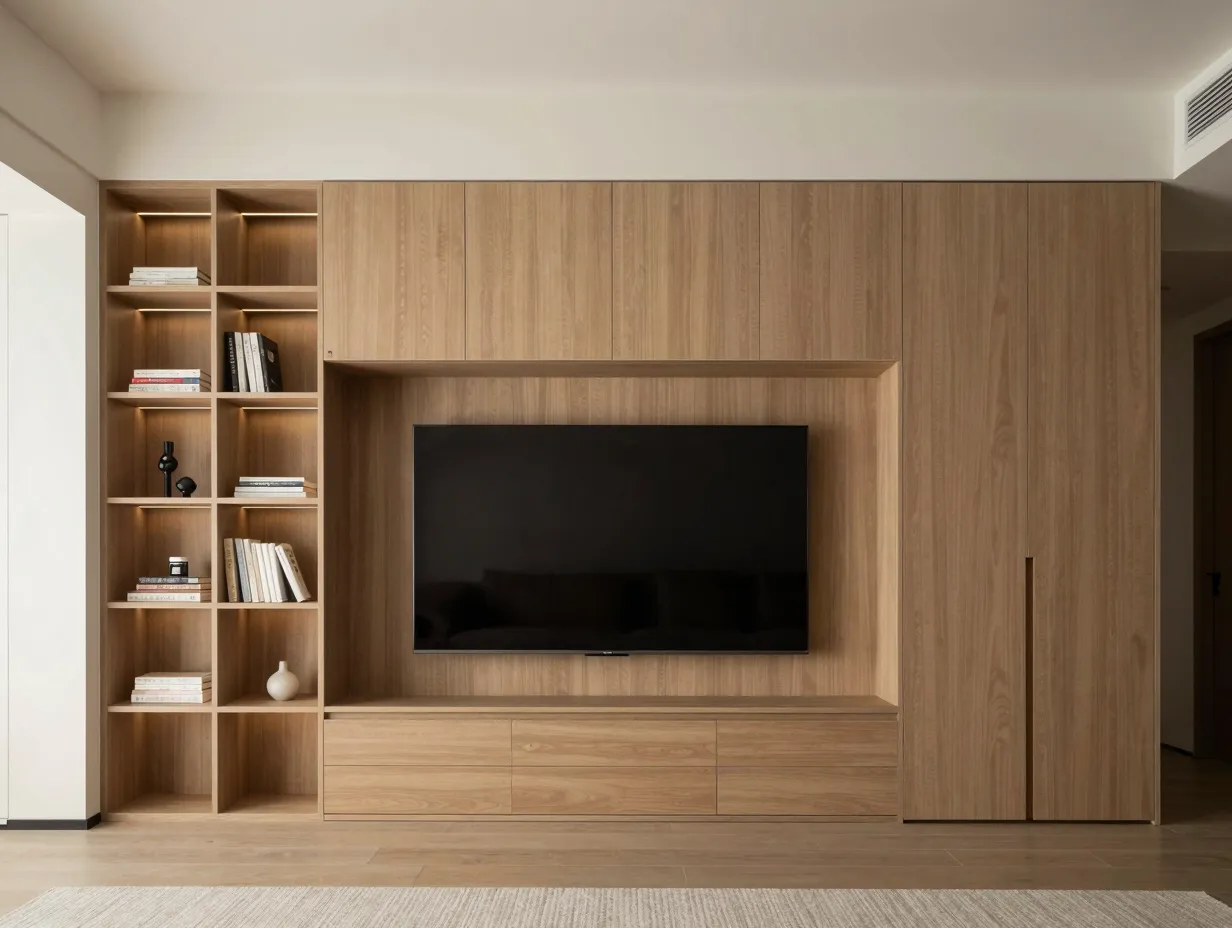
A full-height media wall is the closest thing to a room transformation that does not require knocking down walls. By running cabinetry, shelving, and paneling from floor to ceiling, you create the impression of a purpose-built architectural feature rather than furniture placed against a wall [8].
The television sits within a recessed alcove at eye level, surrounded by a mix of open shelves for display and closed cabinets for storage. This arrangement solves one of the most common living room complaints: too much stuff, not enough places to put it.
Design breakdown:
| Element | Recommended Approach |
|---|---|
| Cabinet finish | Matte paint or wood veneer for warmth |
| Shelf spacing | Vary heights to accommodate books, art, and tech |
| TV recess depth | Minimum 80mm for flush-mount appearance |
| Lighting | LED strip inside recess and under shelves |
Designers in 2026 are favoring asymmetric layouts, more shelving on one side, a deeper cabinet on the other, because perfect symmetry can feel rigid in a relaxed living space [7]. The asymmetry also allows the TV to sit slightly off-center, which can actually improve viewing angles depending on the room’s layout.
3. Textured Accent Wall Panels
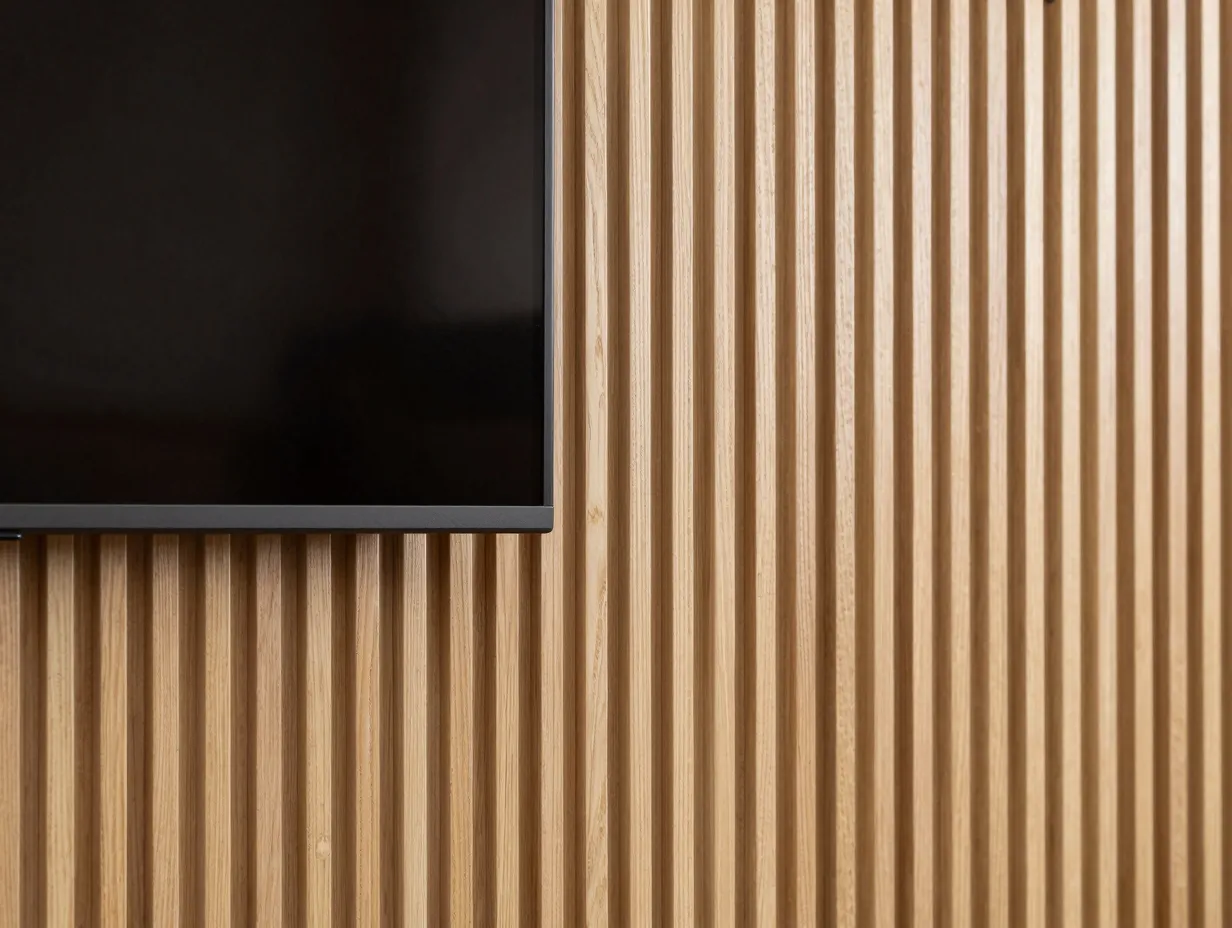
Not every upgrade requires cabinetry or construction. A textured accent wall behind the television is one of the most cost-effective ways to add depth and sophistication to a living room.
The most popular panel materials in 2026 include:
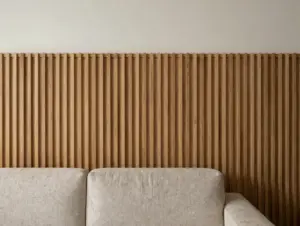
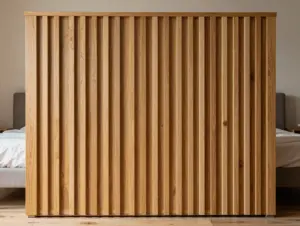
- Fluted wood panels: Vertical grooves create shadow lines that add rhythm and warmth. Particularly effective in Scandi and mid-century modern interiors.
- 3D plaster or gypsum panels: Geometric relief patterns that catch light differently throughout the day, making the wall feel alive.
- Stone-effect porcelain slabs: Durable, easy to clean, and available in formats large enough to cover an entire wall without grout lines [9].
- Acoustic felt panels: A practical choice for open-plan spaces where sound management matters alongside aesthetics.
The key with textured panels is restraint. The wall should frame the television, not compete with it. Neutral tones, warm white, greige, charcoal, or natural timber, keep the texture as the story rather than the color [10].
I once visited a friend’s apartment where she had installed vertical fluted oak panels behind her 55-inch TV. The panels cost around $600 in materials, and the installation took a single weekend. The result looked like a $15,000 bespoke joinery project. Texture is genuinely one of the highest-return investments in interior design.
4. Wallpaper Feature Wall
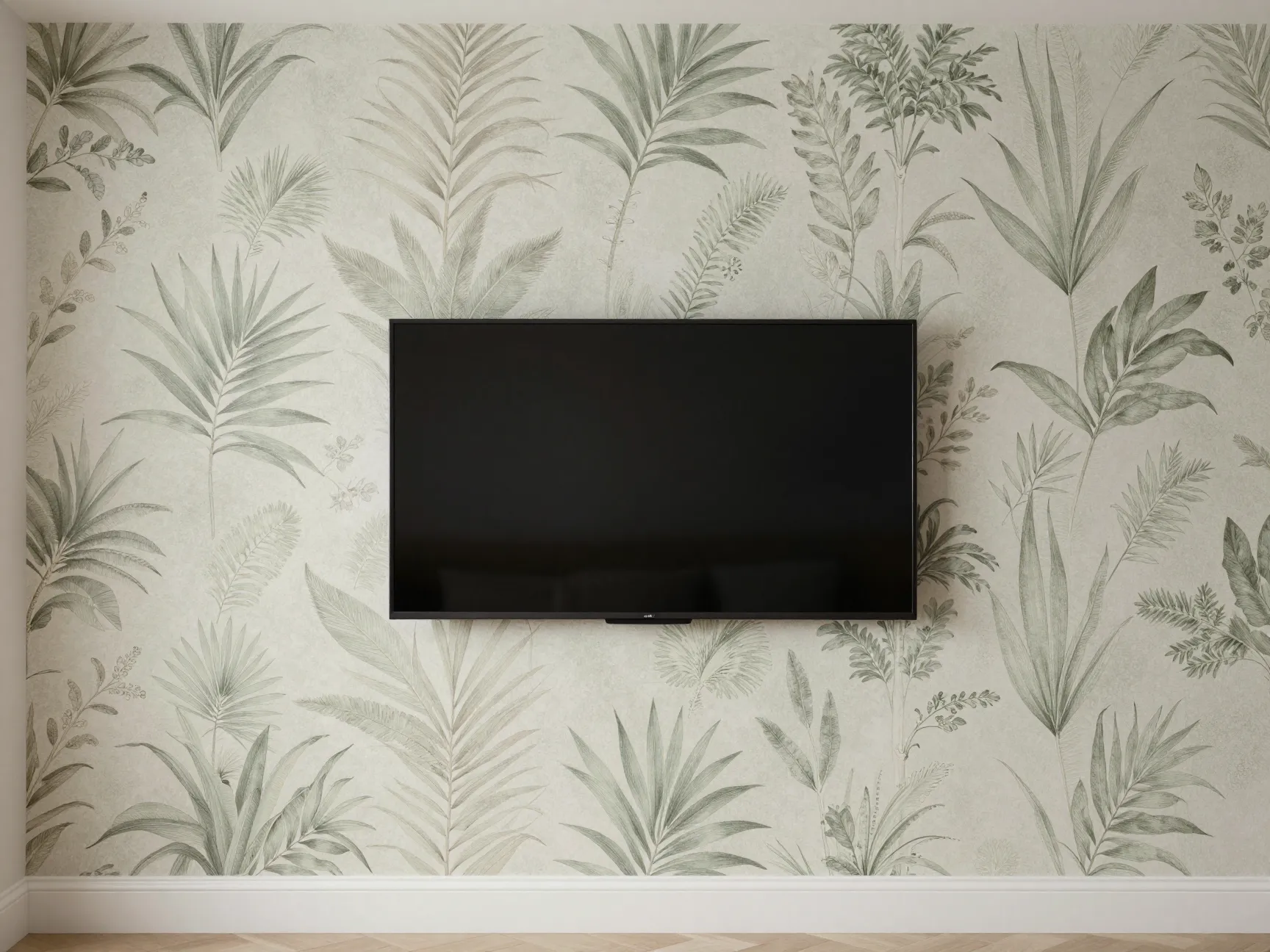
Wallpaper has undergone a complete image rehabilitation over the past decade, and in 2026 it is firmly positioned as a sophisticated design tool rather than a relic of the past [10].
A bold wallpaper behind the television creates instant drama without permanent structural changes, a critical advantage for renters. The most effective choices for TV walls include:
- Large-scale botanical prints that add organic softness to tech-heavy spaces.
- Geometric or abstract patterns in muted tones that provide visual interest without distracting from the screen.
- Textured grasscloth or linen wallpapers that mimic natural materials at a fraction of the cost.
- Mural-style panoramic wallpapers that turn the entire wall into a single artwork [4].
Important consideration: Avoid highly saturated or busy patterns directly behind the screen. When the TV is off, the wallpaper should be the star. When it is on, the pattern should recede gracefully. Test a large sample in the actual room lighting before committing.
Peel-and-stick wallpaper options have improved dramatically in quality, making this a genuinely reversible option for renters who want the look without the commitment.
5. Gallery Wall Arrangement Around the TV
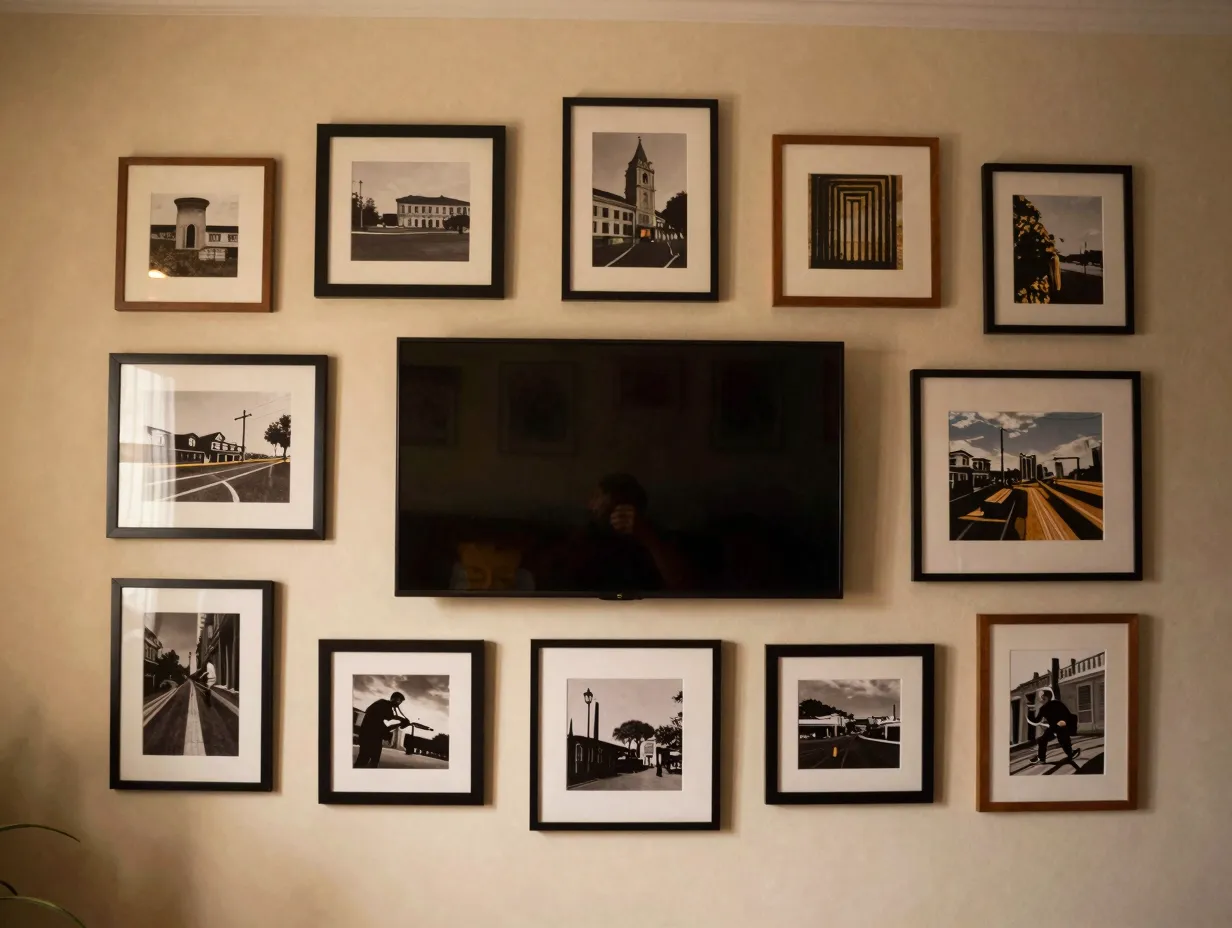
The gallery wall around a television is a design idea that divides opinion sharply. Done poorly, it looks chaotic and draws attention to the screen’s industrial nature. Done well, it integrates the TV into a curated art display that makes the entire wall feel intentional and personal [10].
The rules for making it work:
- Treat the television as one large “frame” within the gallery composition. Choose artwork in frames that share a finish with the TV bezel (black, brushed metal, or natural wood).
- Keep a consistent mat or frame style across at least 60% of the pieces to create visual cohesion.
- Leave adequate breathing room, at least 3 to 4 inches, between the TV edges and the nearest frames.
- Mix scales deliberately: one or two large pieces, several medium, a few small.
Samsung’s The Frame TV was practically designed for this application. Its customizable bezel options and Art Mode (which displays curated artwork when the screen is idle) make the television nearly indistinguishable from a framed print [9].
A gallery wall also benefits from picture lights, small directional fixtures mounted above key pieces, which add warmth and signal that the wall has been thoughtfully curated rather than randomly assembled.
6. Floating Shelves and Minimalist TV Setup
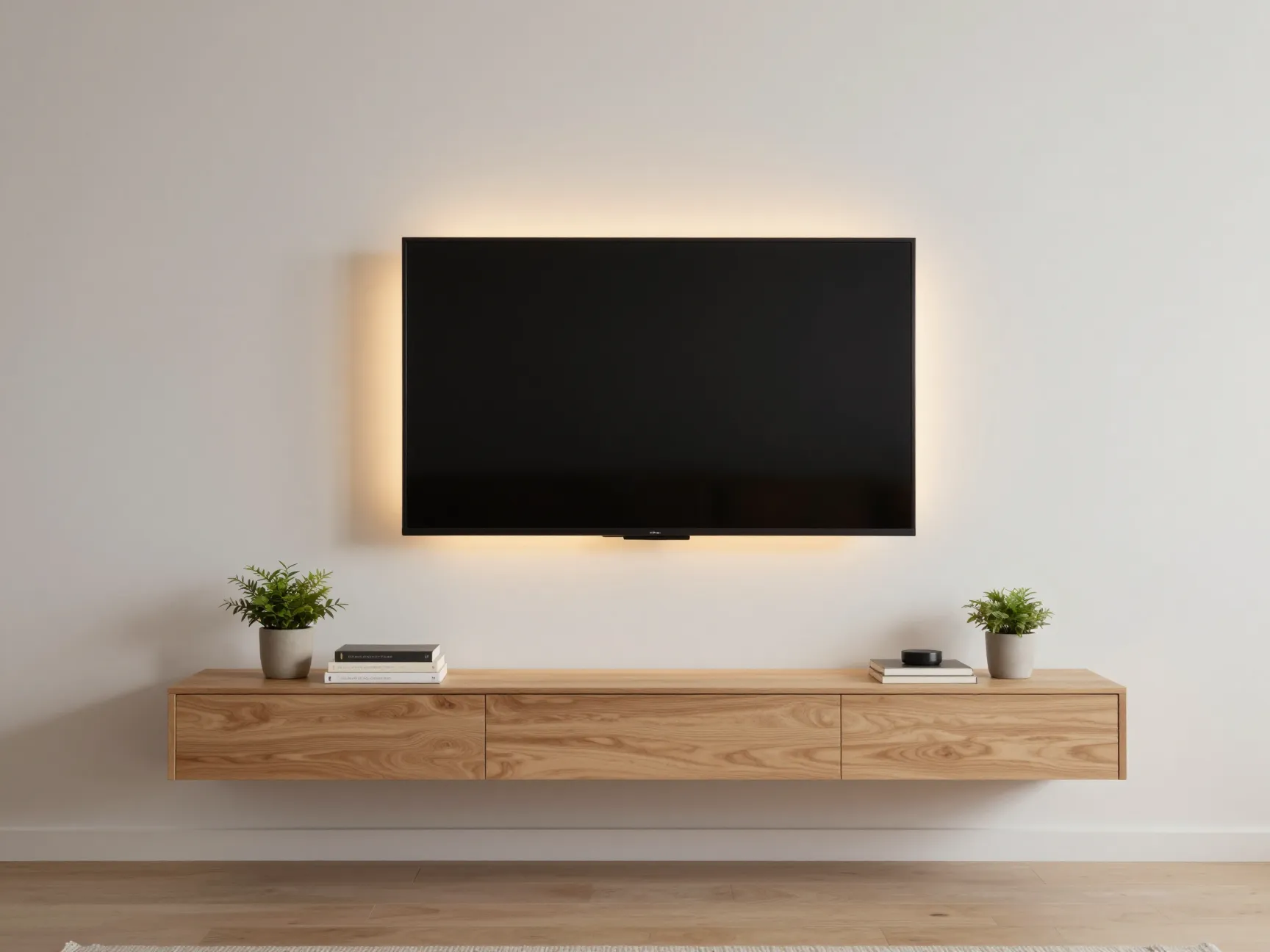
Not every home calls for floor-to-ceiling drama. For smaller rooms, studio apartments, or those who prefer a clean, uncluttered aesthetic, a floating shelf arrangement offers a refined alternative to heavy built-ins [8].
The minimalist TV wall typically features:
- The television wall-mounted with cables fully concealed inside the wall or through a slim cable management channel.
- One or two floating shelves below the screen for a media console, a few books, and a small plant.
- Negative space used deliberately, empty wall area is treated as a design element, not wasted space.
Cable management is non-negotiable here. A single visible cable destroys the effect of an otherwise immaculate setup. In-wall cable kits cost as little as $30 and take under an hour to install in most drywall constructions. The visual difference is enormous.
This approach pairs particularly well with warm LED backlighting mounted behind the television. Bias lighting, a strip of LEDs affixed to the back of the screen, reduces eye strain during viewing and creates a soft halo effect that makes the TV feel like a deliberate design choice rather than a utilitarian object [6].
7. Wood Slat Panel TV Wall
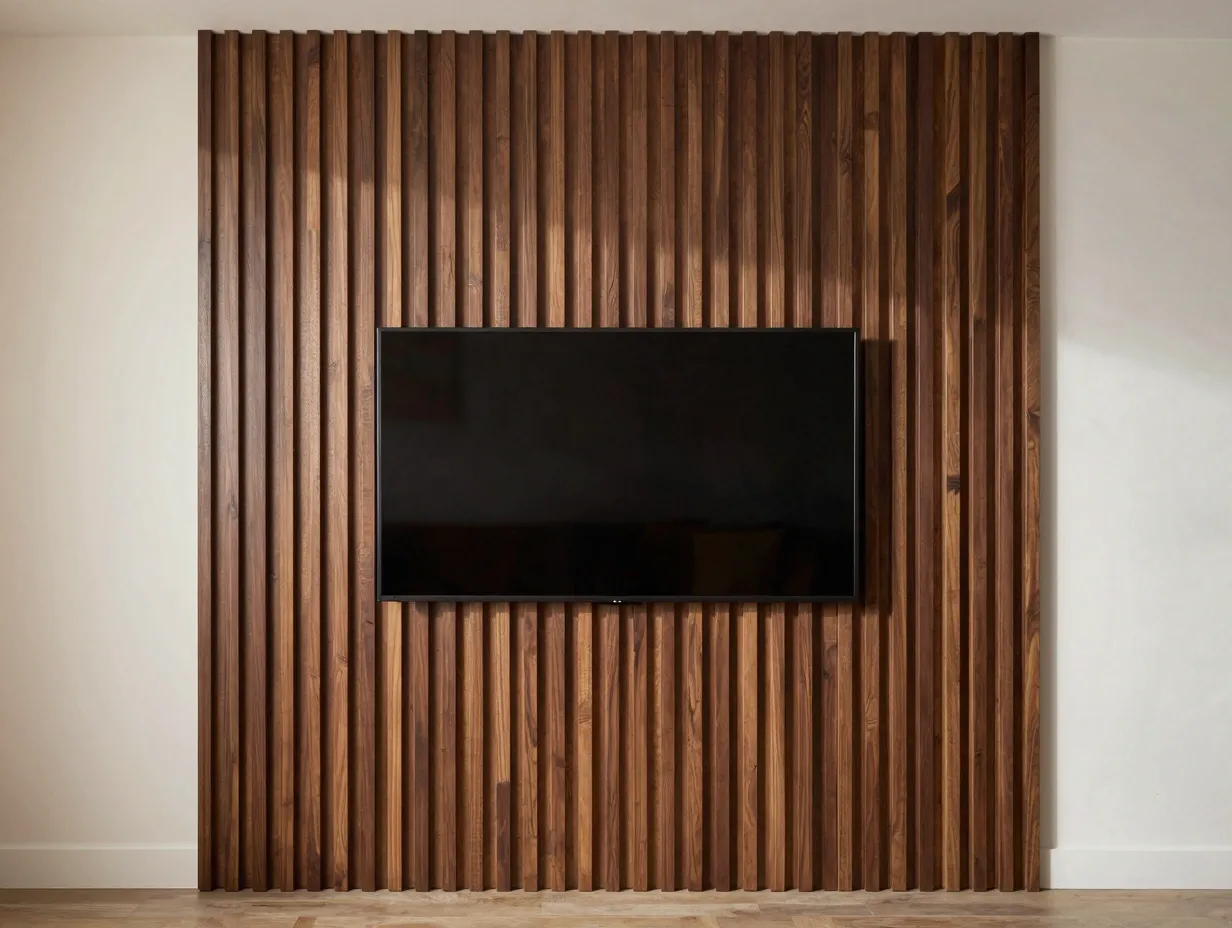
Wood slat panels, also called slatted wood walls or ribbed wood feature walls, have become one of the defining interior design trends of the mid-2020s, and they show no signs of slowing down in 2026 [7].
The appeal is straightforward: vertical timber slats create a warm, organic backdrop that softens the hard lines of a television and any associated technology. The slats cast subtle shadow lines that shift with natural light, giving the wall a dynamic quality that flat painted surfaces simply cannot match.
Material options and their effects:
- Real oak or walnut veneer slats: Maximum warmth and authenticity. Best for rooms with natural light and neutral color palettes.
- MDF slats with paint finish: More affordable, allows color matching to the room’s existing palette. Works well in contemporary and monochrome interiors.
- Acoustic wood slat panels: Combine the visual appeal with genuine sound-dampening properties. Ideal for home cinema setups or open-plan rooms [9].
The television is typically mounted directly onto the slat panel using a low-profile bracket that sits flush with the surface. Some homeowners choose to recess the screen slightly by removing a few slats and adding a backing panel, creating a more integrated appearance.
Color note: Dark walnut slats against a light wall create high contrast and a bold statement. Lighter oak tones against a warm white wall produce a softer, more Scandinavian result. Both work, the choice depends on whether you want the wall to command attention or simply enhance the room’s warmth.
8. Backlit Panel and LED Lighting Feature Wall
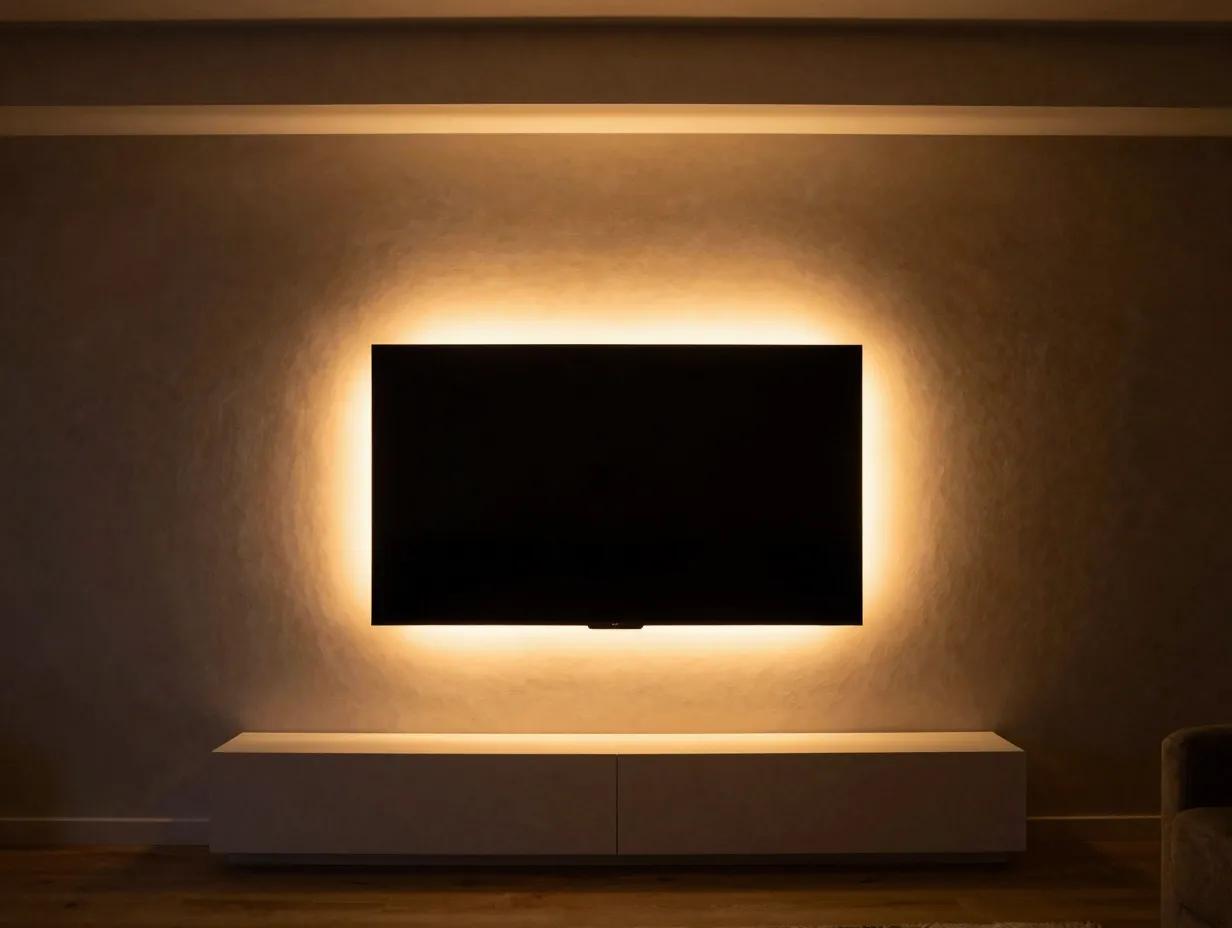
Of all the ideas in this guide, the backlit LED feature wall offers the most dramatic transformation per dollar spent. It is also the most technically flexible, the same underlying approach can be adapted to suit minimalist, maximalist, contemporary, and even traditional interiors [6].
The concept involves mounting the television against a panel, which can be painted MDF, stone-effect tile, fluted wood, or any other material, and integrating LED strip lighting in one or more of the following ways:
- Behind the TV panel: Creates a halo of light around the entire screen, reducing contrast fatigue during evening viewing and making the wall glow softly.
- Inside display niches or alcoves: Illuminates objects on shelves from below or above, turning everyday items into curated displays.
- Along the ceiling coffer or floor line: Grounds the wall within the room and connects it visually to the broader space.
- Behind vertical slats or perforated panels: Light bleeds through the gaps, creating a layered, almost theatrical effect [4].
Smart LED systems, controllable via smartphone or voice assistant, allow the color temperature and intensity to shift throughout the day. Warm amber tones in the evening, cooler daylight tones for daytime use. This adaptability is one reason the backlit panel wall has become a staple recommendation among interior designers working on living room upgrades in 2026 [7].
Budget reality check: A basic backlit panel wall using an MDF panel, a low-profile TV mount, and a quality LED strip kit can be completed for under $300 in materials. A premium version with stone-effect tiles, recessed lighting, and professional installation typically runs $1,500 to $3,500 depending on wall size and material quality.
How to Choose the Right TV Wall Design for Your Space
With eight strong options on the table, the challenge becomes choosing the right one. These three questions cut through the noise:
1. What is your primary goal? Storage, aesthetics, or both? If storage is critical, built-in media walls (ideas 1 and 2) are the clear answer. If you are renting or want flexibility, wallpaper (idea 4) or floating shelves (idea 6) make more sense.
2. What is your budget? Backlit panels (idea 8) and textured accent walls (idea 3) offer the highest visual return at the lowest cost. Fireplace-TV combinations (idea 1) and full built-ins (idea 2) require larger investments but deliver proportionally larger transformations.
3. What is the room’s existing style? Wood slat panels (idea 7) suit warm, organic, or Scandinavian aesthetics. Gallery walls (idea 5) work best in eclectic or maximalist spaces. Minimalist floating shelf setups (idea 6) align with contemporary and industrial interiors.
Common Mistakes to Avoid
Even the best design concept can fall flat if execution misses a few fundamentals. Watch out for these frequent errors:
- Mounting the TV too high. Eye level when seated is the correct height. A common mistake is mounting the screen at standing eye level, which causes neck strain and looks unnatural.
- Ignoring cable management. Visible cables undermine every design on this list. Budget time and money for proper concealment.
- Choosing the wrong TV size for the wall. A 43-inch screen on a 12-foot wall looks lost. Use a TV size calculator or tape out the dimensions on the wall before purchasing.
- Skipping the lighting layer. Overhead ceiling lights alone create flat, unflattering illumination. Layer in wall sconces, LED strips, or picture lights to give the wall dimension.
- Over-accessorizing shelves. Curated minimalism reads as intentional design. Cluttered shelves read as storage overflow [10].
Conclusion
The living room TV wall is one of the highest-impact design opportunities in any home, and it is consistently one of the most neglected. These 8 TV wall design ideas that instantly upgrade your living room prove that meaningful transformation does not always require a major renovation budget or months of construction.
Here are your actionable next steps:
- Walk into your living room right now and assess the wall behind your television honestly. Is it doing any work, or is it simply there?
- Pick one idea from this list that aligns with your style, budget, and practical needs.
- Start with the lighting. Even before committing to panels, wallpaper, or built-ins, add a bias lighting kit behind your TV this week. The immediate improvement will motivate the rest of the project.
- Gather material samples and test them in your actual room lighting before purchasing at scale.
- If you are considering a built-in or fireplace combination, get at least three contractor quotes and ask to see completed projects in person.
The gap between a living room that functions and one that genuinely impresses is often just one well-designed wall away.
References
[1] Watch – https://www.youtube.com/watch?v=_r9w7k-CEI4
[2] Watch – https://www.youtube.com/watch?v=5_9lM8SFSHM
[3] Watch – https://www.youtube.com/watch?v=lqxRdt_5iGo
[4] Living Room Tv Wall Ideas 2026 Modern Luxury – https://homeproideas.com/living-room/living-room-tv-wall-ideas-2026-modern-luxury/
[5] Watch – https://www.youtube.com/watch?v=gYh6BBwex0w
[6] Tv Media Wall Design Guide 2026 – https://accentwallsceiling.com/blog/tv-media-wall-design-guide-2026
[7] Media Wall Trends For 2026 – https://www.robesandrails.co.uk/news/media-wall-trends-for-2026/
[8] Living Room Media Wall Ideas For 2026 – https://www.homedit.com/living-room-media-wall-ideas-for-2026/
[9] Top Media Wall Trends For 2024 Modern Designs For Every Home – https://mediawallmaster.co.uk/top-media-wall-trends-for-2024-modern-designs-for-every-home/
[10] Tv Wall Ideas – https://www.housebeautiful.com/uk/decorate/display/g39927584/tv-wall-ideas/