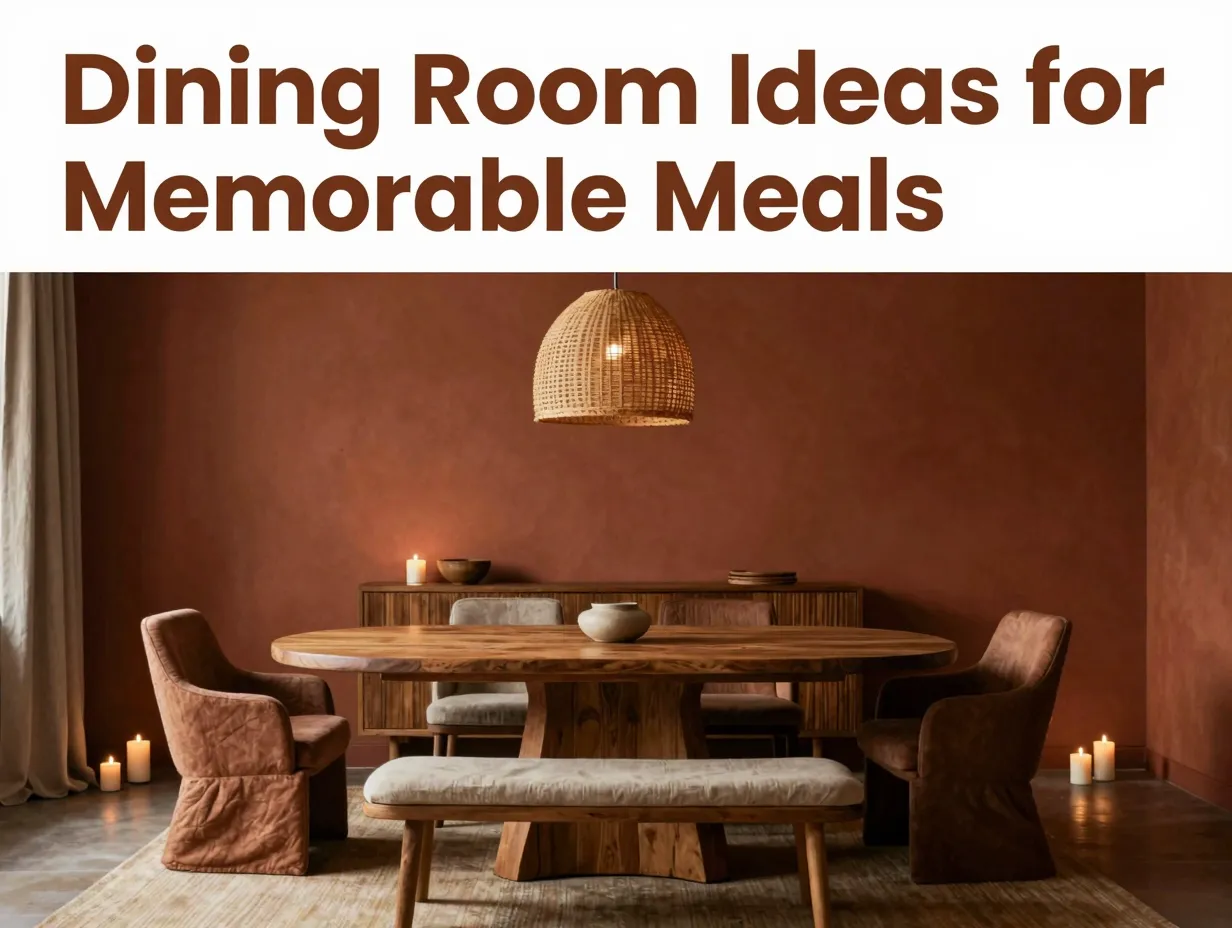
9 Dining Room Inspiration Ideas For Memorable Meals and Gatherings
Fewer than 30% of American households eat dinner together more than five nights a week, according to research from the American College of Lifestyle Medicine. That number tells a quiet story about how we have drifted away from the dining table as a place of connection. Yet the design of that room, the lighting, the seating, the colors on the walls, can either pull people back to the table or push them away from it. These 9 dining room inspiration ideas for memorable meals and gatherings are built around one core belief: the right environment makes people want to linger.
Disclosure: This post contains affiliate links. As an Amazon Associate, we earn from qualifying purchases, and at no extra cost to you.
Whether you are redesigning a formal dining room from scratch or refreshing a tired breakfast nook, this guide gives you practical, design-forward ideas rooted in what leading interior designers are recommending for 2026.
Key Takeaways
- Warm, earthy color palettes and moody layered tones are the dominant mood-setters in dining rooms right now, replacing cold neutrals.
- Statement lighting is no longer optional; it is the single fastest way to elevate any dining space.
- Mixing seating types, such as benches, banquettes, and upholstered chairs, improves both comfort and visual interest.
- Enclosed dining rooms are making a comeback because they create intimacy and a true sense of occasion.
- Natural materials, especially wood, anchor a dining space and connect it to something timeless and warm.
Why Your Dining Room Environment Matters More Than the Menu
Before diving into the 9 dining room inspiration ideas for memorable meals and gatherings, it helps to understand why the physical space matters so much. Psychologists who study eating behavior consistently find that ambient factors like lighting, color, and noise level influence how long people stay at the table, how much they eat, and how satisfied they feel afterward. A well-designed dining room is not a luxury. It is a tool for better connection.
I experienced this firsthand when a friend renovated her dining room two years ago. She swapped out harsh overhead lighting for a warm pendant fixture, painted the walls a deep terracotta, and added a simple upholstered bench along one wall. Suddenly, dinners that used to end in 20 minutes stretched to two hours. The food had not changed. The room had.
With that context in mind, here are the nine ideas that can transform your dining space.
9 Dining Room Inspiration Ideas For Memorable Meals and Gatherings
1. Embrace Warm, Earthy Color Palettes
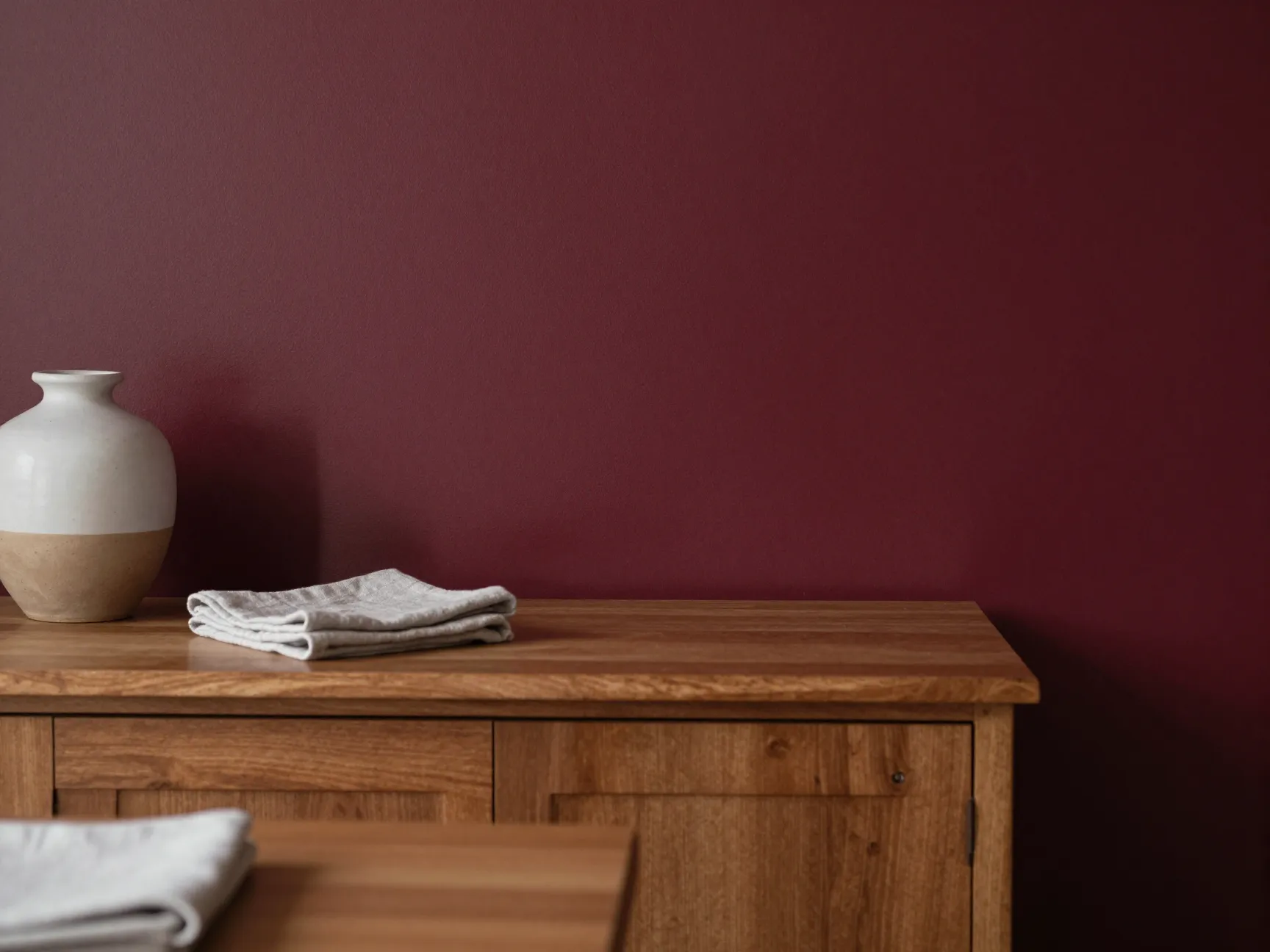
Color is the fastest and most affordable way to change the emotional temperature of a room. Designers in 2026 are moving decisively away from cool grays and stark whites toward colors that feel grounding and human [1].
Colors to consider:
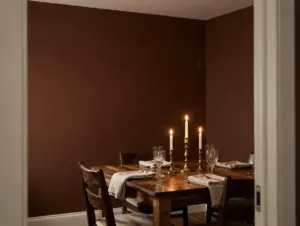
- Chocolate brown
- Warm beige and sand
- Ochre and mustard
- Terracotta and burnt sienna
- Smoky jade
- Deep burgundy
These tones work because they mimic the colors found in natural materials like clay, stone, and aged wood. They signal warmth and abundance, which are exactly the feelings you want guests to associate with your table.
Practical tip: You do not need to paint every wall. A single feature wall in deep burgundy behind a sideboard can anchor the entire room without overwhelming it.
2. Go Moody With Layered Color Schemes
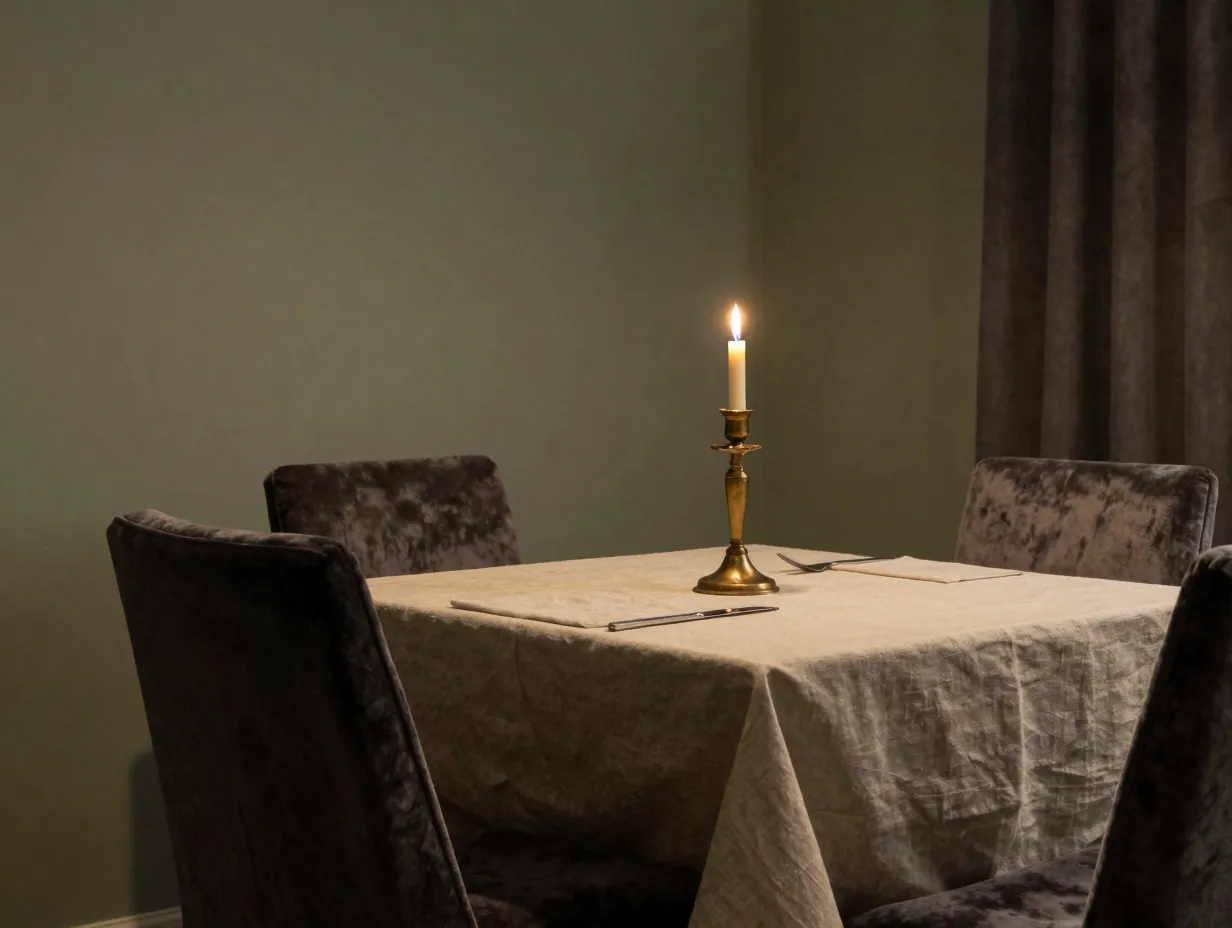
Related to earthy palettes but distinct in approach, moody layered color schemes use depth and shadow to create an atmosphere that encourages people to slow down [5]. Think of the difference between a brightly lit fast-food restaurant and a dimly lit bistro. One makes you rush; the other makes you stay.
How to layer a moody palette:
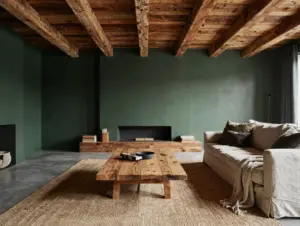
- Start with a mid-tone wall color like soft charcoal or muted sage green.
- Add textiles in a slightly darker or richer version of the same hue.
- Bring in natural materials like linen, velvet, and aged brass to add texture without adding brightness.
- Use candlelight or warm-toned bulbs (2700K or lower) to deepen the effect at night.
“The most memorable dinner parties I have attended all happened in rooms that felt slightly dramatic. Not dark, but deliberate.”
Chocolate browns, soft charcoals, and muted greens are particularly effective at creating that sense of deliberate atmosphere [5]. The key is layering, not just painting walls one color and stopping there.
3. Install a Statement Lighting Fixture
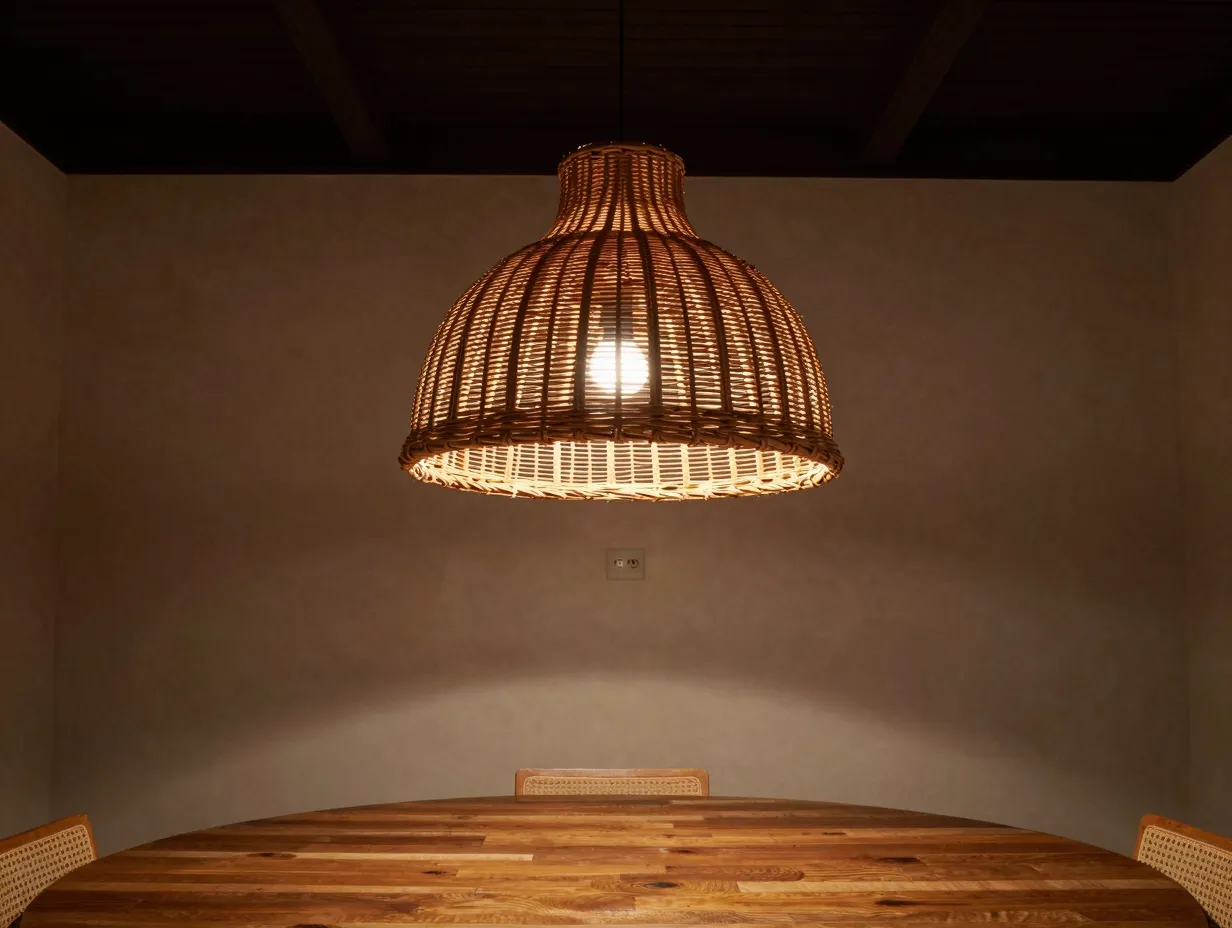
If you do only one thing from this list of 9 dining room inspiration ideas for memorable meals and gatherings, make it this one. Statement lighting has the highest return on investment of any single design change in a dining room [3].
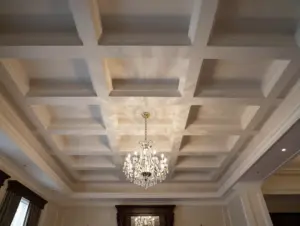
Recessed lighting, while practical, flattens a space. A sculptural pendant or chandelier does the opposite. It draws the eye upward, creates a focal point, and, most importantly, controls the quality of light that falls on the faces of everyone at your table.
What makes a fixture a “statement”:
| Feature | Why It Matters |
|---|---|
| Sculptural form | Becomes a conversation piece |
| Warm light output | Flatters skin tones and food |
| Correct scale | Should be 12 inches narrower than the table on each side |
| Dimmable capability | Lets you shift mood from daytime to evening |
Designers are favoring fixtures made from natural materials like rattan, hand-blown glass, and oxidized metal. These materials age beautifully and complement the earthy palettes described above [3].
Hanging height: The bottom of the fixture should sit 30 to 36 inches above the tabletop for standard 8-foot ceilings.
4. Choose Curved Furniture Silhouettes
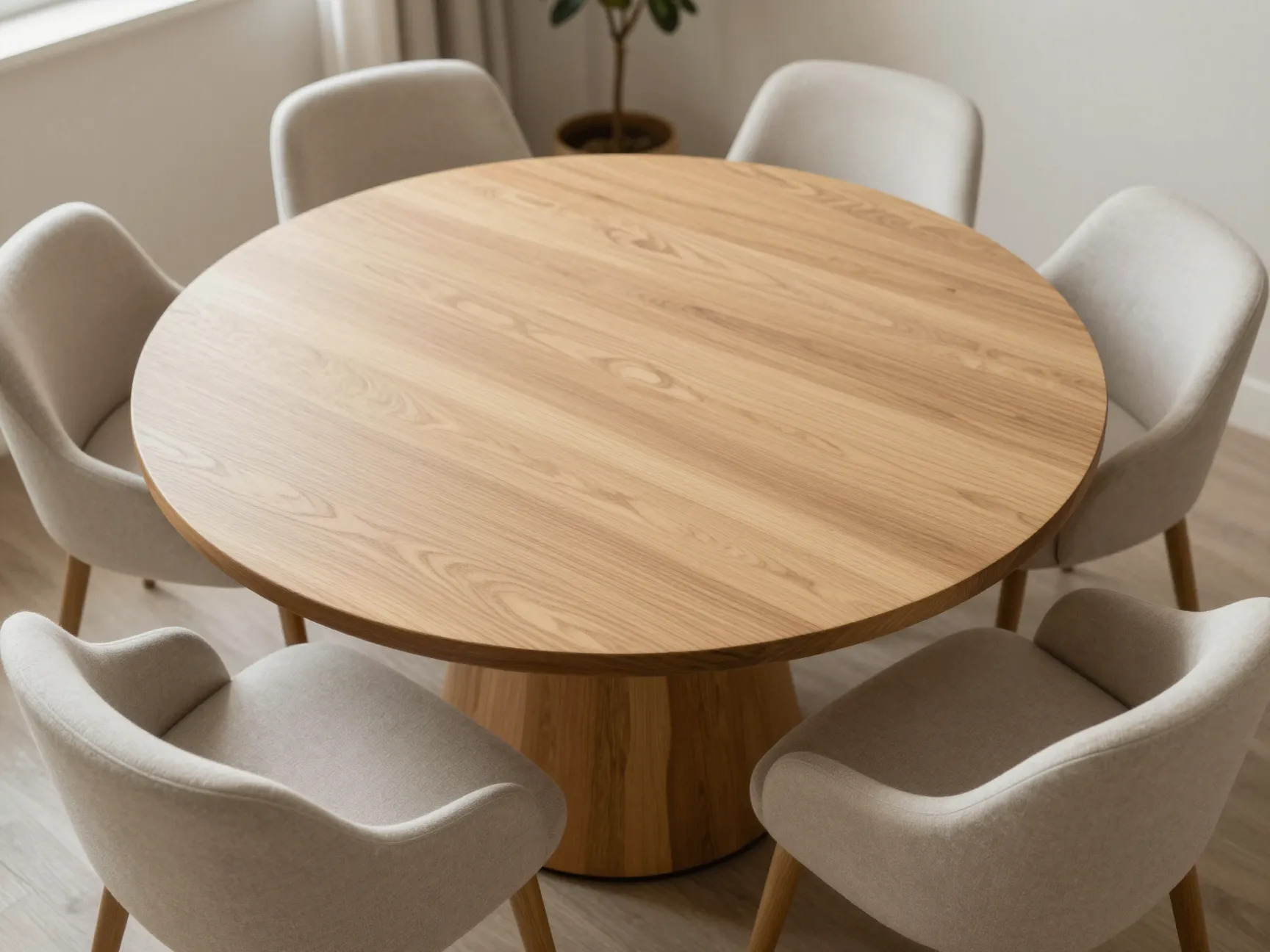
Hard angles create a sense of formality and even tension. Softer, curved shapes do the opposite. They invite people in and make a room feel more relaxed and human [2].
The shift toward curved silhouettes in dining rooms is one of the clearest design signals of 2026. Oval and round dining tables with sculptural pedestal bases are replacing the rectangular tables with four-legged frames that dominated the previous decade [2].
Why curved furniture works better for gatherings:
- Round and oval tables eliminate the “head of the table” hierarchy, making conversation flow more naturally.
- Pedestal bases free up leg room, which matters enormously for comfort during long meals.
- Curved chair backs and upholstered seats reduce physical fatigue during extended dinners.
- Soft shapes soften the acoustic environment, reducing the echo that hard-edged furniture can amplify.
My recommendation: If a full round table is too large for your space, look for a round-cornered rectangular table. It gives you the seating capacity of a rectangle with the softened energy of a curve.
5. Mix Your Seating Arrangements
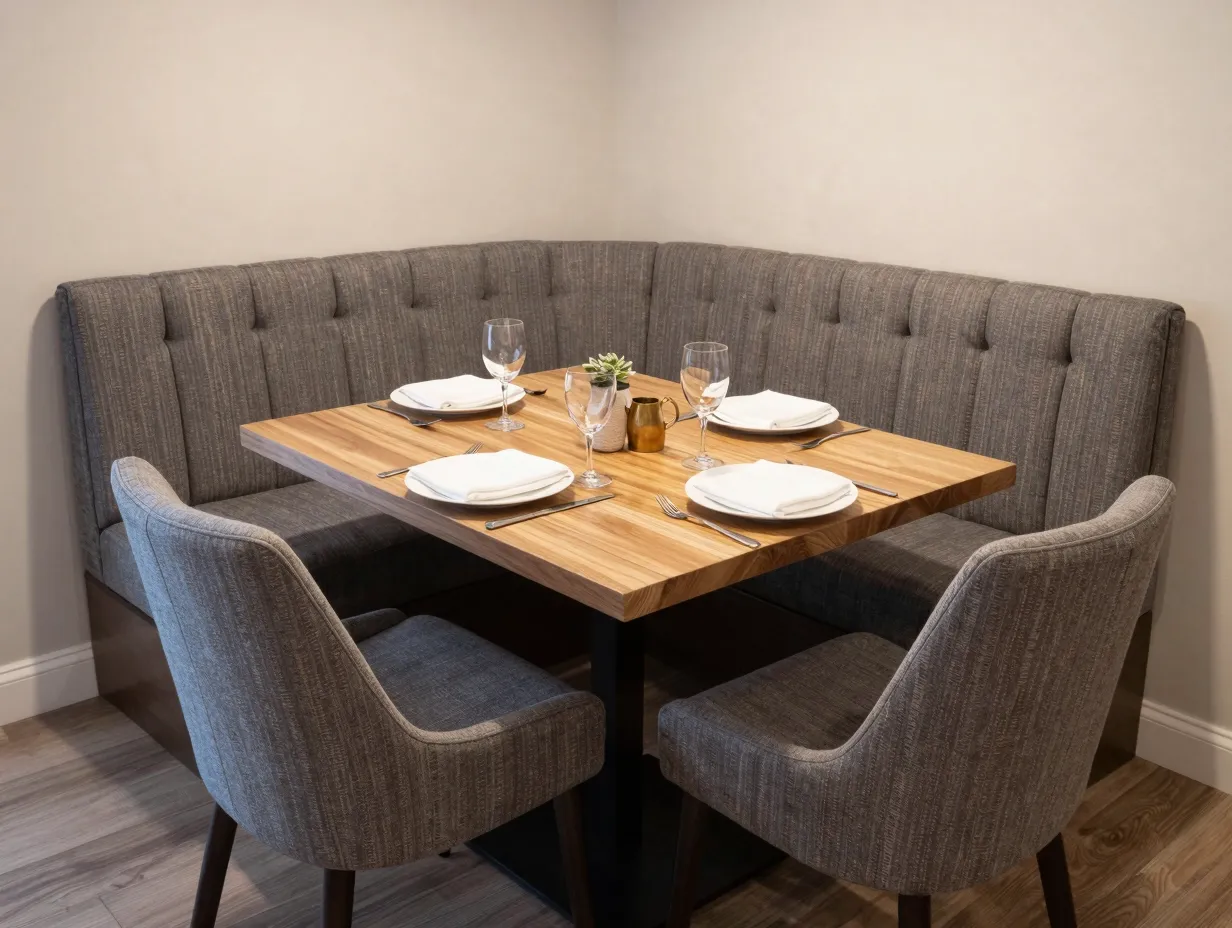
One of the most underused strategies in dining room design is combining different types of seating. Most people buy a matching set of six or eight chairs and call it done. But mixed seating, combining upholstered chairs with benches or banquettes, does two things at once: it maximizes the number of people you can seat and it adds visual interest that a uniform set simply cannot [3].
Common mixed seating combinations:
- Upholstered host chairs at each end plus a bench along one long side
- A built-in banquette against the wall with loose chairs on the open side
- Two armchairs at the heads of the table with armless side chairs along the sides
A banquette in particular is a smart investment. It can seat more people per linear foot than individual chairs, it creates a cozy, restaurant-style feel, and it can incorporate hidden storage underneath, which is invaluable in smaller homes.
Fabric tip: Use performance fabrics like Crypton or Sunbrella for upholstered pieces in dining rooms. They handle spills, wine, and children far better than standard upholstery.
6. Bring Back the Enclosed Dining Room
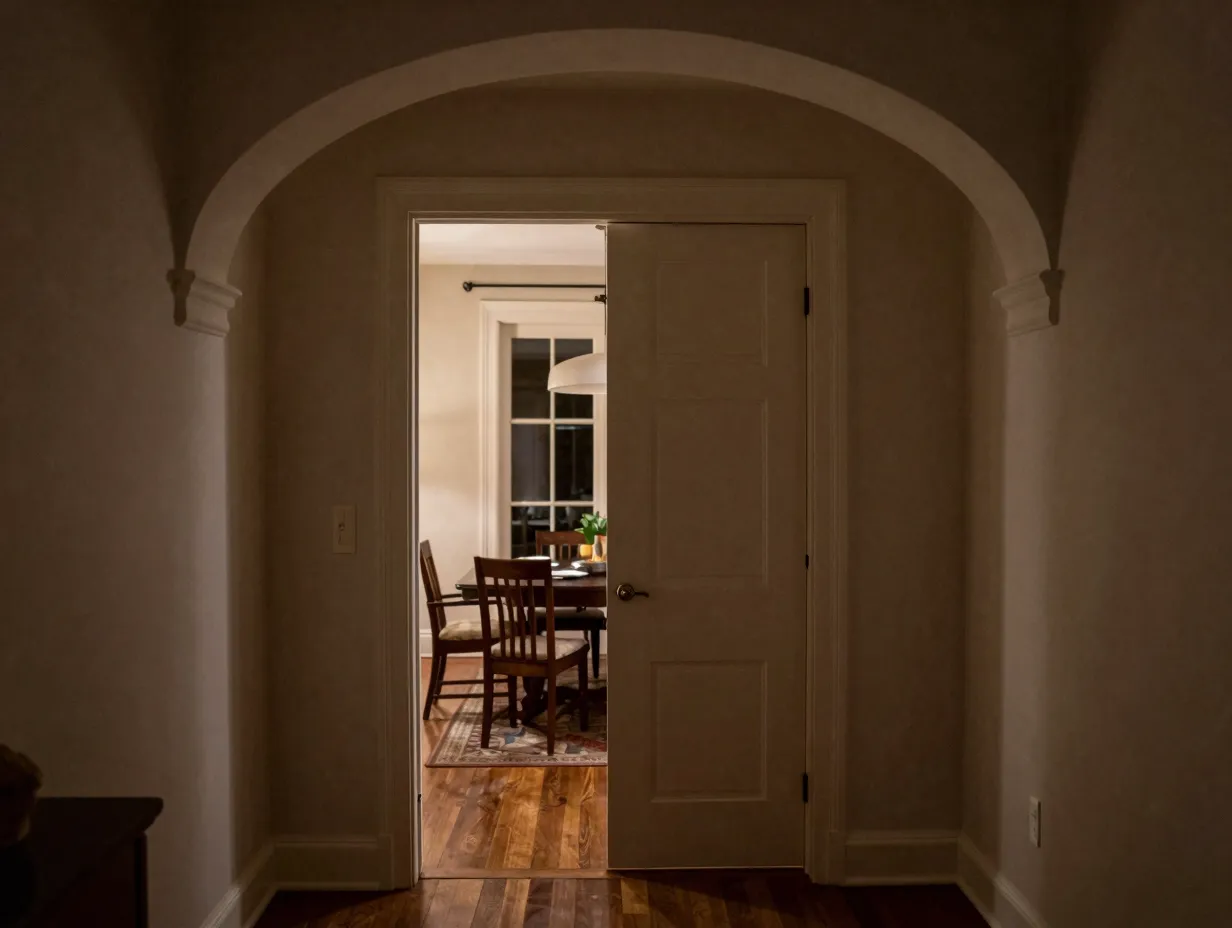
Open-concept floor plans dominated home design for two decades. Now, there is a measurable shift back toward enclosed, defined dining rooms [3]. The reason is simple: open spaces are great for visibility but terrible for intimacy.
An enclosed dining room creates a sense of occasion. When guests step through a doorway into a dedicated dining space, something shifts psychologically. The meal feels more intentional. Conversations feel more private. The room itself signals that what happens here matters.
Ways to create enclosure without full walls:
- Install a wide doorway with a pocket door that can be left open or closed.
- Use a dramatic arched opening to define the space without fully separating it.
- Position a large bookcase or open shelving unit as a room divider.
- Hang a ceiling-mounted curtain track to create a soft, flexible partition.
If you are building or renovating, consider a dedicated dining room with a door. If you are working with an existing open plan, use the architectural tricks above to carve out a sense of enclosure.
7. Incorporate Natural Wood Details
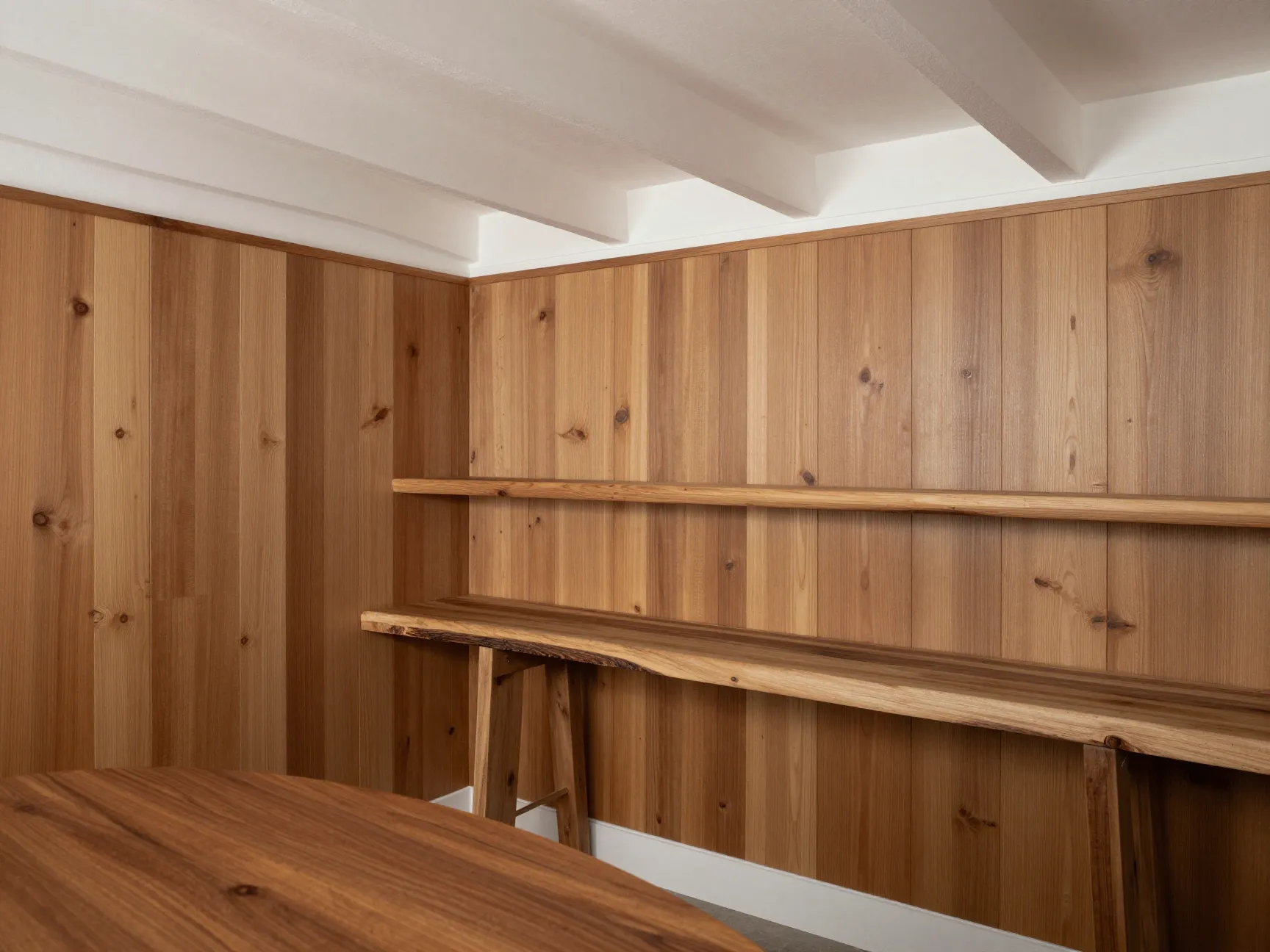
Wood is one of the oldest and most psychologically comforting materials humans have used in their built environment. In dining rooms, it adds warmth, texture, and a sense of rootedness that no synthetic material can replicate [3].
The current design direction goes beyond a wood dining table. Designers are using wood on walls, ceilings, and architectural details to create a fully immersive natural environment [3].
Wood applications to consider:
- Ceiling beams: Even faux beams add enormous warmth and visual weight to a dining room ceiling.
- Shiplap or paneled walls: A single wall of vertical wood paneling transforms the character of a room.
- Wood-framed windows and doors: Replacing painted trim with natural wood trim is a high-impact, lower-cost upgrade.
- Live-edge shelving: A live-edge shelf as a sideboard or display surface brings organic shape into the room.
Wood species to consider: White oak is the dominant choice right now for its warm, even grain. Walnut offers deeper, richer tones. Reclaimed pine brings history and character.
Pair wood elements with the earthy color palettes from ideas 1 and 2 and the effect is cohesive and deeply inviting.
8. Use Bold Patterns and Textured Surfaces
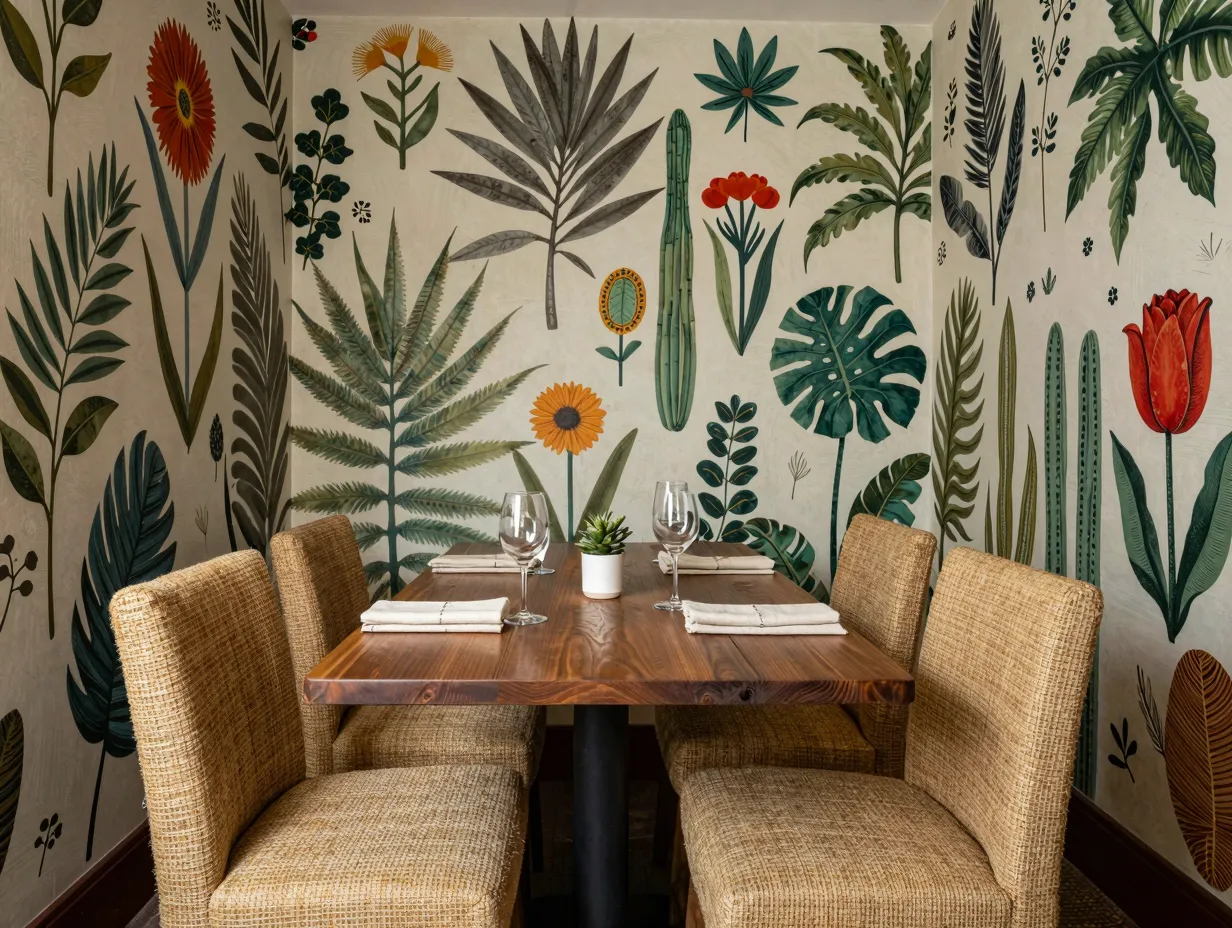
Pattern is one of the most personal expressions in interior design, and dining rooms are one of the best places to use it boldly [6]. Because the dining room is a destination rather than a through-space, it can handle more visual intensity than a hallway or living room.
Where to introduce pattern:
- Wallpaper: A patterned wallpaper on all four walls of an enclosed dining room creates an immersive, jewel-box effect. Botanical prints, geometric patterns, and abstract designs all work well.
- Upholstery: Patterned chair seats or banquette cushions add rhythm without overwhelming the room.
- Rugs: A bold rug under the dining table grounds the space and defines the dining zone within a larger room.
- Table linens: Patterned tablecloths and napkins are the lowest-commitment way to test a pattern direction.
A word of caution: When mixing patterns, use the classic rule of scale. Pair a large-scale pattern (like a wide botanical print) with a small-scale pattern (like a fine stripe or micro-geometric) and a solid to give the eye a place to rest.
Textured surfaces work alongside pattern. Grasscloth wallpaper, linen drapes, woven placemats, and hammered metal tableware all add tactile richness that photographs beautifully and feels wonderful in person.
9. Connect Your Dining Room to the Outdoors
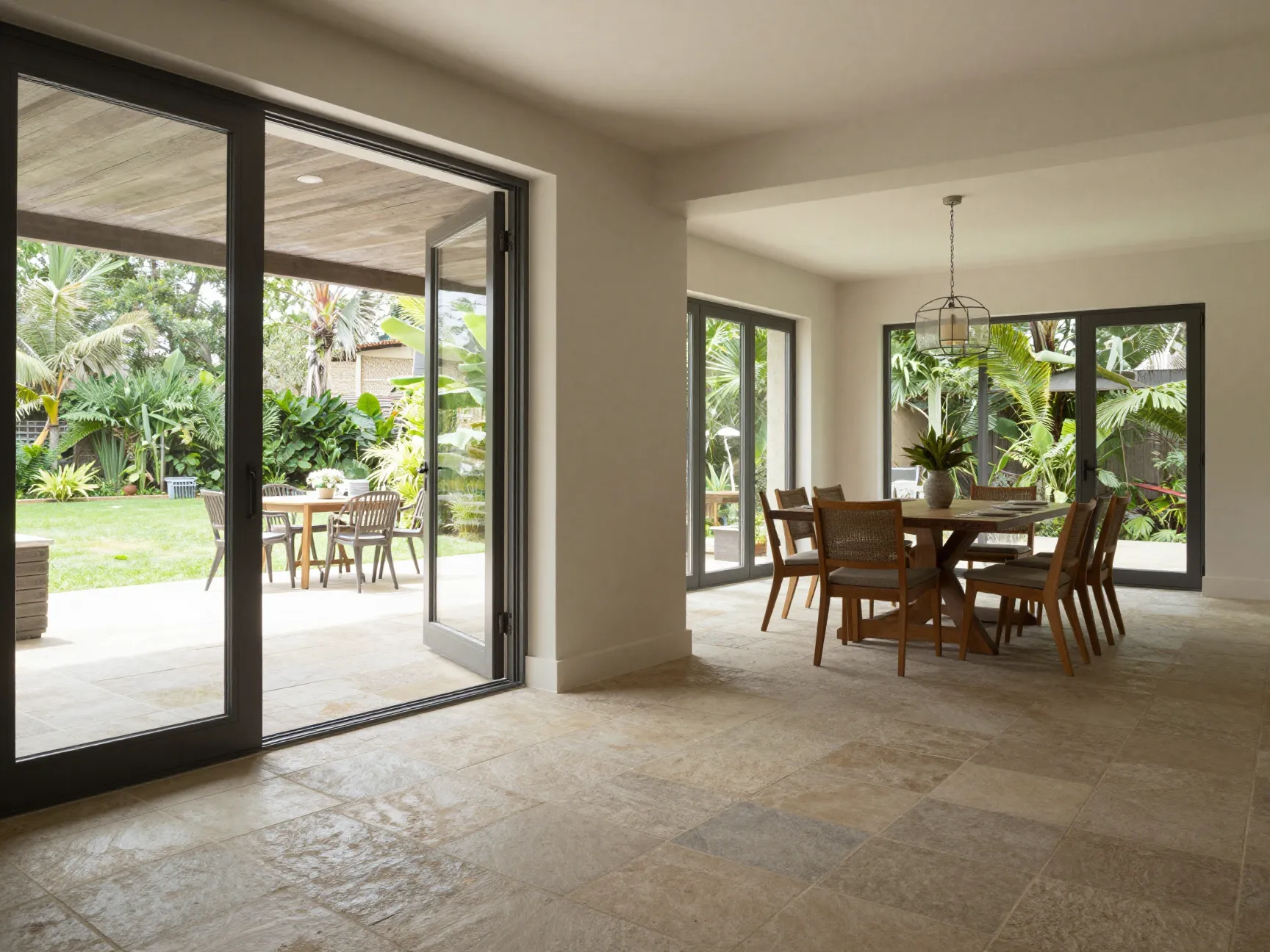
The final idea in these 9 dining room inspiration ideas for memorable meals and gatherings is about expanding the boundaries of the room itself. Dining rooms that connect to outdoor spaces feel larger, more dynamic, and more memorable [4].
This connection does not require a full indoor-outdoor renovation. It exists on a spectrum.
Levels of indoor-outdoor connection:
- Visual connection: Large windows or glass doors that frame a garden view bring the outside in without any structural changes.
- Material continuity: Using the same flooring material inside and outside, such as large-format stone tile, blurs the boundary between spaces.
- Physical connection: Folding or sliding glass doors that open fully create a seamless transition between dining room and terrace.
- Full outdoor dining: A covered outdoor dining area that mirrors the interior design creates a second dining space for warmer months.
When the weather allows, there is something genuinely magical about a meal that begins indoors and spills out onto a terrace. The transition itself becomes part of the experience.
Design tip: To make the connection feel intentional rather than accidental, use the same or complementary lighting fixtures inside and outside, and carry at least one material, such as the same wood species or stone color, across both spaces [4].
How to Prioritize These Ideas for Your Own Space
Not every idea applies equally to every home. Here is a simple framework for deciding where to start.
If your budget is limited: Focus on color (idea 1 or 2) and lighting (idea 3). These two changes deliver the most dramatic transformation per dollar spent.
If you are remodeling: Prioritize enclosure (idea 6), wood details (idea 7), and indoor-outdoor connection (idea 9). These are structural or semi-structural changes that are much harder to add later.
If you entertain frequently: Mixed seating (idea 5) and curved furniture (idea 4) will have the biggest impact on guest comfort and the quality of conversation at your table.
If you want personality: Pattern and texture (idea 8) is where you express your individual taste most directly. Do not be timid here.
Conclusion
The dining room is one of the most emotionally loaded spaces in a home. It is where families negotiate the day, where friendships deepen over a second bottle of wine, where children learn the rhythms of shared meals. Getting the design right is not about following trends for their own sake. It is about creating conditions where people want to be present.
These 9 dining room inspiration ideas for memorable meals and gatherings give you a practical, layered toolkit. Start with the changes that fit your current budget and space. Add layers over time. The goal is not a perfect room on a deadline. It is a room that keeps getting better, one meal at a time.
Your next steps:
- Walk into your dining room right now and identify the single element that feels most wrong. Is it the lighting? The color? The seating?
- Choose one idea from this list that addresses that problem directly.
- Set a realistic budget and timeline before you start shopping.
- Make the change, then live with it through at least three or four dinner gatherings before deciding whether to move to the next idea.
The best dining rooms are not designed all at once. They are curated over years of meals, guests, and small, deliberate improvements.
References
[1] Dining Room Trends 2026 – https://www.homemakers.com/blog/inspiration/dining-room-trends-2026.html?utm_source=openai
[2] Dining Room Design Trends 2026 – https://homefurnishings.com/dining-room-design-trends-2026/?utm_source=openai
[3] Dining Room Trends 2026 – https://www.goodhousekeeping.com/home/decorating-ideas/a69938681/dining-room-trends-2026/?utm_source=openai
[4] 2026 Dining Room Trends – https://www.veranda.com/home-decorators/design-trends/a70463640/2026-dining-room-trends/?utm_source=openai
[5] Dining Room Trends 2026 – https://www.elledecor.com/design-decorate/trends/a70406010/dining-room-trends-2026/?utm_source=openai
[6] Dining Room Trends 2026 – https://www.homesandgardens.com/interior-design/dining-room-trends-2026?utm_source=openai