8 Sacred And Serene Flower Decoration Ideas For Pooja
Across India, more than 80 percent of households perform some form of daily pooja, yet most people spend less than five minutes thinking about how flowers are arranged before the ritual begins. That gap between intention and presentation matters more than many devotees realize. Flowers are not merely decorative in Hindu tradition, they are offerings, symbols, and energy carriers that shape the spiritual atmosphere of a sacred space. The right floral arrangement can transform a simple home altar into a sanctuary that invites calm, focus, and devotion.
Disclosure: This post contains affiliate links. As an Amazon Associate, we earn from qualifying purchases, and at no extra cost to you.
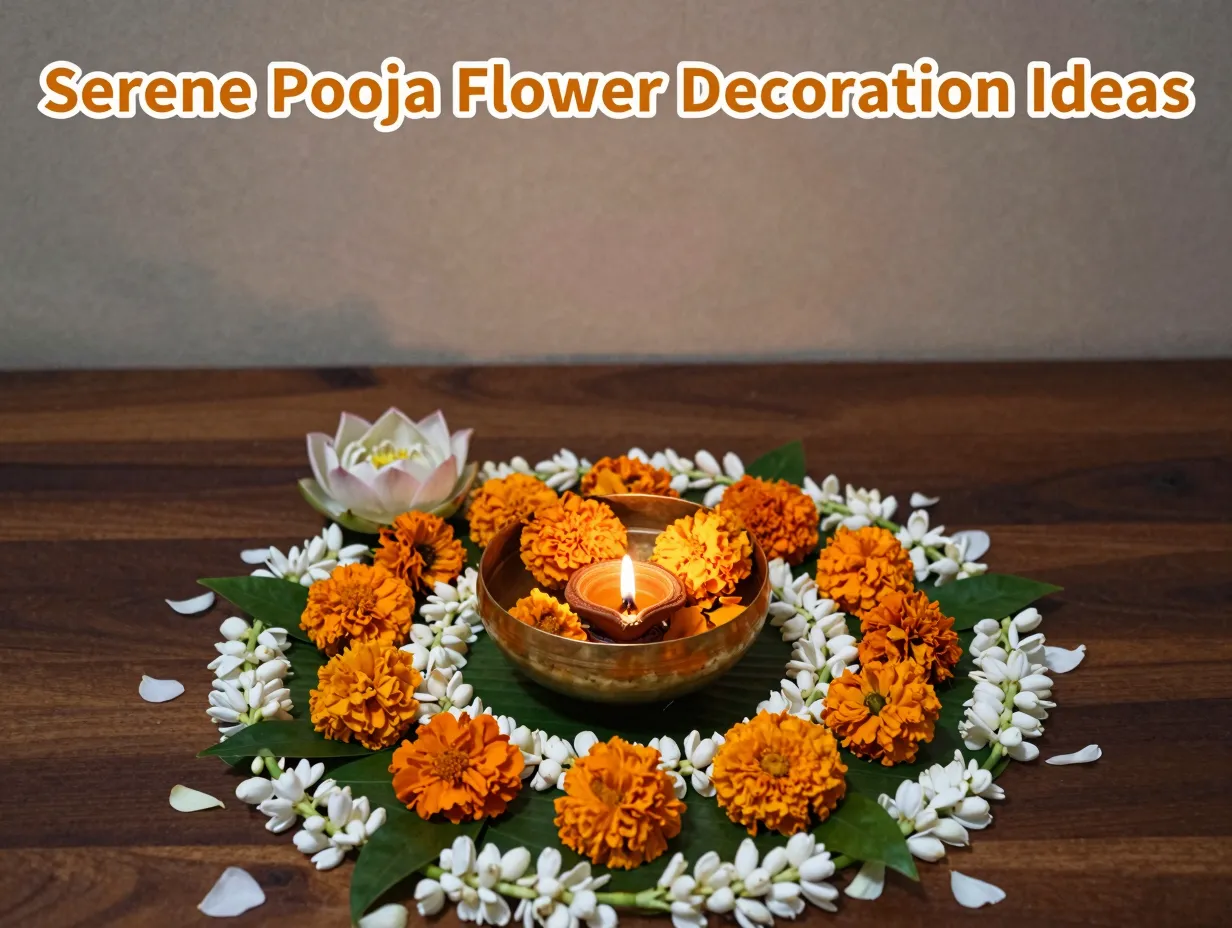
In this guide, I walk you through 8 Sacred And Serene Flower Decoration Ideas For Pooja that are both spiritually meaningful and visually stunning. Whether you are preparing for a daily puja, a festival like Navratri or Diwali, or a special occasion such as a griha pravesh, these ideas are practical, accessible, and rooted in tradition. Each of the 8 Sacred And Serene Flower Decoration Ideas For Pooja covered here can be adapted to fit a small apartment mandir or a large dedicated prayer room.
Key Takeaways
- Marigolds, jasmine, roses, and lotus flowers are the most auspicious choices for pooja decoration because of their spiritual symbolism and fragrance.
- Simple techniques like flower rangoli, urli bowls, and hanging phool jhoolas can create a temple-like atmosphere at home without a large budget.
- Symmetry, layering, and minimalism are three distinct design philosophies that each produce beautiful and sacred results.
- Fresh flowers should be replaced regularly to maintain the purity and positive energy of the pooja space.
- Even a single well-placed garland and a lit diya can elevate a modest altar into a deeply reverential setting.
Why Flowers Matter in Pooja Decoration
Before diving into the specific ideas, it helps to understand why flowers hold such a central place in Hindu worship. In Sanskrit texts, the offering of flowers to a deity is called pushpanjali, meaning “offering made with flowers.” Each flower carries a specific vibration and symbolic meaning. Marigolds represent prosperity and the sun’s energy. Jasmine symbolizes purity and divine grace. The lotus stands for spiritual awakening and detachment from worldly concerns. Roses express devotion and love.
When I first started paying close attention to flower placement at my grandmother’s pooja room, I noticed how the scent of fresh jasmine strings combined with the warm glow of diyas created an almost immediate shift in mood. The mind quieted faster. The prayers felt more sincere. That experience is not unique to me, it is the reason temples across India invest so heavily in fresh floral decoration every single day.
Beyond symbolism, flowers serve a practical sensory purpose. Their fragrance purifies the air, their colors stimulate positive emotions, and their natural impermanence reminds us of the transient nature of life, a core teaching in many Hindu philosophical traditions.
The 8 Sacred And Serene Flower Decoration Ideas For Pooja
1. Marigold Garlands and Torans at the Entrance
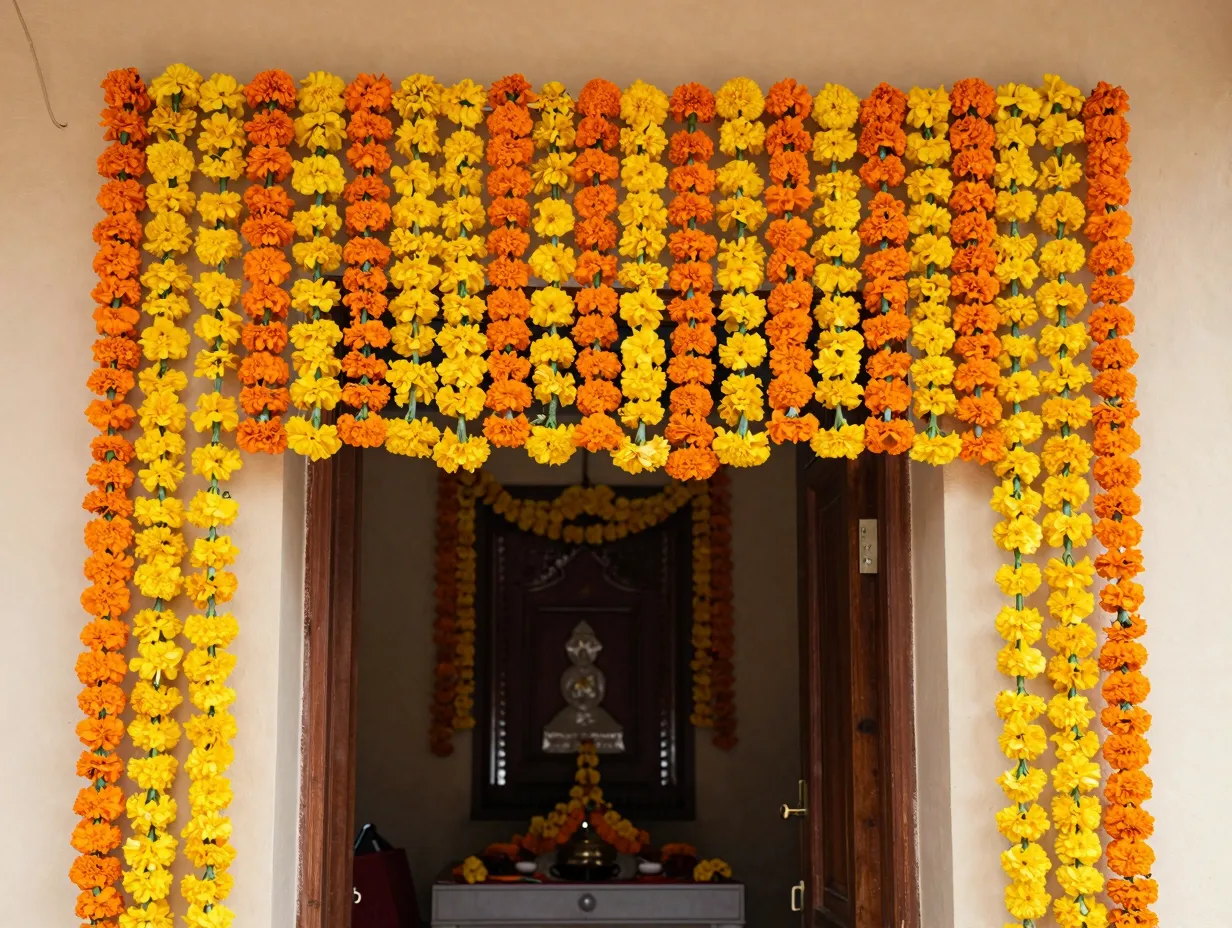
The marigold is arguably the most iconic flower in Indian religious life. Its bold orange and yellow hues are associated with the sun, prosperity, and positive energy. Hanging marigold garlands and torans, traditional door hangings, at the entrance of your pooja room or around the deity creates a vibrant and welcoming atmosphere that signals the beginning of sacred space [1].
How to do it:
- String fresh marigold heads tightly together using a needle and thick thread.
- Hang the toran horizontally above the mandir entrance or doorway.
- Layer garlands vertically along the sides of the altar for a framing effect.
- Replace garlands every one to two days to maintain freshness and fragrance.
Marigold torans are especially popular during festivals like Dussehra, Diwali, and Navratri. They are also one of the most budget-friendly options since marigolds are widely available and inexpensive year-round. The visual impact, however, is far greater than their cost suggests.
“A fresh marigold toran at the entrance of a pooja room does not just decorate, it announces that something sacred is about to happen.”
2. Flower Rangoli Around the Pooja Area
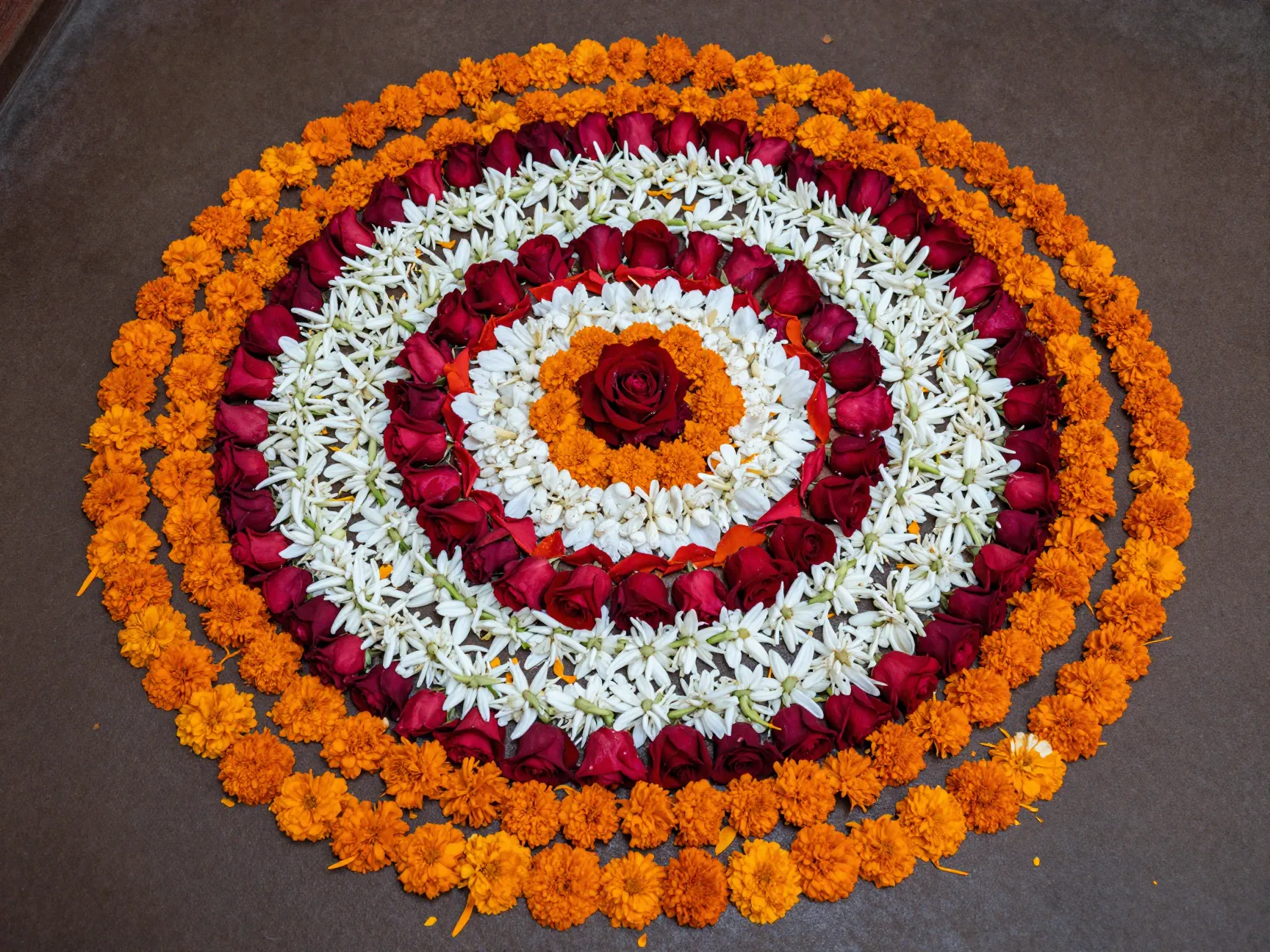
Rangoli is one of the oldest art forms in Indian culture, and creating rangoli designs using fresh flower petals elevates the practice into a living, fragrant offering. Flower rangoli placed at the entrance of the pooja space or directly around the altar adds both color and spiritual charm [2].
Best flowers for rangoli:
| Flower | Color | Symbolic Meaning |
|---|---|---|
| Marigold | Orange, Yellow | Prosperity, auspiciousness |
| Rose | Red, Pink, White | Devotion, love |
| Jasmine | White | Purity, divine grace |
| Mogra | White | Spiritual clarity |
| Chrysanthemum | Yellow, White | Longevity, joy |
The process is meditative in itself. Sitting on the floor and carefully placing each petal is a form of active prayer. I recommend starting with a simple geometric pattern, concentric circles or a star shape, and filling in the sections with contrasting flower colors. Even a small rangoli measuring one foot in diameter can dramatically change the energy of the space.
For festivals, larger floor rangolis extending from the entrance to the altar create a visual pathway that guides both the eye and the spirit toward the deity.
3. Floral Backdrop for the Deity
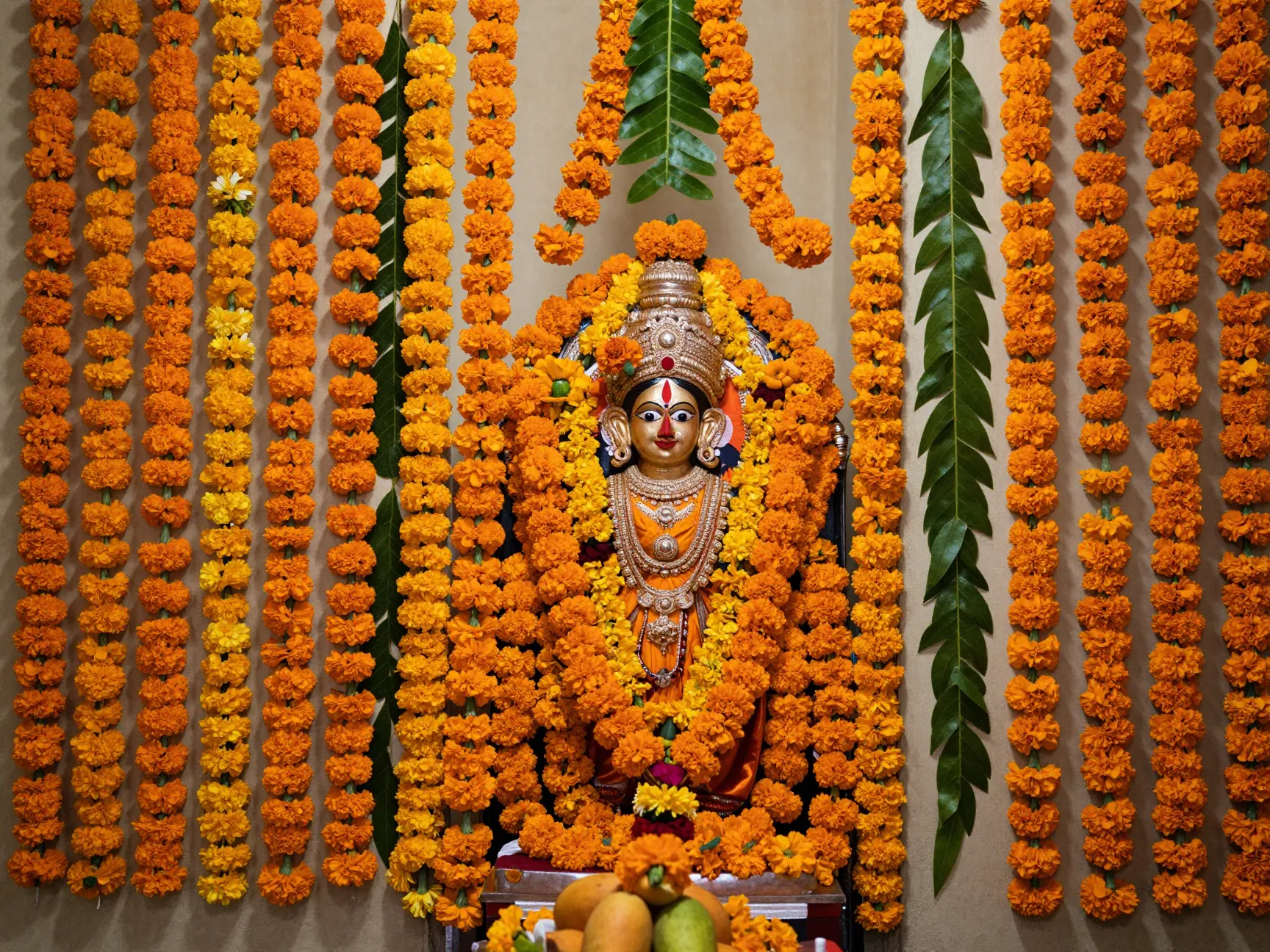
One of the most visually striking of the 8 Sacred And Serene Flower Decoration Ideas For Pooja is the floral backdrop. Designing a vertical backdrop of flower garlands directly behind the deity draws the eye upward and inward, creating a focal point that enhances the sacredness of the entire space [2].
Step-by-step approach:
- Measure the height and width of the wall space behind your mandir.
- String vertical garlands of marigold, rose, or mixed flowers.
- Hang them at equal intervals from a horizontal rod or hook system.
- Add a few horizontal strings at different heights for a grid-like effect.
- Optionally, weave in mango leaves (torana) between the flower strings for a traditional touch.
Marigold garlands are the preferred choice for backdrops because their dense, round heads create a lush, full texture. For special occasions, mixing marigold with white tuberose or red roses adds depth and contrast. The backdrop essentially frames the deity the way a picture frame enhances a painting, it elevates the subject within it.
4. Urli Bowls with Floating Flowers
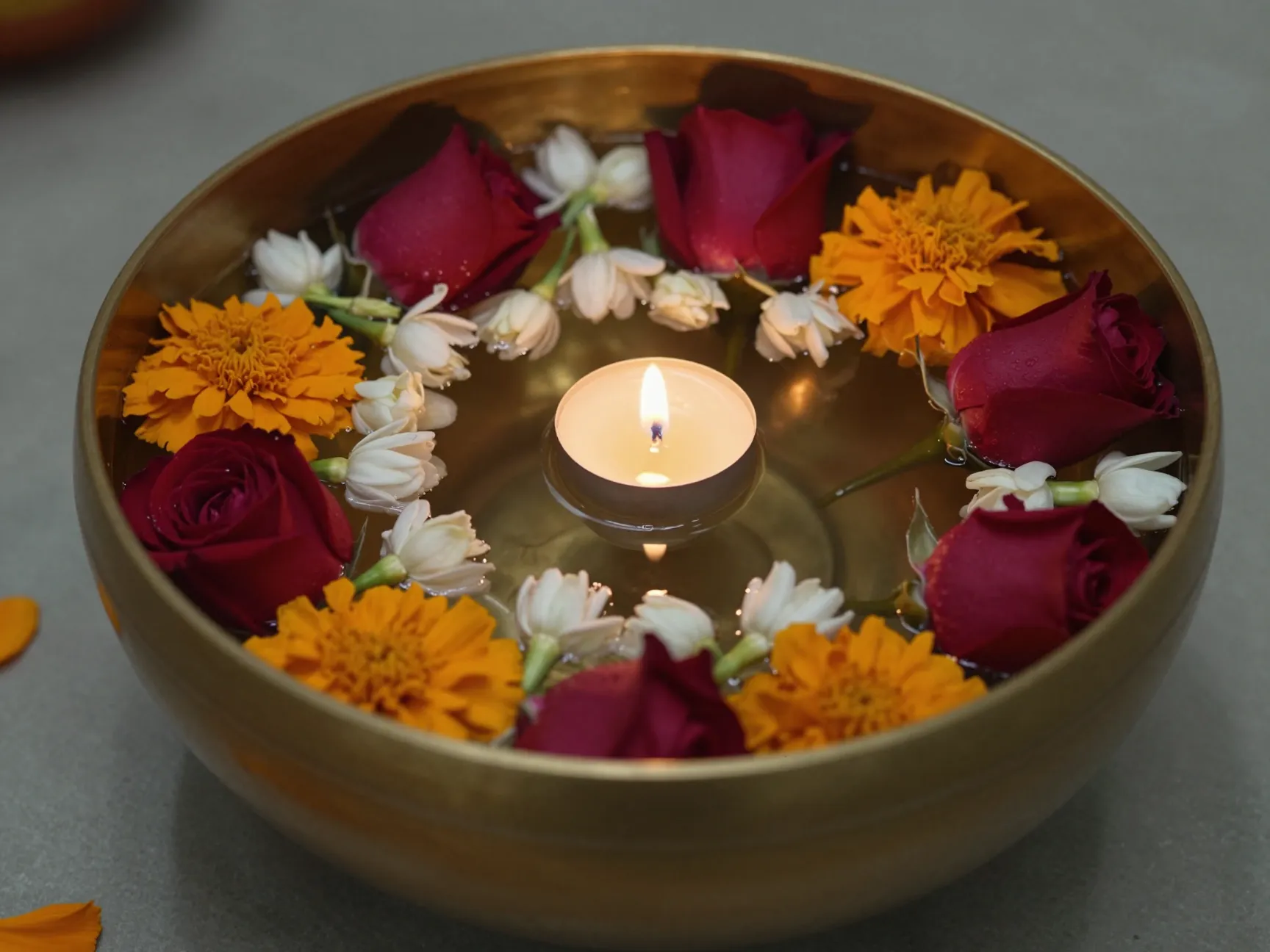
The urli is a traditional South Indian vessel, typically made of brass or copper, with a wide, shallow bowl shape. Filling an urli with water and floating fresh flowers on the surface creates a calming, meditative decoration that suits any pooja space [2].
What to place in an urli:
- Roses (red or pink) for color and fragrance
- Jasmine buds for their intense, sweet scent
- Marigold heads for their vibrant orange hue
- Floating diyas or tea light candles for warm, flickering light
- A few drops of rose water or essential oil to enhance fragrance
The combination of water, flowers, and candlelight in an urli bowl creates a multi-sensory experience. The reflection of the diyas on the water surface adds a magical quality, especially during evening prayers. Place the urli on a low table or directly on the floor in front of the altar for maximum visual effect.
Urli arrangements are particularly beautiful during Lakshmi Puja, Satyanarayana Puja, and any water-related festival like Varalakshmi Vratam.
5. Hanging Flower Strings (Phool Jhoola)
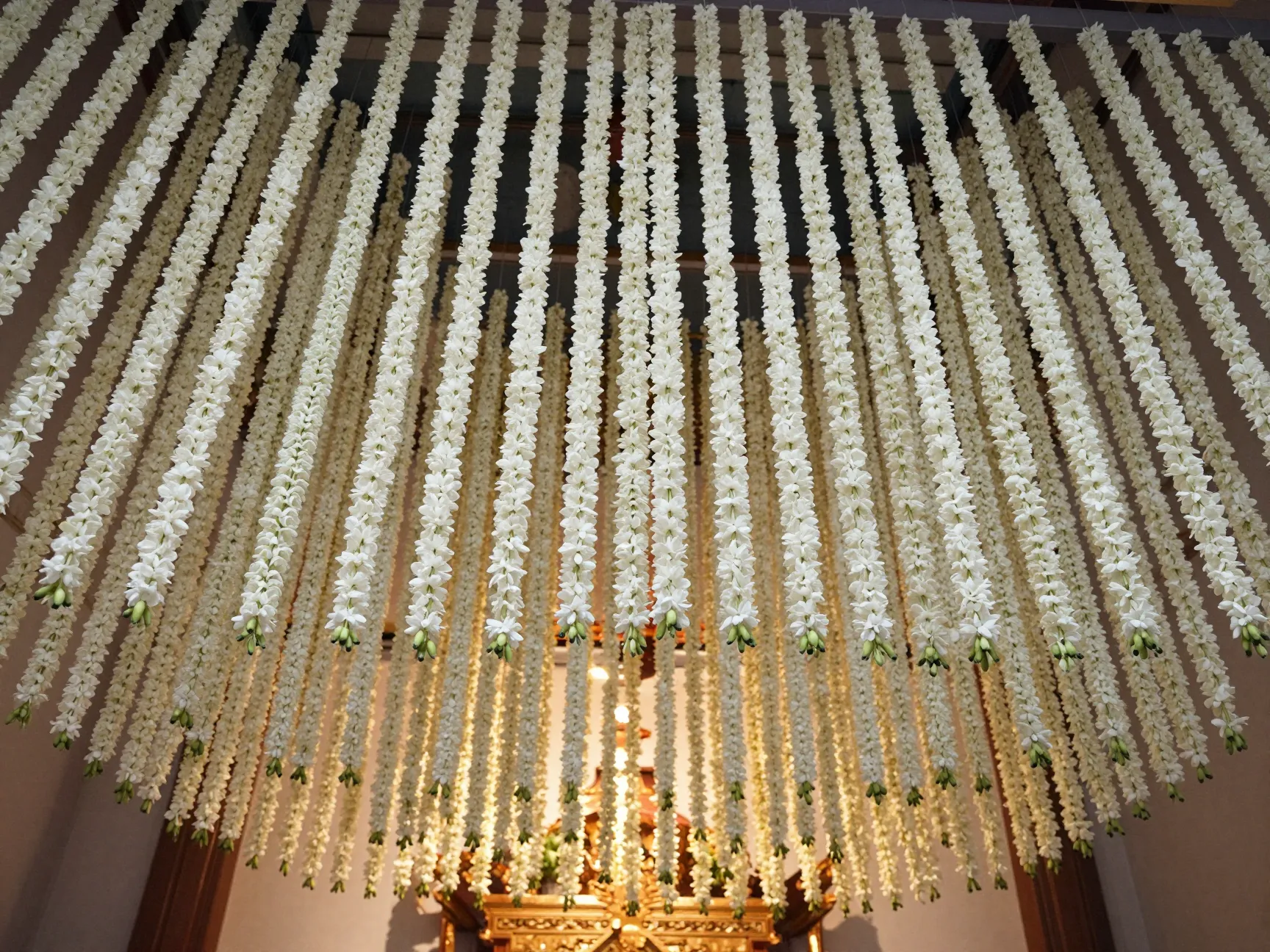
A phool jhoola, literally “flower swing”, refers to long strings of flowers suspended from the ceiling or across the top of the altar. This technique creates an immersive, temple-like atmosphere that makes even a modest home mandir feel grand and sacred [2].
Popular flower choices for phool jhoola:
- Jasmine strings for fragrance and traditional appeal
- Marigold strings for bold color
- Orchids for a contemporary, elegant look
- Roses for a rich, romantic aesthetic
The key to a successful phool jhoola is proportion. Strings that are too short look sparse; strings that are too long can overwhelm the space. A good rule of thumb is to hang strings that reach about two-thirds of the way down from the ceiling to the altar surface. Spacing strings six to eight inches apart creates a curtain-like effect that is visually lush without being cluttered.
For special occasions like Janmashtami, when the deity is traditionally placed on a decorated swing, the phool jhoola becomes both decoration and devotional prop, a beautiful intersection of art and worship.
6. Lotus and Rose Arrangements Around the Deity
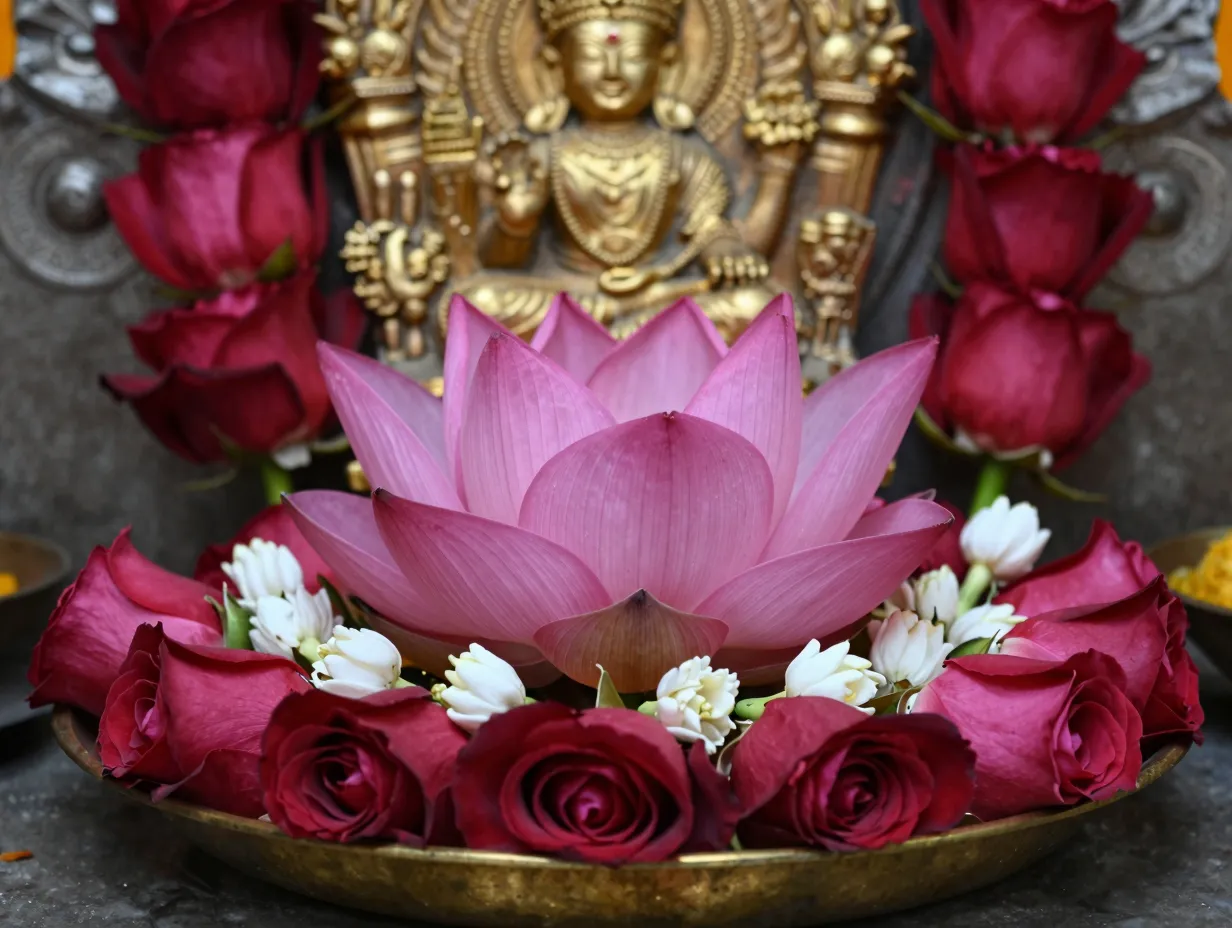
The lotus holds the highest symbolic status of any flower in Hindu, Buddhist, and Jain traditions. It grows from mud yet blooms in perfect purity, a metaphor for spiritual transcendence. Placing lotus flowers alongside roses around the base or immediate surroundings of the deity creates an arrangement that speaks directly to themes of devotion and purity [3].
Arrangement tips:
- Place a single open lotus bloom directly in front of the deity as the central offering.
- Surround it with a ring of red or pink rose heads.
- Use a shallow brass plate or banana leaf as the base for the arrangement.
- Add a few jasmine buds between the lotus and roses for fragrance.
- Change the arrangement daily to honor the principle of fresh offerings.
Lotus flowers can be harder to source in some regions, but many florists stock them during festival seasons. When fresh lotus is unavailable, lotus-shaped brass or silver diyas serve as a beautiful symbolic substitute while the rose arrangement continues to provide fragrance and color.
7. Layered Flower Base Decoration
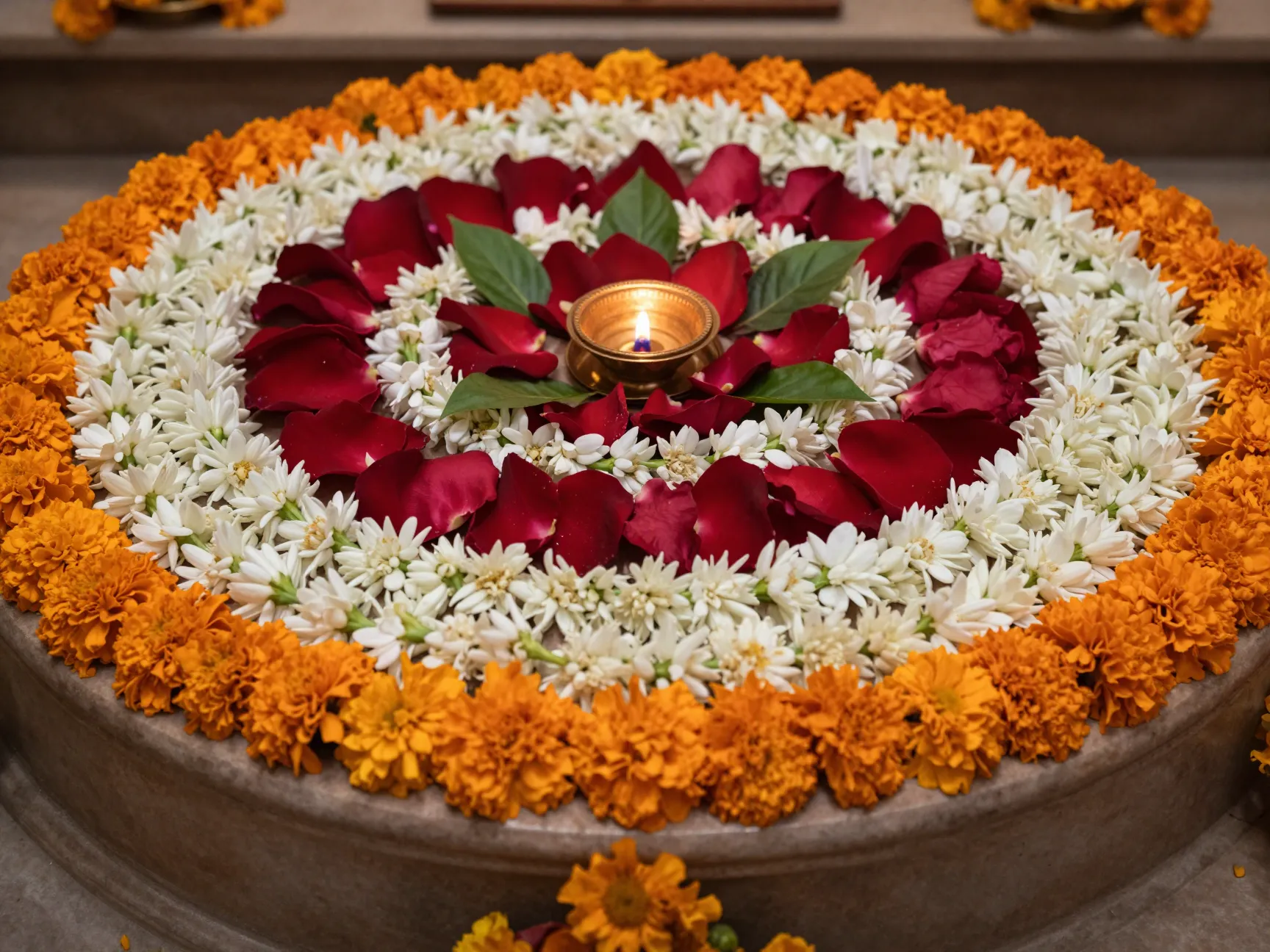
The layered flower base is a technique that creates visual richness at the foundation of the mandir without overcrowding the altar itself. By arranging layers of marigold and jasmine at the base of the mandir structure, you create a sense of abundance and reverence that draws the eye upward toward the deity [3].
How to build a layered flower base:
- Start with a wide outer ring of marigold heads placed directly on the altar shelf or a decorative tray.
- Add a middle ring of jasmine strings or white flower heads.
- Place a smaller inner ring of rose petals closest to the deity.
- Optionally, add a few tulsi (holy basil) leaves throughout the arrangement for their sacred significance.
- Light a small diya at the center front of the base to complete the composition.
This layered approach works particularly well for mandirs that have a tiered or stepped structure. Each tier can carry a different flower type, creating a gradient of color and texture that is both organized and visually generous.
The layered base is also practical, it keeps the altar surface clean and defined while still providing the abundance of flowers that pooja tradition calls for.
8. Minimal Floral Mandir Styling
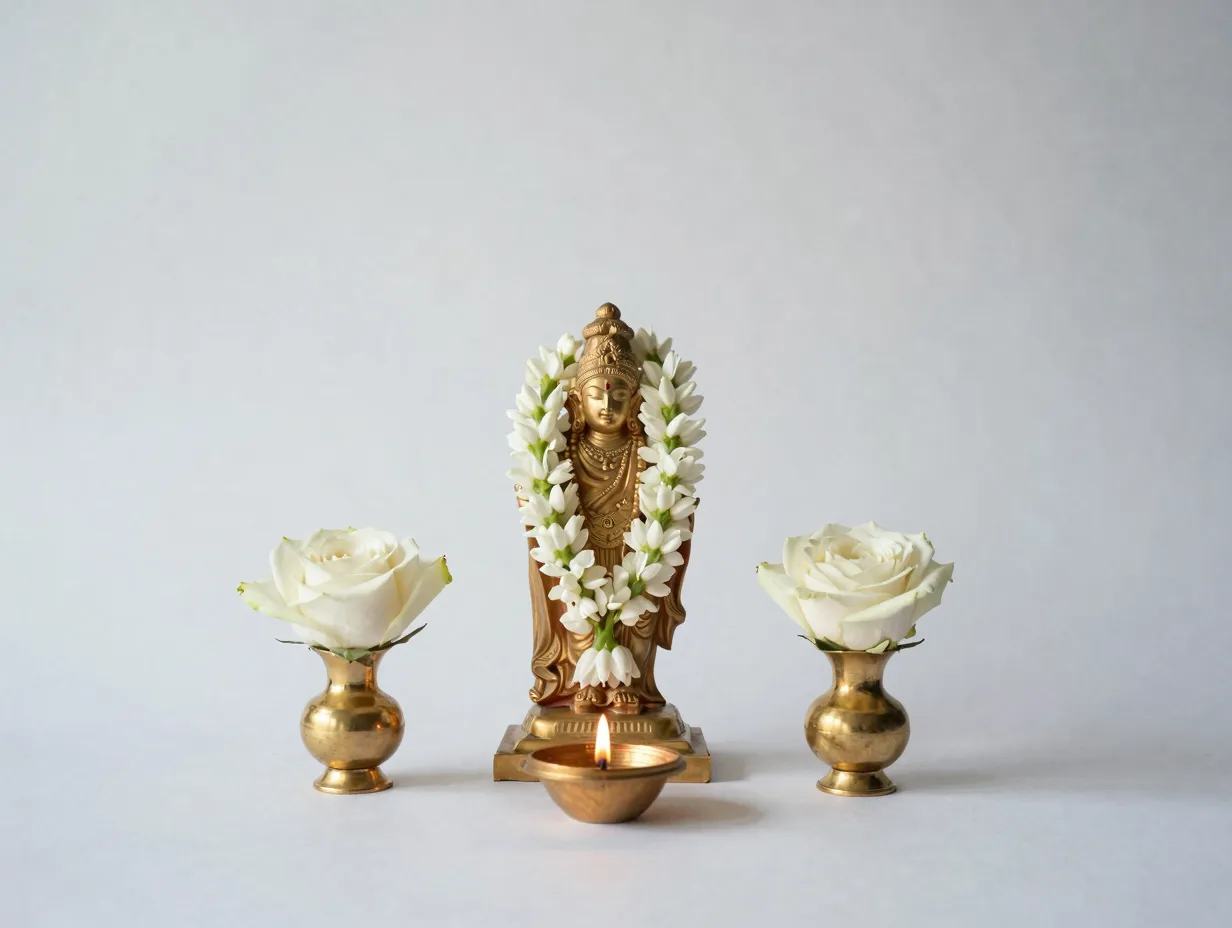
Not every pooja space needs to be elaborate. In fact, some of the most spiritually powerful altars I have encountered were remarkably simple. The minimal floral approach, a single garland for the deity, a few symmetrically placed flowers, and a central diya, can create an elegant and deeply sacred setup that is just as effective as a more elaborate arrangement [3].
Principles of minimal floral styling:
- One focal flower: Choose one type of flower and use it consistently. A single strand of jasmine draped over the deity or a small cluster of white roses in a brass vase is sufficient.
- Symmetry: Place equal numbers of flowers on both sides of the deity to create visual balance and a sense of order.
- Negative space: Resist the urge to fill every inch of the altar. Empty space around the deity creates a sense of reverence and focus.
- Quality over quantity: Two perfectly fresh, fragrant flowers are more powerful than a dozen wilted ones.
Minimal styling suits daily pooja particularly well. It is easy to maintain, quick to set up, and does not require a large flower budget. The simplicity itself becomes a form of discipline, a reminder that devotion is not measured by extravagance but by sincerity.
Practical Tips for Maintaining Flower Freshness
Even the most beautiful floral arrangement loses its power when the flowers wilt. Here are some practical steps to keep your pooja flowers fresh longer:
- Buy flowers early in the morning when they are freshest and have been recently watered.
- Store unused flowers in a cool, shaded area, never in direct sunlight.
- Mist flowers lightly with water if you are setting up arrangements hours before the pooja.
- Use a wet cloth base under flower rangoli to slow petal drying.
- Replace flowers daily during extended festivals or multi-day pujas.
- Dispose of used flowers respectfully, immerse them in a river or natural water body, or compost them. Never place used pooja flowers in a general waste bin if it can be avoided.
Choosing the Right Flowers for Different Deities
Different deities in the Hindu tradition have specific flower preferences based on scriptural guidance. Matching your flower selection to the deity being worshipped adds an additional layer of spiritual intention to your decoration.
| Deity | Preferred Flowers |
|---|---|
| Lord Ganesha | Red hibiscus, marigold |
| Goddess Lakshmi | Lotus, marigold, rose |
| Lord Shiva | Dhatura, white flowers, bilva leaves |
| Goddess Durga | Red hibiscus, marigold |
| Lord Vishnu | Tulsi, lotus, jasmine |
| Lord Krishna | Jasmine, marigold, kadamba |
| Goddess Saraswati | White flowers, jasmine, lotus |
This table is a general guide based on traditional practice. Regional customs may vary, and it is always worth consulting local temple traditions or family elders for specific guidance.
Combining Multiple Ideas for Festival Occasions
For major festivals, combining several of the 8 Sacred And Serene Flower Decoration Ideas For Pooja creates a layered, immersive sacred space. Here is a suggested combination for a festival pooja setup:
- Entrance: Marigold toran and garlands framing the doorway.
- Floor: Flower rangoli leading from the entrance to the altar.
- Altar backdrop: Vertical marigold and rose garland backdrop behind the deity.
- Altar base: Layered flower base with marigold, jasmine, and rose petals.
- Ceiling: Phool jhoola of jasmine or orchid strings suspended above the altar.
- Floor accent: One or two urli bowls with floating flowers and diyas placed on either side of the altar.
This combination covers all sensory dimensions, sight, scent, and the warm glow of candlelight, creating an environment that is genuinely immersive and spiritually elevating.
Conclusion
Flower decoration for pooja is one of the most accessible and meaningful ways to deepen your spiritual practice. The 8 Sacred And Serene Flower Decoration Ideas For Pooja covered in this guide, from marigold garlands and torans to minimal floral styling, offer a range of options that suit different spaces, budgets, and occasions. Each idea is rooted in tradition while remaining flexible enough to adapt to modern homes and lifestyles.
Actionable next steps:
- Start with one idea this week, the marigold toran or a simple urli bowl, and observe how it changes the atmosphere of your pooja space.
- Gradually introduce a second element, such as flower rangoli or a phool jhoola, as you become more comfortable with the practice.
- Pay attention to the deity you worship most frequently and research the specific flowers associated with that deity to add intentionality to your offerings.
- Establish a weekly flower-buying routine so that fresh flowers are always available for daily pooja.
- Share what you learn with family members, flower decoration is a practice that becomes richer when done together.
The relationship between flowers and prayer is ancient, but it is also deeply personal. There is no single right way to decorate a pooja space. What matters most is the sincerity behind the offering and the care taken in its preparation. Start small, be consistent, and let the flowers do what they have always done, open the heart and invite the divine.
References
[1] Beautiful Mandir Decoration Ideas With Flowers – https://www.coohom.com/in/article/beautiful-mandir-decoration-ideas-with-flowers?utm_source=openai
[2] Flower Decoration Ideas For Pooja At Home – https://yfdecor.com/blog/flower-decoration-ideas-for-pooja-at-home/?utm_source=openai
[3] Flower Decoration Images For Pooja 5 Ideas – https://www.coohom.com/in/article/flower-decoration-images-for-pooja-5-ideas?utm_source=openai