8 Ways To Achieve A Warm Apartment Aesthetic In Your Living Room
A cold, sterile living room is one of the most common complaints among apartment renters, and it costs nothing extra to fix. Research consistently shows that the physical environment of a home directly affects mood, stress levels, and even sleep quality, yet most apartment dwellers default to whatever white walls and cool overhead lighting came with the lease. The good news is that you do not need a renovation budget or a designer on speed dial. These 8 ways to achieve a warm apartment aesthetic in your living room are practical, renter-friendly, and grounded in what interior designers are actually recommending in 2026.
Disclosure: This post contains affiliate links. As an Amazon Associate, we earn from qualifying purchases, and at no extra cost to you.
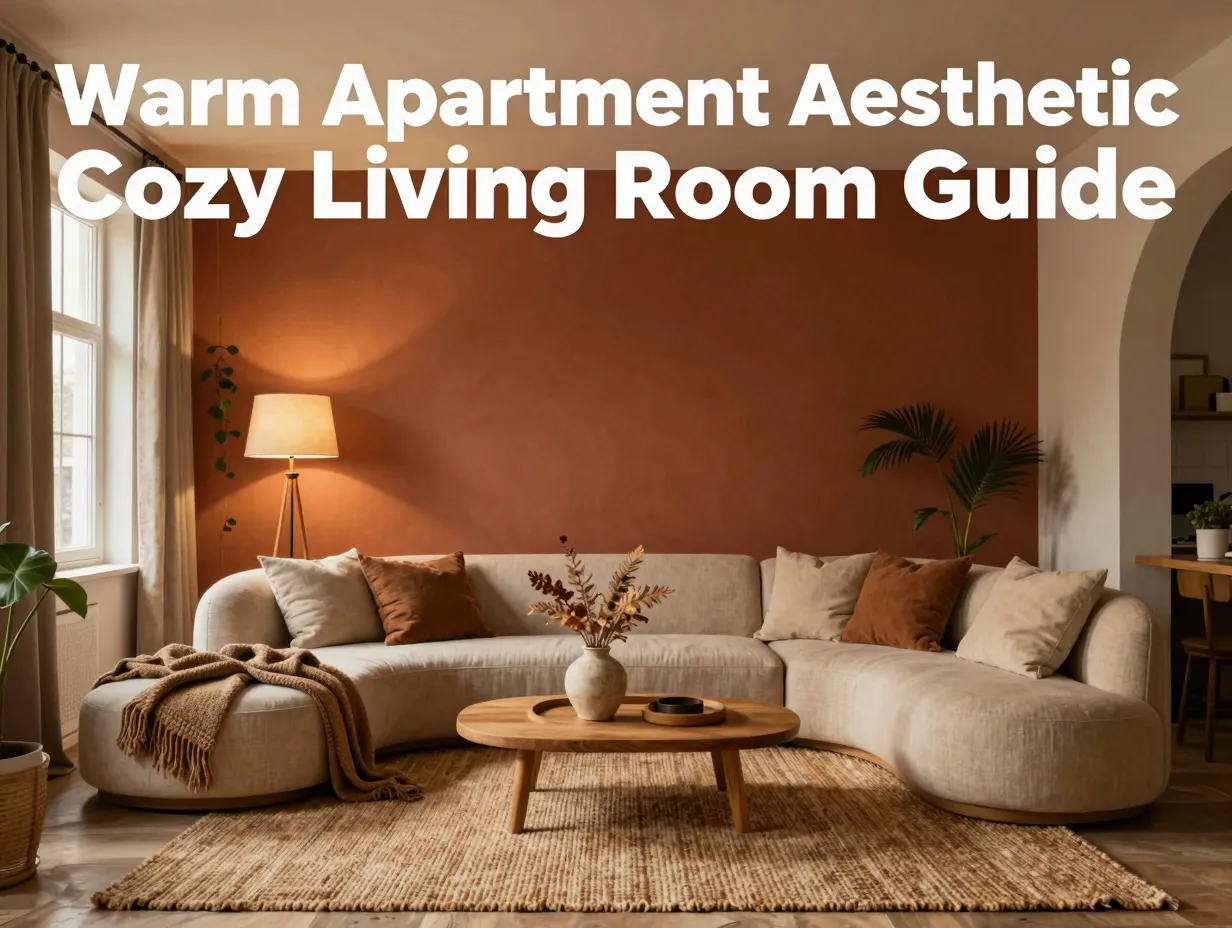
Whether you are starting from scratch in a new place or trying to breathe life into a space that has always felt a little too clinical, this guide walks you through every meaningful change, from paint and lighting to furniture shapes and natural materials.
Key Takeaways
- Warm neutrals and earthy tones such as terracotta, caramel, and ochre are the dominant foundation colors for cozy apartment living rooms in 2026
- Layered textures, bouclé, linen, chunky wool, jute, are now considered essential, not optional, for a genuinely inviting space
- Lighting temperature matters more than most people realize; bulbs in the 2400K, 2700K range are the baseline for warmth
- Curved, low-slung furniture visually softens a room and is especially effective in compact apartments
- Natural materials, biophilic elements, and intentional accessory layering work together to create depth and character
Why Most Apartments Feel Cold, And How These 8 Ways To Achieve A Warm Apartment Aesthetic Change That
I moved into my current apartment three years ago and spent the first six months wondering why it always felt like a waiting room, even after I had filled it with furniture. The walls were a flat, builder-grade white. The overhead light was a single LED panel rated at 5000K, essentially daylight. Every surface was hard and reflective. Nothing absorbed sound or light. It looked fine in photos but felt hollow in person.
That experience is far more common than most design content acknowledges. Apartments are built to photograph well and appeal to the broadest possible market, which means developers default to cool, neutral, and minimal. The result is a space that is technically inoffensive but emotionally uninviting.
The 8 ways to achieve a warm apartment aesthetic in your living room described in this article are specifically designed to counteract those defaults. They work with the architecture you already have rather than against it. And most of them are reversible, which matters enormously if you rent.
1. Anchor the Room With Warm, Earthy Paint or Wall Treatments
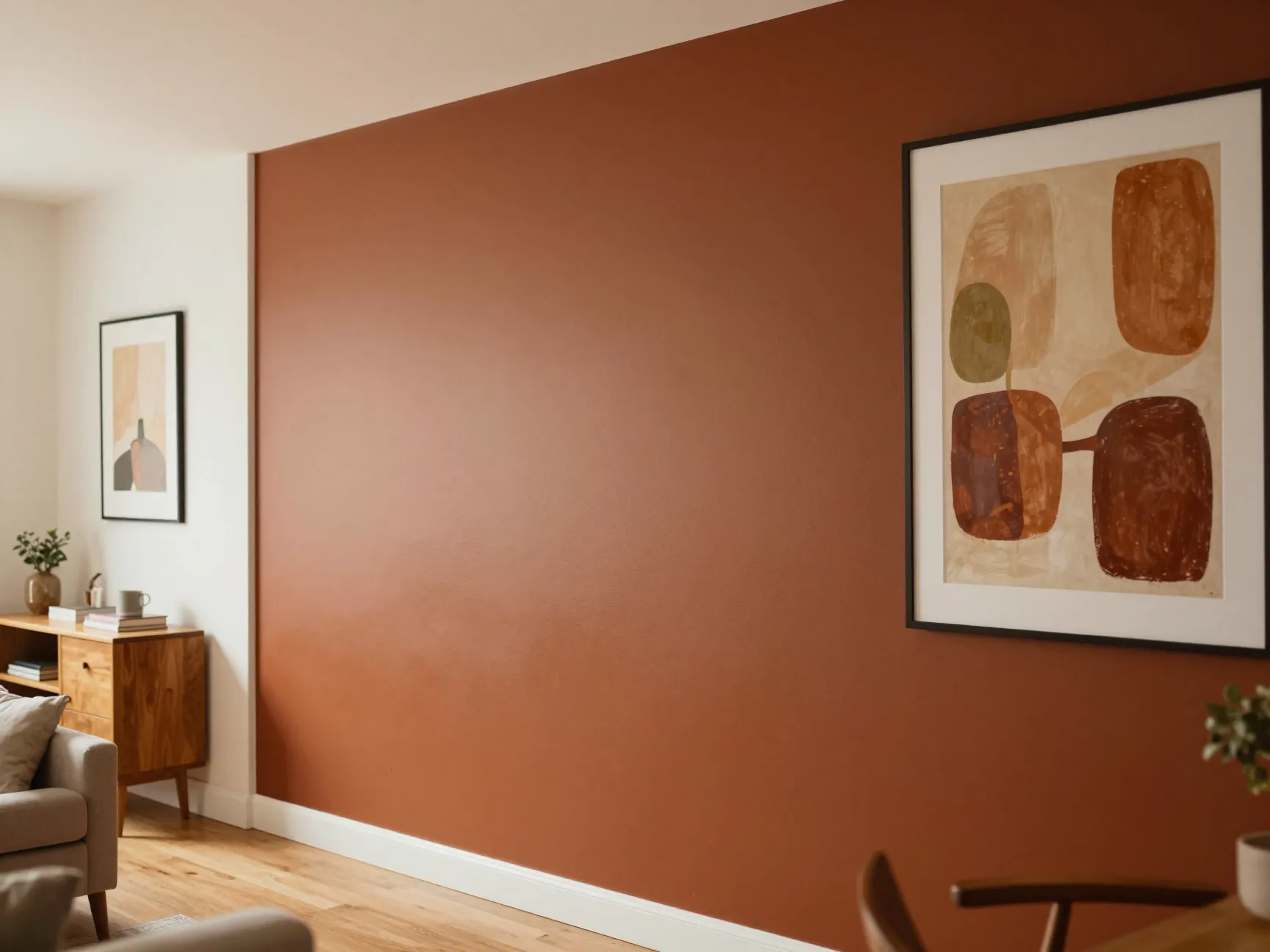
The single fastest way to transform the emotional temperature of a living room is to change what is on the walls. In 2026, designers are firmly moving away from stark whites and cool grays in favor of warm neutrals and earthy tones, creams, caramels, clay hues, terracotta, rust, olive green, warm beige, chocolate brown, and deep ochre [5][7]. Soft greens and muted blues are now being treated as “new neutrals” that still read as warm when paired correctly [5].
If you rent and cannot paint, there are several workarounds:
- Removable wallpaper in warm linen or clay textures
- Large-scale art prints with warm color palettes covering a significant portion of a wall
- A gallery wall using warm wood frames
- Fabric wall hangings in natural fibers
If you can paint, even painting a single accent wall in a deep ochre or terracotta immediately shifts the entire room’s atmosphere. The key is choosing undertones carefully. Warm whites have yellow, pink, or peach undertones. Cool whites lean blue or green. Hold paint swatches against your existing furniture in natural light before committing.
“The shift away from stark whites is not just a trend, it is a correction. Cool palettes in small apartments create a clinical feeling that no amount of soft furnishings can fully overcome.” [1]
2. Layer Textures Until the Room Feels Like a Cocoon
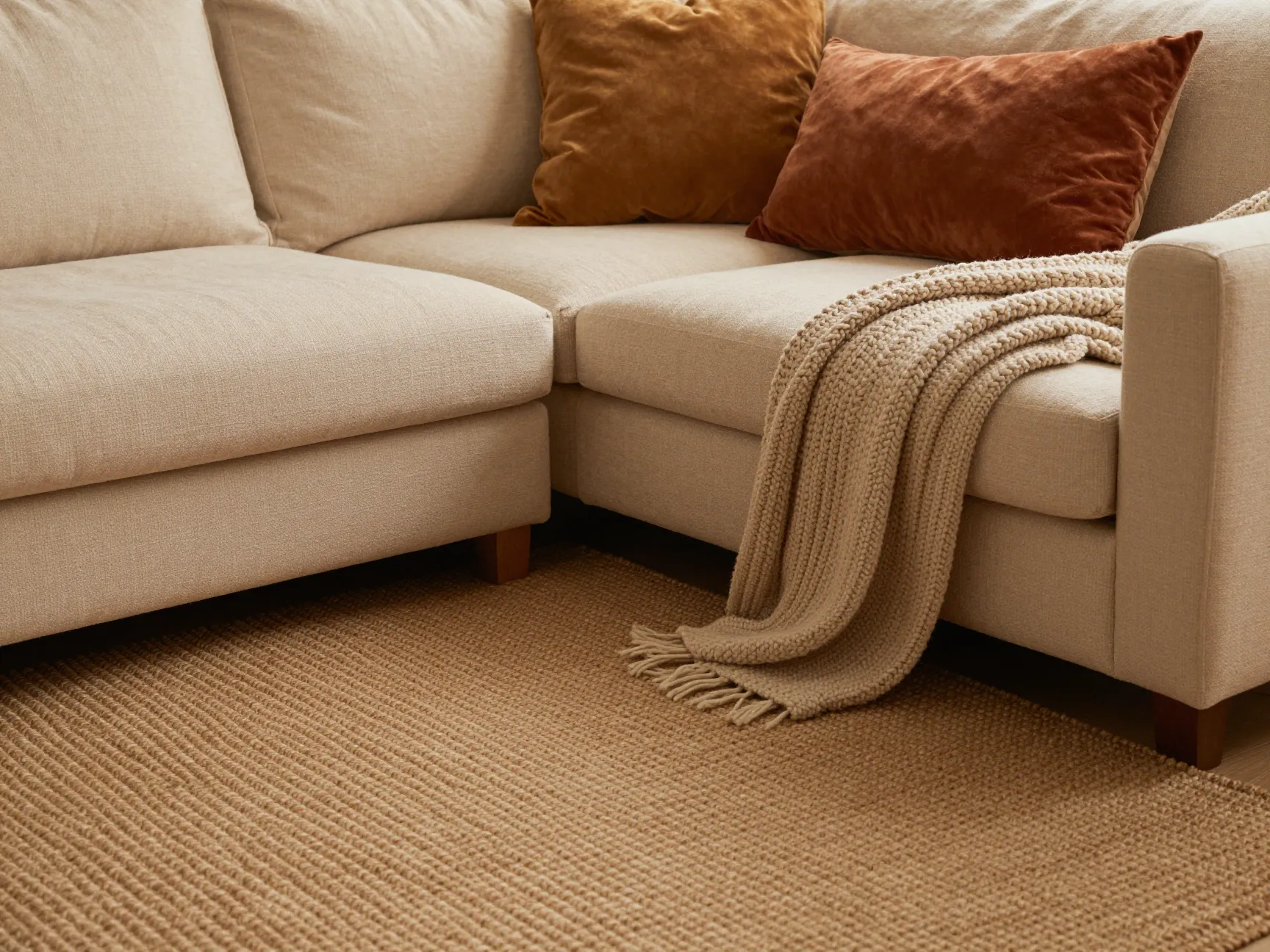
Texture is the most underused tool in apartment decorating. Multiple 2026 trend reports describe layering as “compulsory” for a warm, inviting living room, not a finishing touch, but a structural requirement [1][3]. The principle is simple: hard, smooth surfaces reflect both light and sound, making a room feel cold and loud. Soft, varied surfaces absorb both, making a room feel intimate and calm.
The layering formula that works:
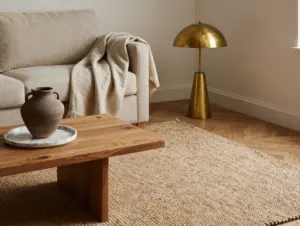
- Base layer: a large area rug in a natural fiber such as jute or wool, sized generously so that at least the front legs of all major furniture pieces rest on it
- Mid layer: a bouclé or chunky-knit throw draped over the sofa arm or a chair
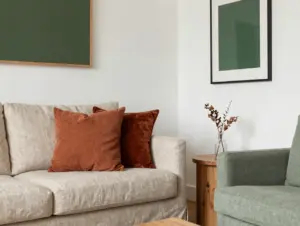
- Top layer: a mix of cushion covers in linen, velvet, and cotton in coordinating warm tones [1][3][6]
Do not be afraid of mixing textures that seem contradictory. A smooth velvet cushion next to a rough-weave linen one creates visual and tactile interest that a room full of matching fabrics never achieves. Designers are specifically recommending combinations of bouclé throws, chunky wool rugs, linen or velvet cushions, and jute or natural-fiber rugs to make even small apartments feel cocoon-like rather than minimal and bare [1][3][13].
A quick texture audit for your current space:
| Surface Type | Feels Cold If… | Quick Fix |
|---|---|---|
| Floor | Bare hardwood or tile | Layer a large jute or wool rug |
| Sofa | Leather or smooth polyester | Add bouclé or knit throw + linen cushions |
| Walls | Flat paint, no art | Fabric wall hanging or gallery wall |
| Windows | Blinds only, no soft treatment | Linen or velvet curtains hung high and wide |
| Coffee table | Glass or polished metal | Add a tray with a candle and a small plant |
3. Overhaul Your Lighting, Temperature Is Everything
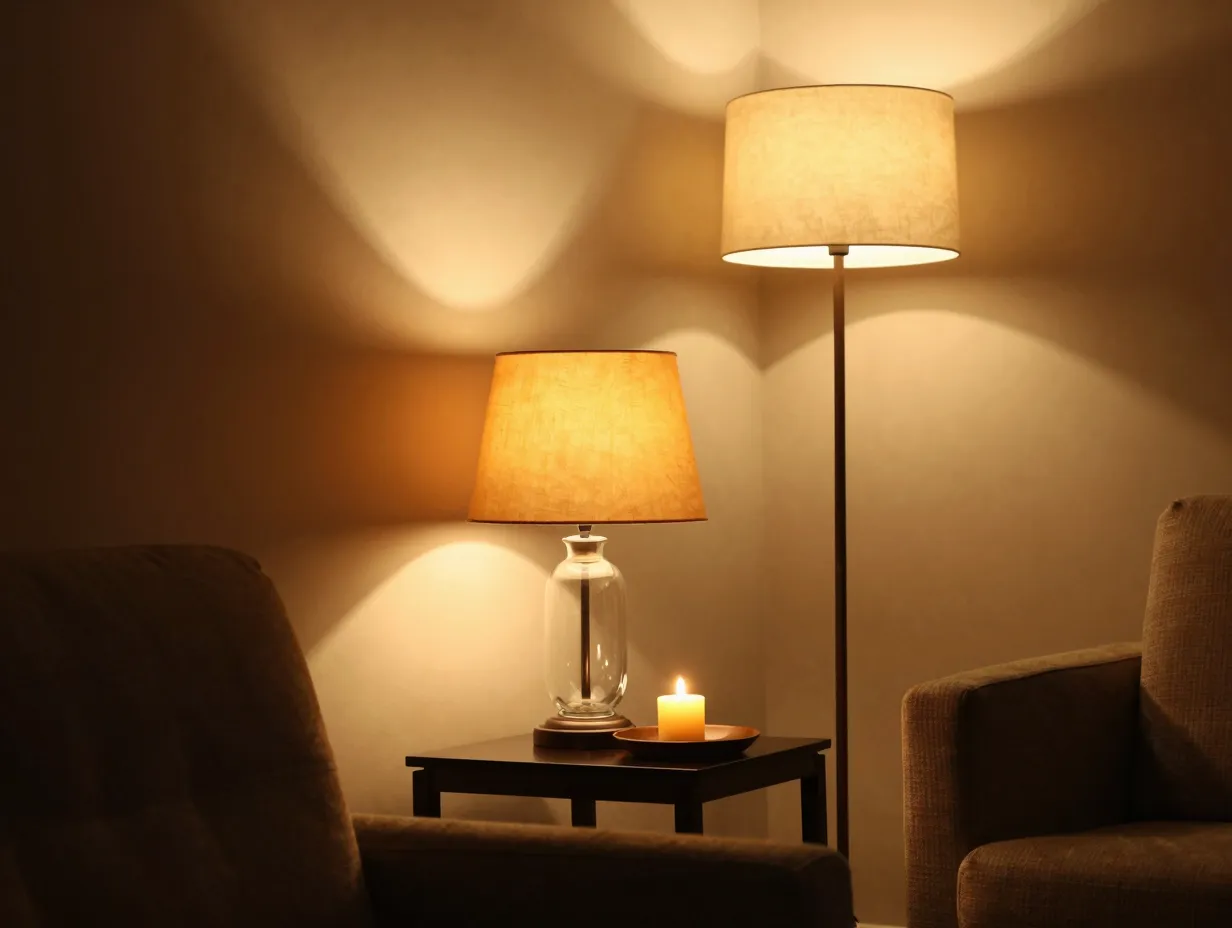
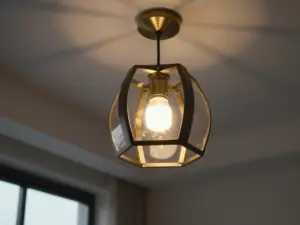
Most people think about lighting in terms of brightness. The more important variable is color temperature, measured in Kelvin. A bulb rated at 5000K or above produces a cool, bluish-white light similar to midday sun, functional for a kitchen or office, but actively hostile to a warm atmosphere in a living room. Bulbs in the 2400K, 2700K range are the recommended baseline for a genuinely warm atmosphere [5].
The three-layer lighting system:
- Ambient light, the general fill for the room. Replace any cool overhead fixtures with warm-toned alternatives, or add a dimmer switch if your lease allows it.
- Task light, a floor lamp beside the reading chair or a table lamp on a side table. Choose lamps with amber, brown, or warm-toned glass shades, which tint the light further toward gold [5][6].
- Accent light, candles, string lights tucked along a bookshelf, or a small LED strip behind a TV unit set to warm white. These create depth and shadow, which is what makes a room feel three-dimensional rather than flat.
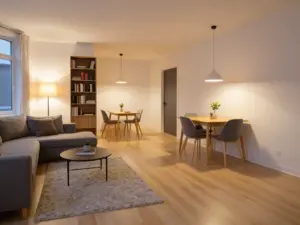
The goal is to eliminate the single overhead fixture as the primary light source entirely. A room lit only from above casts unflattering shadows and reads as institutional. A room lit from multiple points at varying heights feels like a place someone actually lives in. [4][8]
Experts also advise swapping all cool-toned bulbs throughout the living room at once, because a single cool bulb in a warm-lit room is immediately noticeable and undermines the entire effect [5].
4. Choose Curved, Low-Slung Furniture
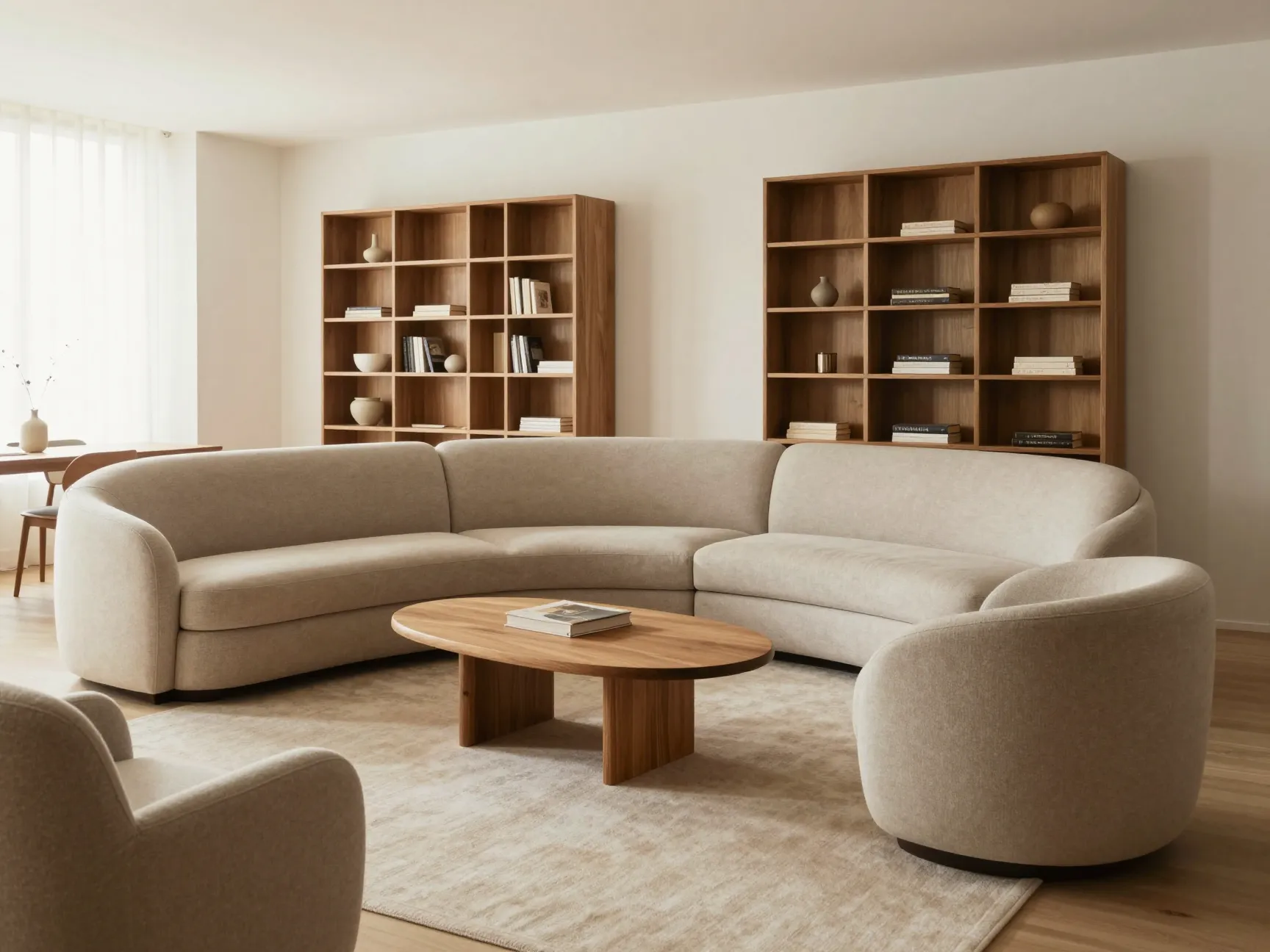
Furniture shape communicates before anyone sits down. Sharp, angular lines, boxy sofas, rectangular coffee tables with hard corners, tall bookcases with no visual softness, read as formal and slightly cold. Curved, low-slung furniture does the opposite. Rounded sofas, barrel chairs, oval coffee tables, and low-profile sectionals are recommended in 2026 because they visually soften the room and promote a gentle, inviting flow [2][7][10].
This is particularly effective in compact apartments, where hard geometry can make a small space feel even more constricted. A curved sofa with a low back keeps sightlines open and avoids the “furniture wall” effect that tall, boxy pieces create.
What to look for when shopping:
- Sofas with rounded arms and a seat height below 18 inches
- Coffee tables with oval or round tops rather than sharp rectangular corners
- Accent chairs in a barrel or tub silhouette
- Ottomans that double as coffee tables, they are inherently soft in shape and function
If replacing furniture is not in the budget, you can partially achieve this effect by rearranging existing pieces into a curved conversational grouping rather than a straight-line arrangement, and by adding a large round ottoman to replace or supplement a rectangular coffee table.
5. Bring In Natural Materials and Biophilic Elements
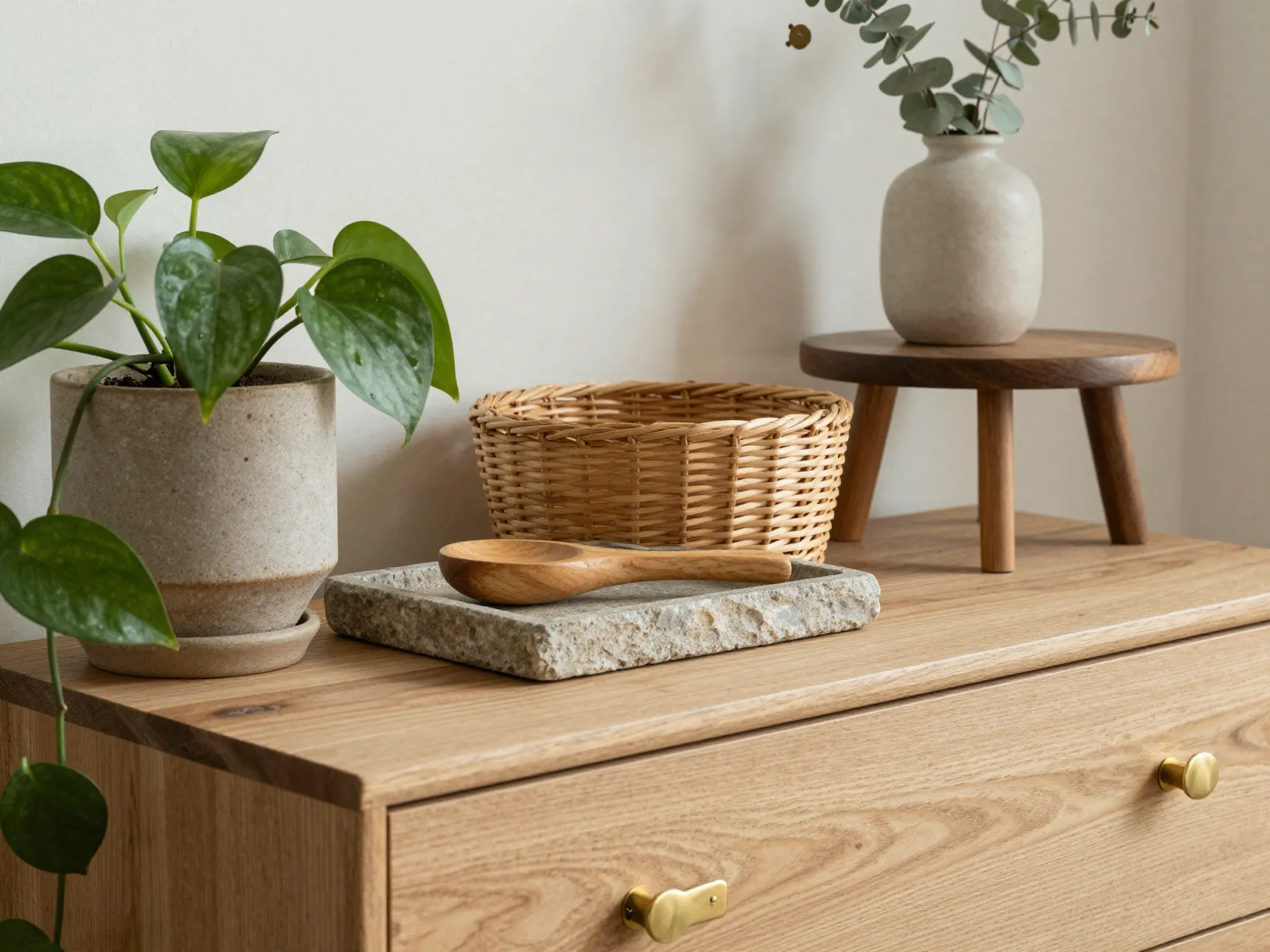
There is a reason that rooms full of plastic, glass, and synthetic fabrics feel hollow even when they are technically well-designed. Human beings respond to natural materials at a sensory level that goes beyond aesthetics. Oak and other light woods, stone surfaces, linen upholstery, woven baskets, and indoor plants are repeatedly cited as essential components of a cozy apartment living room [3][8][9].
Natural materials by category:
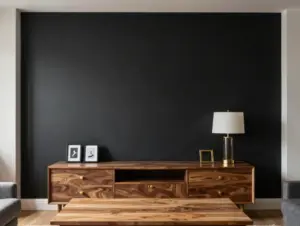
- Wood: Oak shelving, a walnut side table, or even simple wooden frames on art prints add organic warmth. Raw or lightly finished wood reads warmer than heavily lacquered versions.
- Stone and ceramic: A stone tray, ceramic vases in earthy glazes, or a concrete planter introduce weight and texture.
- Woven fibers: Wicker baskets for blanket storage, a rattan side table, or a macramé wall hanging all contribute to the layered, natural quality that defines a warm aesthetic.
- Plants: Trailing pothos on a shelf, a large fiddle-leaf fig in a corner, or a cluster of smaller plants on a windowsill introduce life and color that no inanimate object can replicate [8][9].
Warm metals, brushed brass, antique gold, and aged bronze, are also strongly recommended as hardware and accent finishes. They contrast beautifully with earthy tones and read as luxurious without being cold the way chrome or polished nickel can be [3][9].
6. Use Window Treatments to Control Light and Add Softness
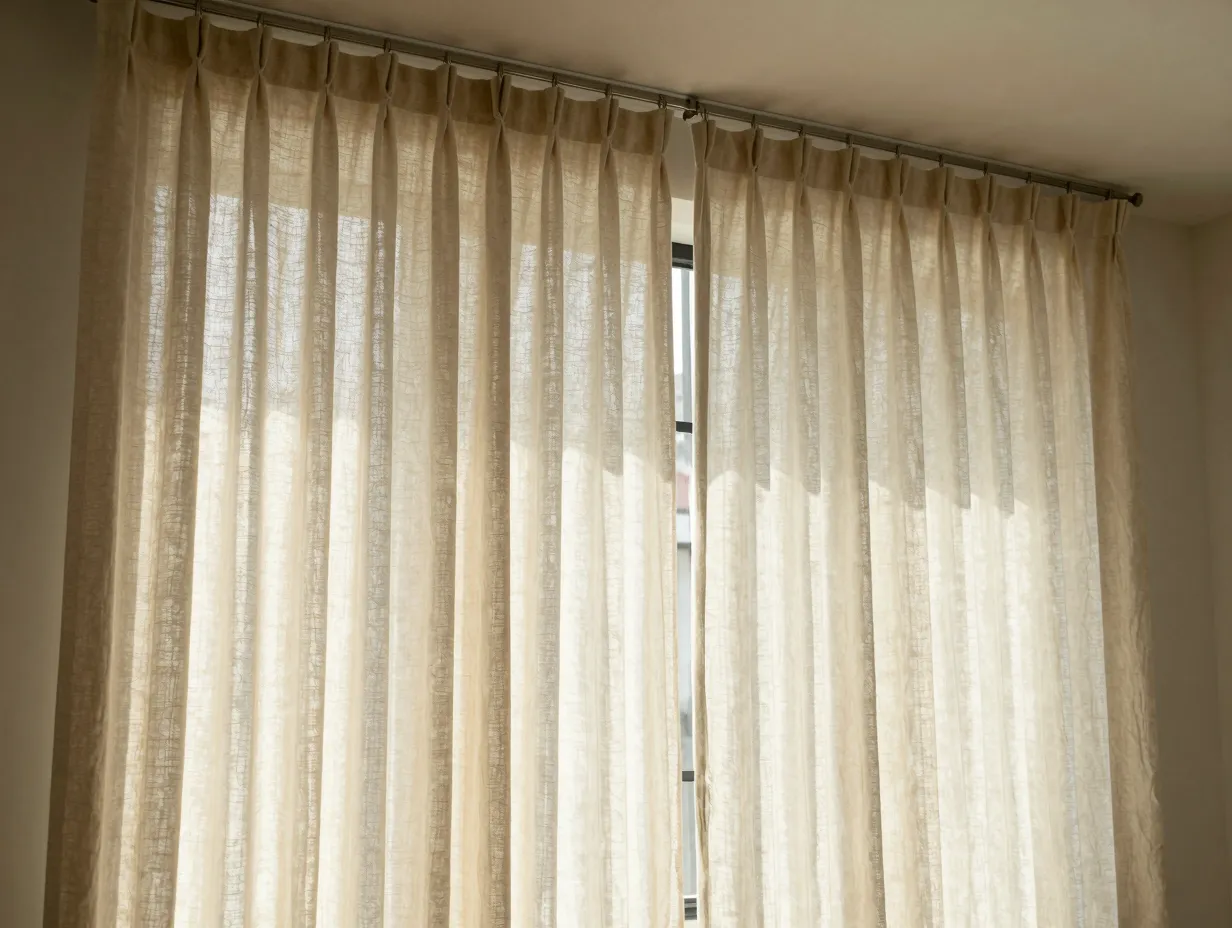
Windows are both a light source and a design element, and most apartments treat them as neither. Standard horizontal blinds are functional but visually harsh, they chop the window into segments and do nothing to soften the room.
Linen curtains hung from ceiling height to floor length are one of the highest-impact, lowest-cost changes you can make. The technique of mounting curtain rods as close to the ceiling as possible and letting panels fall to the floor creates the illusion of taller ceilings and larger windows, while the fabric itself adds a layer of softness to what is otherwise a hard, reflective surface [6][8].
Key principles for warm window treatments:
- Choose natural fabrics: linen, cotton, or velvet rather than synthetic sheers
- Stick to warm tones: cream, warm white, camel, dusty terracotta, or sage
- Hang wide: extend the rod 6-12 inches beyond the window frame on each side so that when the curtains are open, they frame the window rather than blocking it
- Layer when possible: a sheer linen panel behind a heavier linen or velvet drape gives you light control and texture simultaneously
For renters, tension rods inside the window frame or adhesive curtain rod brackets are both viable options that leave no permanent marks.
7. Build a Considered Accessory Layer With Intention
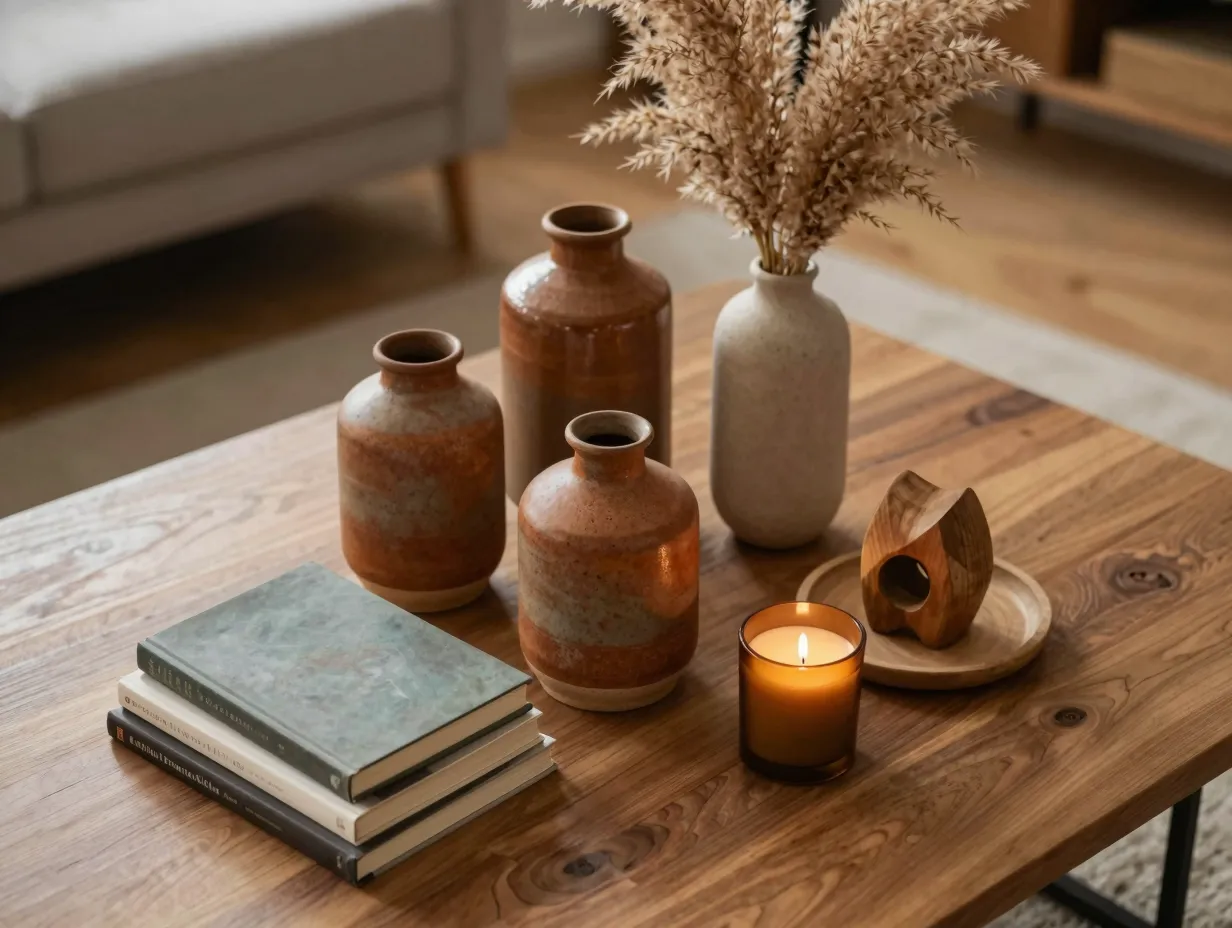
Accessories are where a warm apartment aesthetic either comes together or falls apart. The difference between a room that feels curated and one that feels cluttered is not the quantity of objects, it is whether those objects have been chosen with intention and arranged with care.
The principle that works consistently is grouping objects in odd numbers (three or five) at varying heights, using a shared color palette or material to tie them together [6][9]. A cluster of three ceramic vases in different sizes but the same earthy glaze reads as deliberate. Three random objects in three different styles reads as clutter.
The warm accessory palette for 2026:
- Candles in amber or cream, grouped on a tray
- Books stacked horizontally with spines facing a consistent direction
- A single oversized ceramic bowl or sculptural object as a focal point
- Dried botanicals, pampas grass, dried eucalyptus, or seed pods, in a tall vase
- Warm-toned art prints in natural wood or thin brass frames
What to edit out:
- Anything in a cool metallic finish (chrome, polished nickel, silver)
- Plastic or synthetic decorative objects
- Items that have no visual relationship to anything else in the grouping
I found that doing a single “warm audit” of my living room, removing everything cool-toned and replacing it with earthy alternatives, changed the room’s feeling more than any single furniture purchase had.
8. Create Zones of Intimacy Within the Room
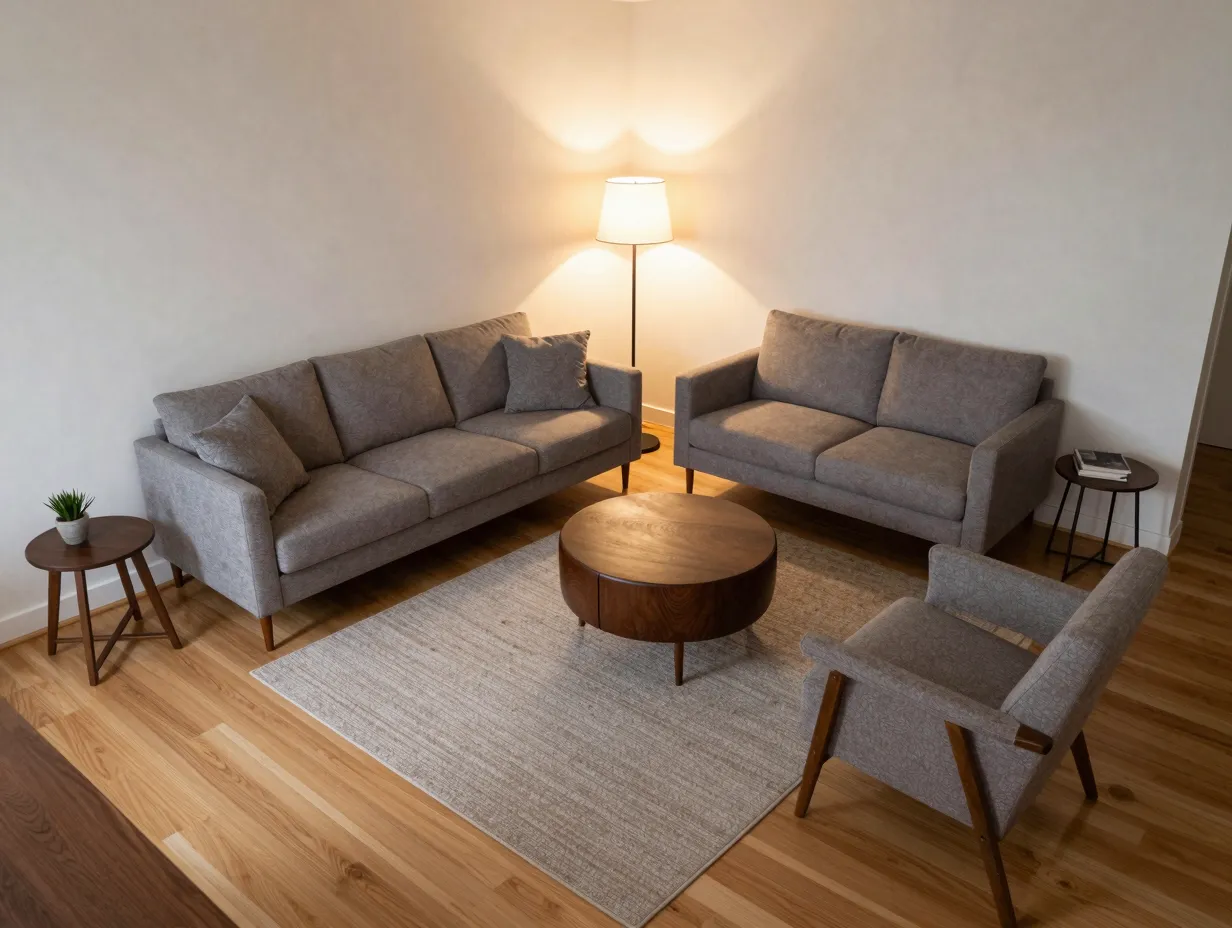
One of the most overlooked aspects of a warm aesthetic is spatial arrangement. Open-plan apartments in particular tend to feel cold because the furniture is arranged around the perimeter of the room, leaving a large, empty center. This arrangement is common because it feels “safe”, it maximizes floor space visually, but it actually makes the room feel less intimate and harder to relax in.
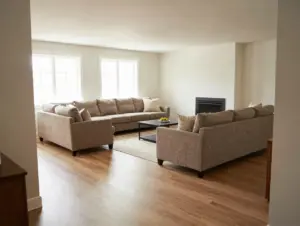
Creating zones of intimacy means pulling furniture away from the walls and grouping it into a conversation-friendly arrangement centered on a focal point such as a fireplace, a large piece of art, or a coffee table [1][2][8]. The result is a room that feels inhabited rather than staged.
How to create zones in a small apartment:
- Float the sofa at least 12-18 inches from the wall and face it toward the room’s focal point
- Use a large area rug to define the seating zone as a distinct space within the room
- Add a reading nook in a corner using a single armchair, a floor lamp, and a small side table, this creates a secondary zone that makes the room feel larger and more layered
- Use a bookcase, a tall plant, or a low credenza as a soft divider between the living area and a dining or entryway space
The psychological effect of this arrangement is significant. When furniture is clustered in a human-scaled grouping, the room signals that it is designed for people to be in it together, which is the core of what a warm aesthetic communicates.
Putting the 8 Ways To Achieve A Warm Apartment Aesthetic Together: A Room Transformation Checklist
The 8 ways to achieve a warm apartment aesthetic in your living room are most effective when layered together rather than applied one at a time. Here is a practical sequence for implementing them:
Phase 1, Foundation (Week 1)
- Swap all light bulbs to 2700K warm white
- Add a large area rug if the floor is bare
- Replace or supplement any cool-toned throw cushions with linen or velvet alternatives in warm tones
Phase 2, Structure (Week 2-3)
- Rearrange furniture into a conversation grouping, floating pieces away from walls
- Hang curtains from ceiling height using warm-toned linen or cotton panels
- Add at least one curved furniture piece or a round ottoman
Phase 3, Character (Week 4)
- Introduce natural materials: a wooden tray, a ceramic vase, a woven basket
- Build one or two intentional accessory groupings using the odd-number principle
- Add a plant or two in earthy ceramic pots
Conclusion
A warm apartment aesthetic is not about spending more money or following trends for their own sake. It is about understanding which design decisions create emotional warmth and which ones undermine it, and then making deliberate choices on that basis.
The 8 ways to achieve a warm apartment aesthetic in your living room covered in this guide, earthy color palettes, layered textures, warm lighting, curved furniture, natural materials, considered window treatments, intentional accessories, and intimate spatial zones, work together as a system. Each one reinforces the others. A room with warm lighting but cool-toned hard surfaces will still feel cold. A room with beautiful textures but a single overhead fluorescent will never feel cozy.
Your actionable next steps:
- Start with lighting this week. It is the cheapest and fastest change, and it affects every other element in the room.
- Do a single “warm audit”, walk through your living room and identify every object that reads as cool, clinical, or synthetic. Note what could replace it.
- Choose one area rug or one set of linen curtains as your next investment. These two items have the highest warmth-to-cost ratio of any living room purchase.
- Rearrange your furniture before buying anything new. The arrangement costs nothing and often solves more than a new sofa would.
A living room that feels genuinely warm and inviting is not a luxury. It is a design decision, and one that is entirely within reach.
References
[1] Cozy Living Rooms Warm Inviting Ideas Americans Are Loving Right Now – https://delviora.com/cozy-living-rooms-warm-inviting-ideas-americans-are-loving-right-now/
[2] 6 Living Room Trends Designers Say Are Cozy But Still Look Smart In 2026 – https://www.journee-mondiale.com/en/6-living-room-trends-designers-say-are-cozy-but-still-look-smart-in-2026/
[3] Living Room Design 2026 41 Cozy Modern And Luxury Ideas For Elegant Home Inspiration – https://nestmood.com/living-room-design-2026-41-cozy-modern-and-luxury-ideas-for-elegant-home-inspiration/
[4] Living Room Trends 2026 – https://www.idealhome.co.uk/all-rooms/living-room/living-room-trends-2026
[5] Warm Apartment Aesthetic 12 Secrets To Cozy Bliss – https://www.smellafterrain.com/warm-apartment-aesthetic-12-secrets-to-cozy-bliss/
[6] Warm Apartment Aesthetic – https://www.countessinthekitchen.com/warm-apartment-aesthetic/
[7] Designers Say These 7 Living Room Trends Will Define 2026 – https://www.msn.com/en-us/lifestyle/home-and-garden/designers-say-these-7-living-room-trends-will-define-2026/ar-AA1U3NYd
[8] Cozy Living Room Ideas – https://jane-athome.com/cozy-living-room-ideas/
[9] Warm Apartment Aesthetic Ideas – https://www.designstudio210.com/interior-spaces/warm-apartment-aesthetic-ideas/
[10] YouTube – Warm Living Room Design Ideas – https://www.youtube.com/watch?v=gfwWX_MhmtE&vl=de-DE